
IT plans to change values in a shared municipal code table used by many applications. What should precede the change?
Select an answer to reveal the explanation.
Short Explanation
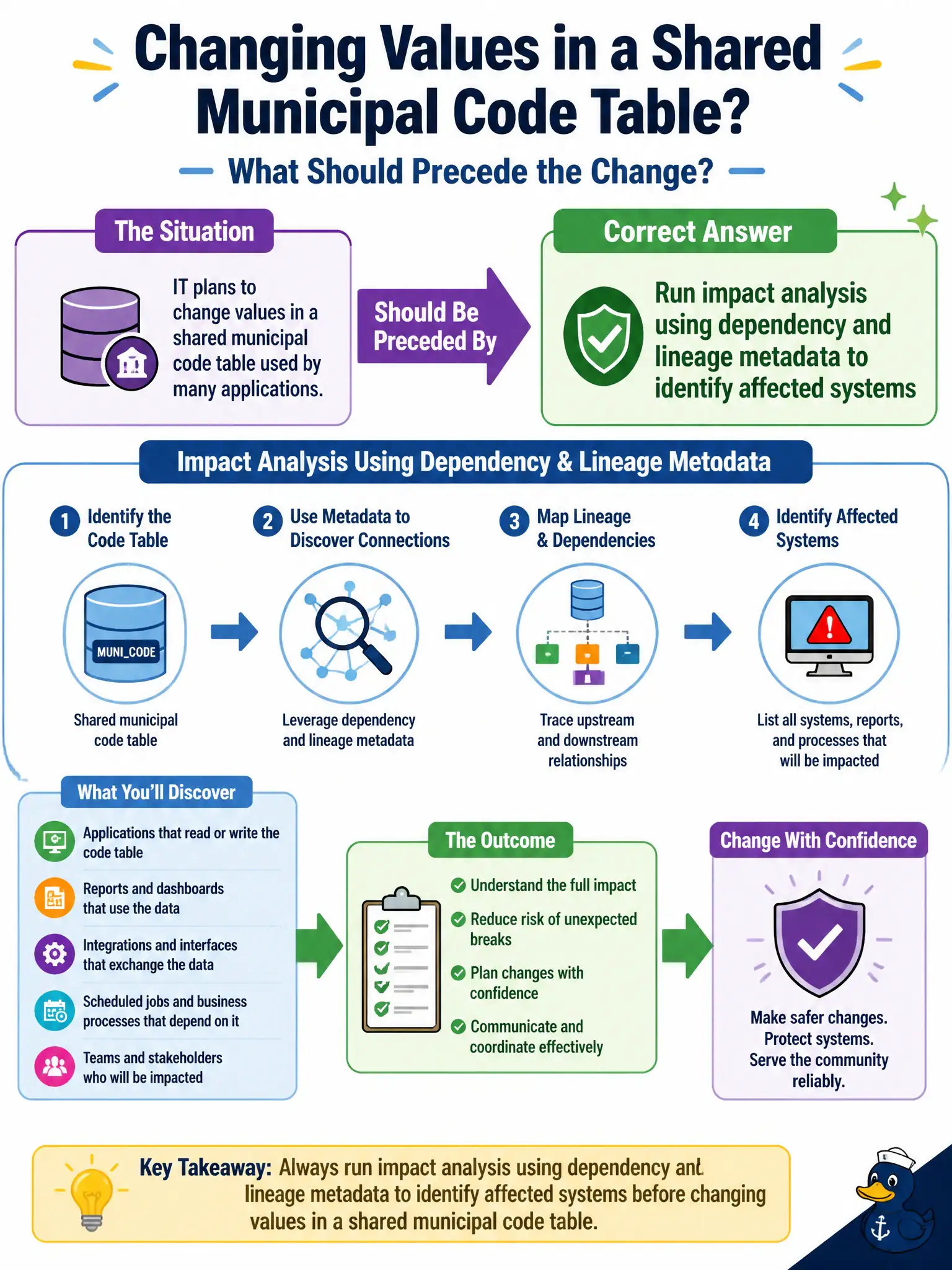
Before you move a load-bearing wall, you check what rests on it. Shared code tables are load-bearing—use lineage and dependency metadata to see who breaks if the codes change.
Full Explanation
Shared municipal code tables are high-blast-radius assets. Before IT changes values used by many applications, teams should run impact analysis using dependency and lineage metadata to identify affected systems, reports, and interfaces. That analysis turns an invisible edit into a planned change with notified consumers and test coverage. Changing production immediately and documenting only if someone complains is uncontrolled change that can break permitting, billing, or inspection workflows. Renaming the code table temporarily without notifying consumers severs integrations by stealth. Disabling logging to hide the operational footprint undermines auditability and incident response. Exam questions often contrast impact analysis with reckless cutovers. Caveat: impact analysis quality depends on metadata completeness; missing lineage is itself a risk to remediate, not a reason to skip analysis. Operationally, query lineage and dependency views for the code table, produce an affected-system list, secure steward approvals, and validate critical civic processes in lower environments before promoting the value change. Municipal code tables often feed inspection workflows, fees, and public portals at once; without dependency metadata, a “small” value edit can create contradictory statuses across channels that residents and staff both see.