
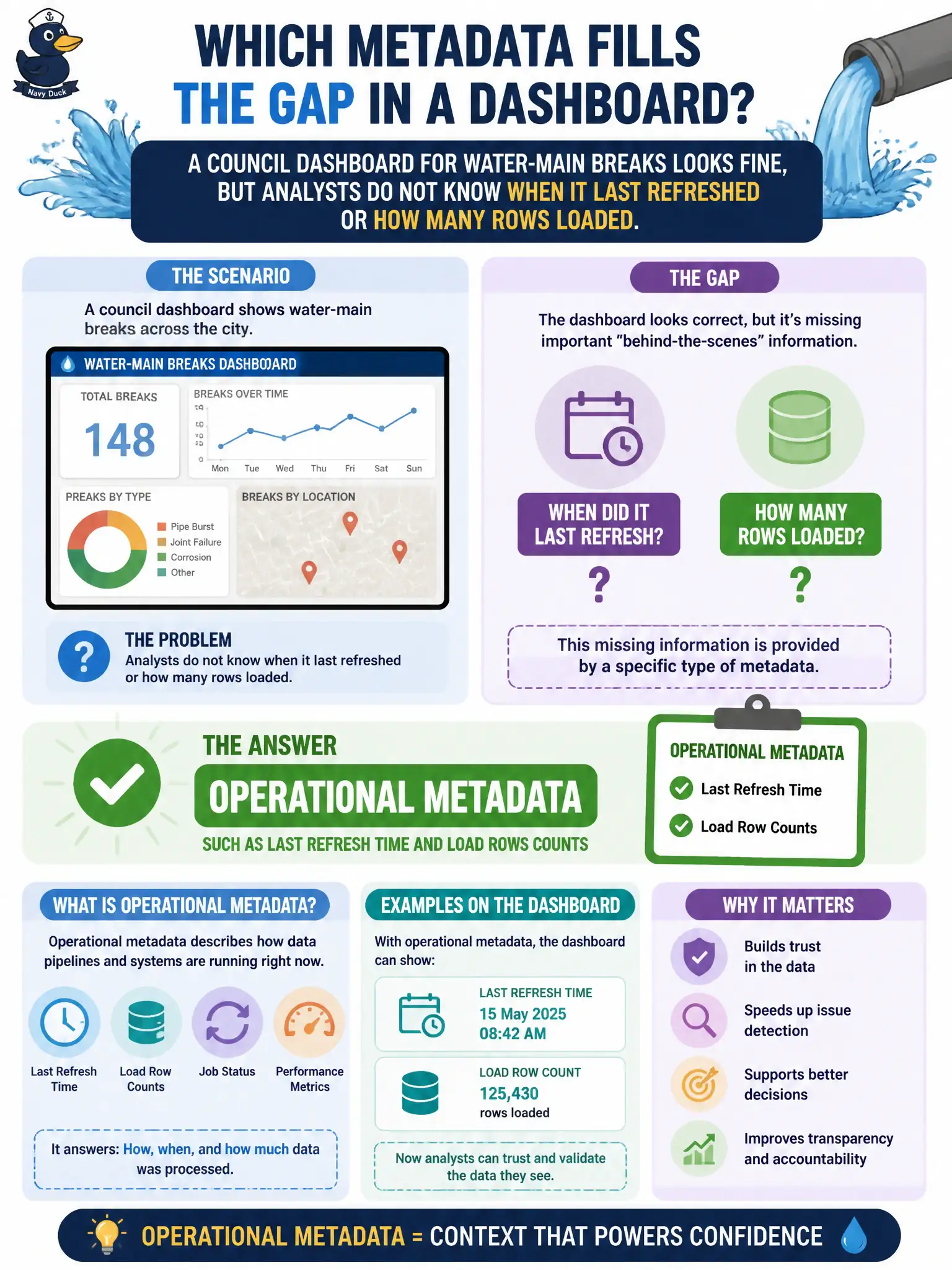
A council dashboard for water-main breaks looks fine, but analysts do not know when it last refreshed or how many rows loaded. What metadata category fills that gap?
Select an answer to reveal the explanation.
Short Explanation
Freshness and volume are trust signals—like a milk carton date and how full the jug is. Operational metadata puts those run facts next to the dashboard so consumers can decide whether to trust today’s numbers.
Full Explanation
A council dashboard can look polished while still being operationally untrustworthy if consumers cannot see when it last refreshed or how many rows loaded. Operational metadata supplies those run facts—refresh timestamps, job success or failure, row volumes, and similar execution signals—so analysts can judge currency and completeness before acting on water-main break counts. Conceptual entity-relationship sketches support modeling education but do not publish live freshness beside a metric. Marketing slogans for an open-data portal may aid outreach without answering whether tonight’s load finished. Paper retention schedules in a legal archive address disposition, not dashboard currency. On CIMP-style questions, classify freshness and volume as operational metadata rather than forcing them into conceptual models or purely business glossary text. A common caveat is that operational signals must stay attached to the asset consumers actually use; buried job logs that no analyst can find do not improve trust. Operationally, open the dashboard’s catalog entry and verify last successful refresh time and loaded row count are visible and recent enough for the decision at hand before citing the metric in a council briefing.