
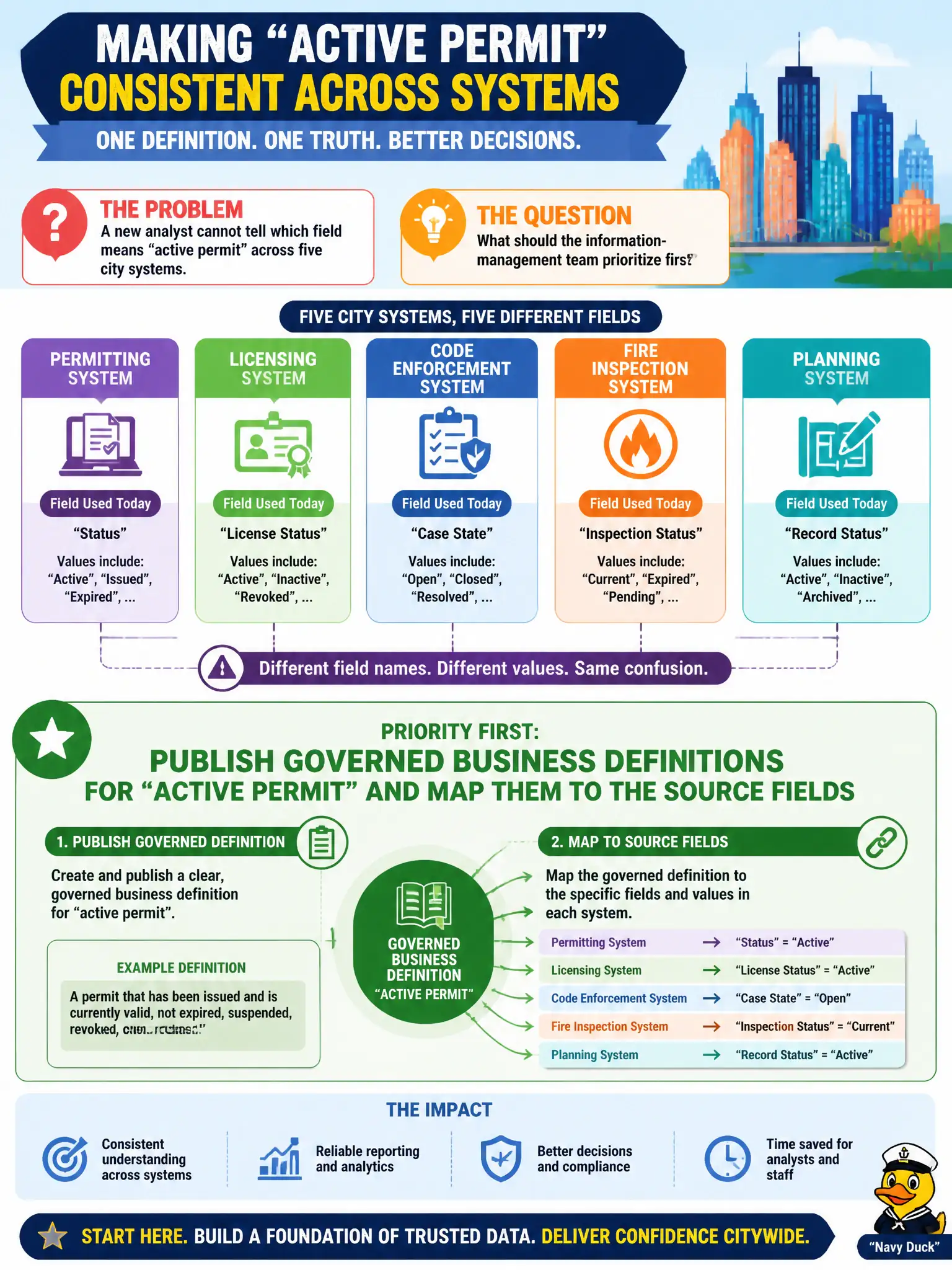
A new analyst cannot tell which field means "active permit" across five city systems. What should the information-management team prioritize first?
Select an answer to reveal the explanation.
Short Explanation
Think of five filing cabinets that all use different nicknames for the same folder. Until someone writes a shared dictionary—and points each nickname at it—newcomers keep guessing. A glossary with field mappings is that dictionary.
Full Explanation
Semantic consistency across municipal systems begins with governed business metadata, not with another overnight rebuild. When an analyst cannot tell which field means “active permit” across five city systems, the first priority is to publish an official definition of that concept and map each source field to it. Those definitions and crosswalks turn conflicting status codes into a shared vocabulary that reporting, permitting, and inspection teams can trust. Tool purchases alone do not resolve meaning: a new ETL platform can move ambiguous fields faster without making them clearer. Renaming production columns to match one analyst’s spreadsheet headers personalizes chaos instead of creating enterprise semantics and risks breaking existing consumers. Deleting unused tables may reduce clutter, yet it does not explain remaining fields or align status meanings across systems that must stay. On the exam, distinguish semantic stewardship from pipeline modernization; both can matter later, but ambiguity of meaning is a metadata problem first. Operationally, confirm that the glossary entry for “active permit” lists an owner, allowed values, and a documented mapping to each contributing system before new analysts build citywide metrics on that status.