
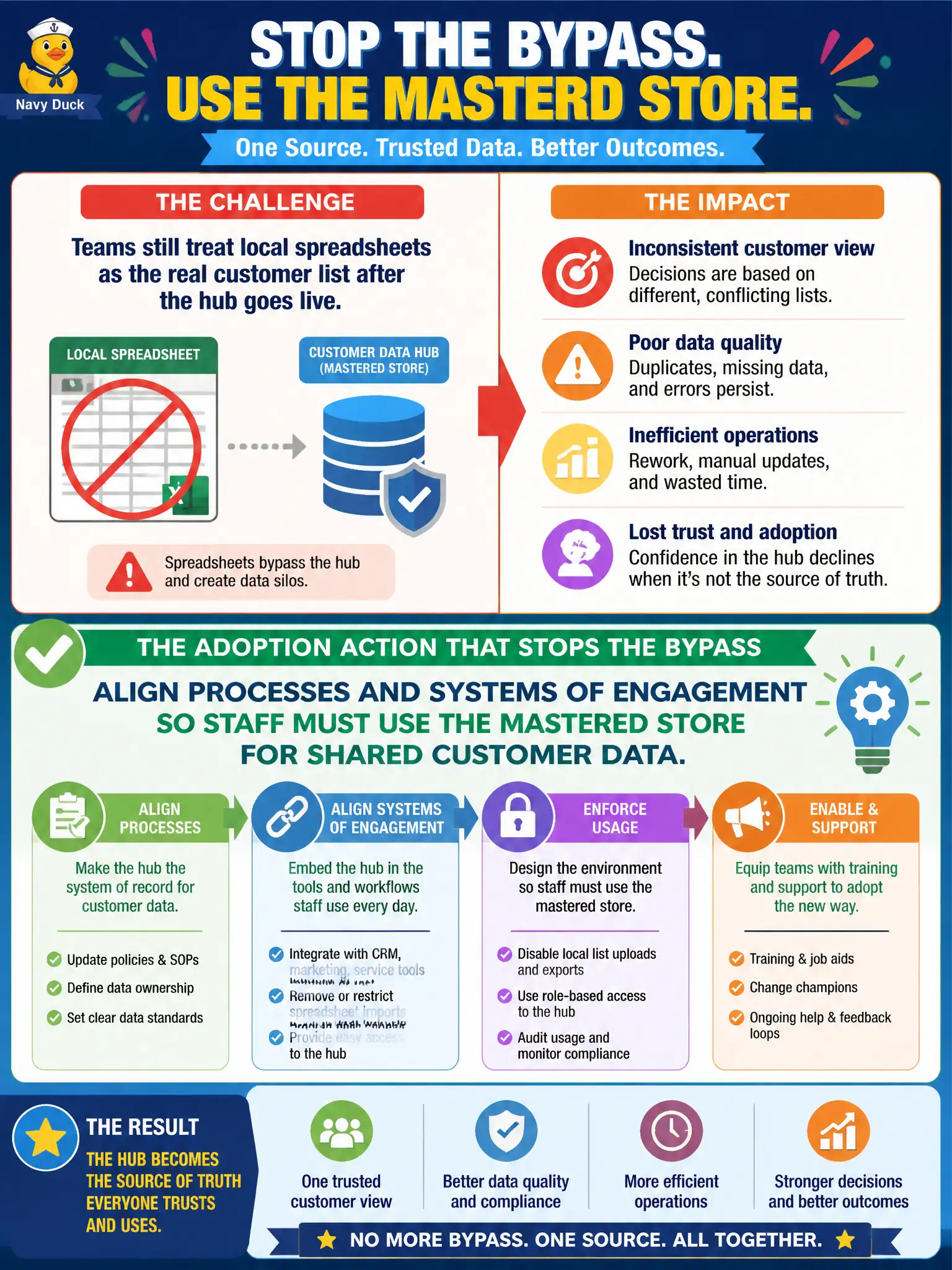
Teams still treat local spreadsheets as the real customer list after the hub goes live. What adoption action best addresses the bypass?
Select an answer to reveal the explanation.
Short Explanation
If the spreadsheet is still the real system, the hub is just expensive wallpaper. Rewire daily work so people actually use the master.
Full Explanation
When teams still treat local spreadsheets as the real customer list after the hub goes live, the best adoption action is to align processes and systems of engagement so staff must use the mastered store for shared customer data. Technology alone does not retire shadow lists. Congratulating teams for maintaining private shadow lists indefinitely fails adoption. Turning off the hub and reverting to email attachments abandons the program. Punishing reporting users who read from the hub for analytics discourages the desired behavior. Exam caveat: MDM adoption requires process and system-of-engagement alignment, not only a live hub. Operational check: point intake screens and official reports at the hub, retire spreadsheet feeds from SOPs, and monitor shadow-list usage. Pair enablement training with municipal policy that the golden store is authoritative for shared customer attributes. Keep verification evidence with the municipal runbook so audits can prove the chosen control was applied as designed and that rejected alternatives would have left city services exposed to the failure modes described above. Keep verification evidence with the municipal runbook so audits can prove the chosen control was applied as designed and that rejected alternatives would have left city services exposed to the failure modes described above.