
Only a shared core of party attributes should be mastered, while volatile order details stay in transactional systems. Which retrieval pattern fits?
Select an answer to reveal the explanation.
Short Explanation
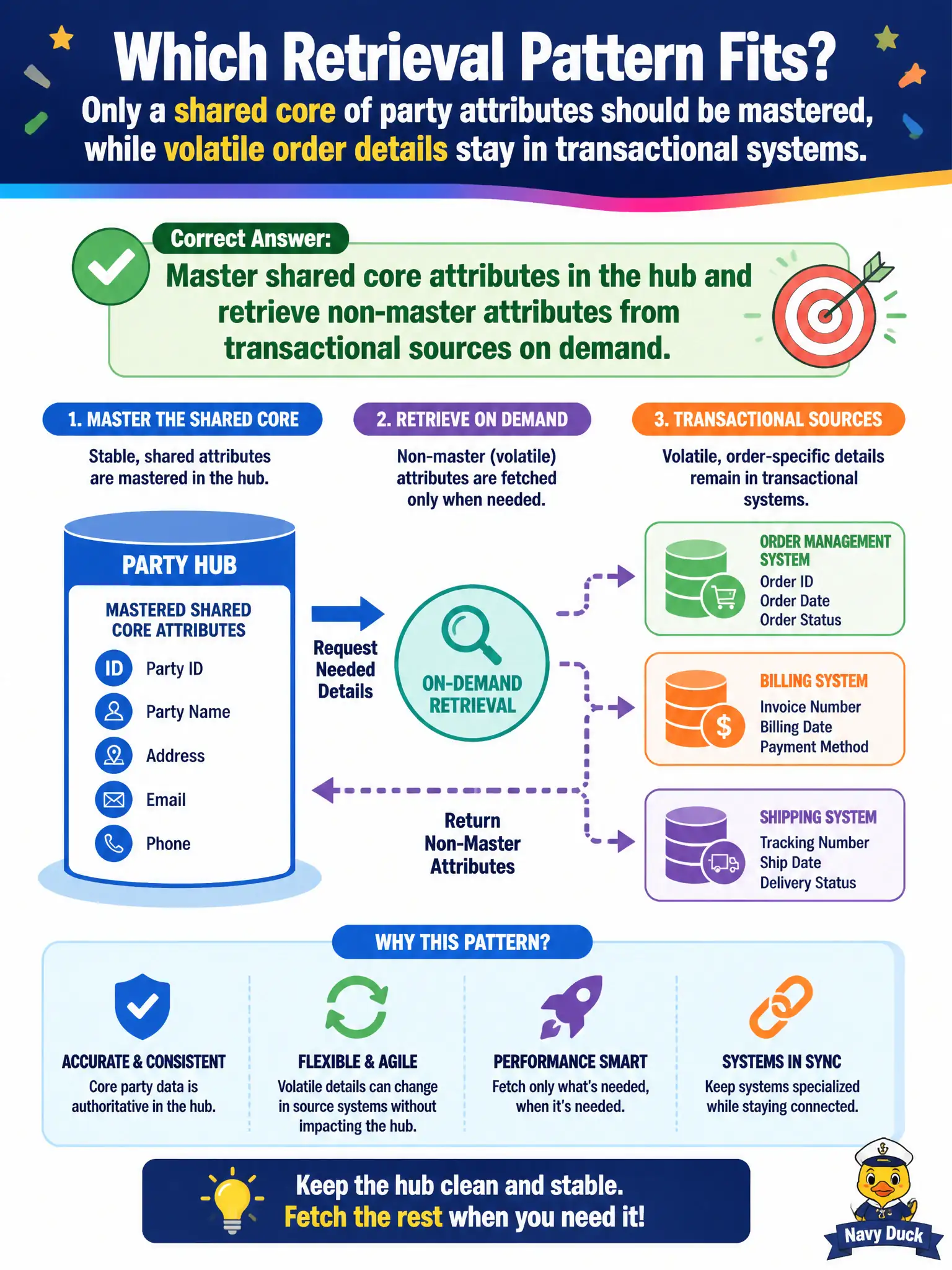
Don’t park the whole warehouse in the golden record. Master the shared core; pull the rest from transactional systems when you need it.
Full Explanation
When only a shared core of party attributes should be mastered while volatile order details stay transactional, the fitting retrieval pattern is to master shared core attributes in the hub and retrieve non-master attributes from transactional sources on demand. Civic MDM should not become a dumping ground for every fact. Duplicating every transactional fact into the hub nightly regardless of volatility bloats the master and fights change velocity. Refusing to master any attributes and querying only screenshots fails the mastering mission. Moving the entire ERP database into a single ungoverned spreadsheet fails governance outright. Exam caveat: master the shared core; leave volatile transactions in source systems with on-demand retrieve. Operational check: publish the mastered attribute list, block hub loading of volatile order lines, and implement retrieve APIs for details. Review the split with application owners in the municipal architecture board. Keep verification evidence with the municipal runbook so audits can prove the chosen control was applied as designed and that rejected alternatives would have left city services exposed to the failure modes described above. Keep verification evidence with the municipal runbook so audits can prove the chosen control was applied as designed and that rejected alternatives would have left city services exposed to the failure modes described above.