
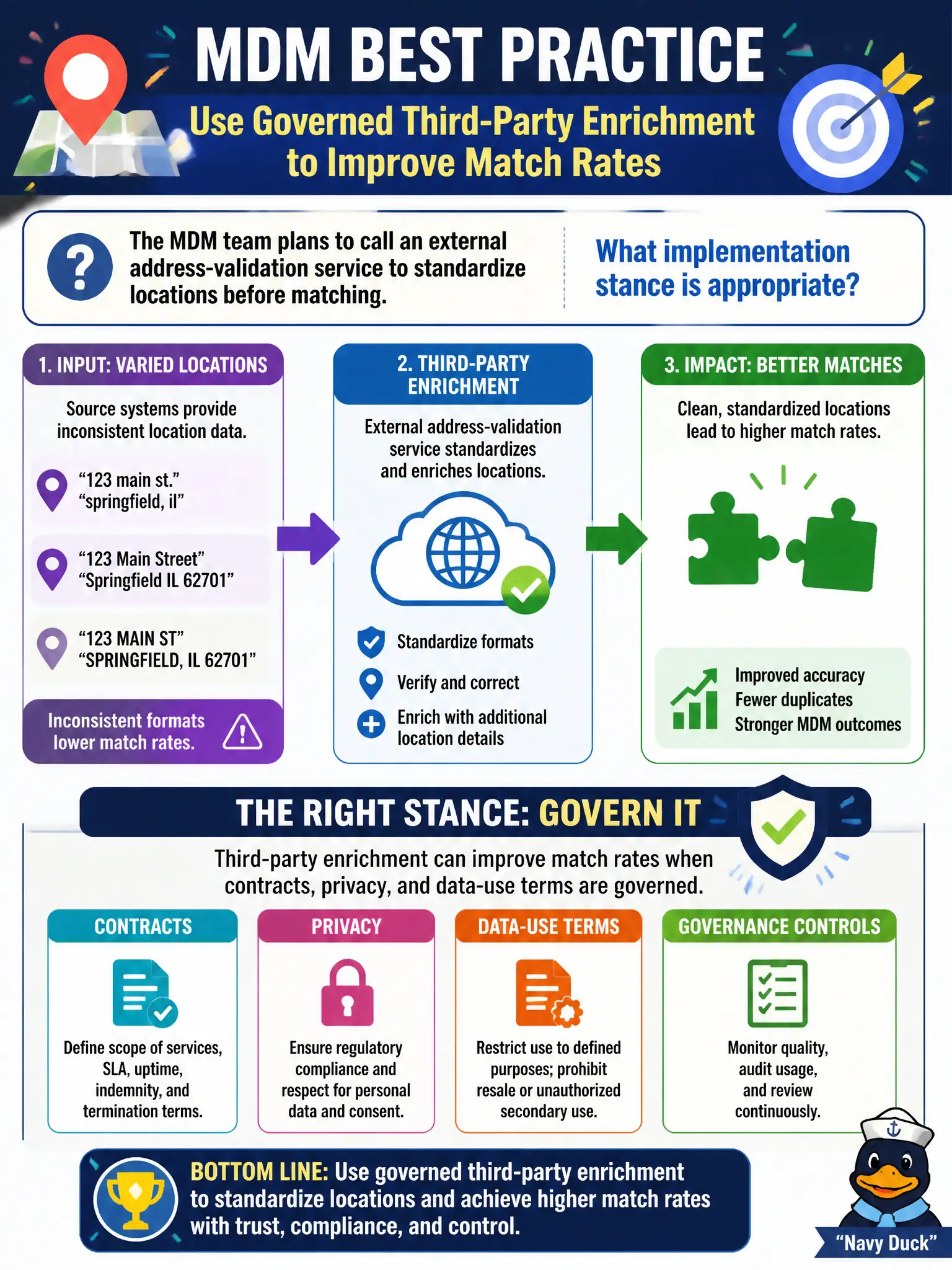
The MDM team plans to call an external address-validation service to standardize locations before matching. What implementation stance is appropriate?
Select an answer to reveal the explanation.
Short Explanation
A good address scrubber is like sending the map to a specialist cleaner—match rates climb when the street lines make sense. Still, read the contract and watch privacy; outside help is not a free pass. Enrichment assists stewards; it does not fire them.
Full Explanation
Calling an external address-validation service to standardize locations before matching is appropriate when third-party enrichment can improve match rates and contracts, privacy, and data-use terms are governed. Civic MDM may use enrichment under controlled agreements. Claiming external enrichment is always forbidden in the public sector regardless of contracts fails; prohibition is not absolute when properly governed. Claiming enrichment replaces internal stewardship or match thresholds fails; enrichment is an input, not a governance substitute. Storing validated addresses only in vendor clouds and never returning them to the golden record fails the point of enrichment for municipal masters. Exam caveat: third-party enrichment is allowed with governance of contracts and privacy—not a blanket ban or a stewardship replacement. Operational check: execute a DPA/contract review, minimize data sent, log enrichment use, and write standardized addresses back under stewardship rules. Revalidate vendor performance periodically against municipal address samples. Keep verification evidence with the municipal runbook so audits can prove the chosen control was applied as designed and that rejected alternatives would have left city services exposed to the failure modes described above.