
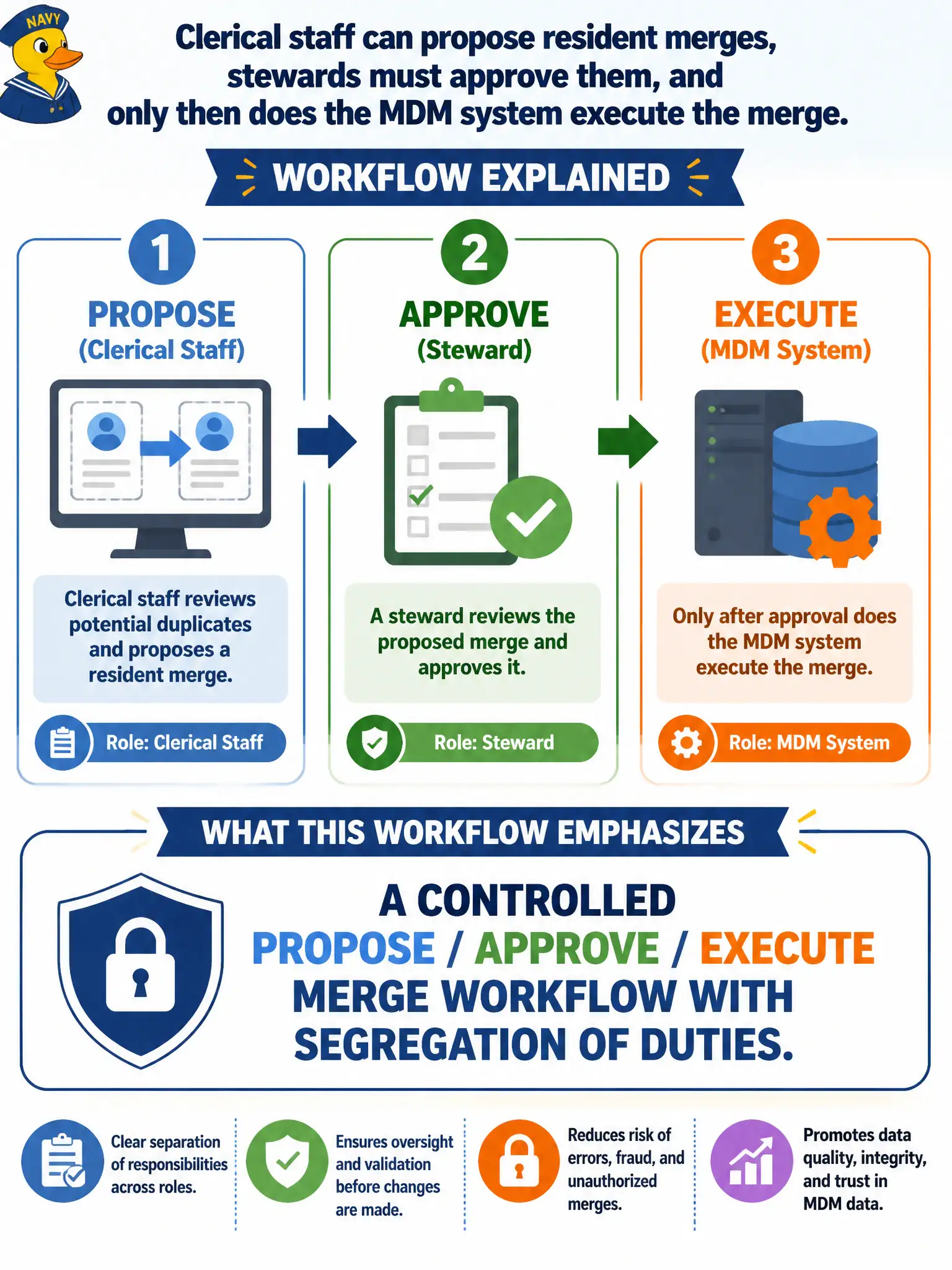
Clerical staff can propose resident merges, stewards must approve them, and only then does the MDM system execute the merge. What does this workflow emphasize?
Select an answer to reveal the explanation.
Short Explanation
One person spots the possible twin, another person says 'yes that is really the same resident,' and the system does the glue work—three beats, not one free-for-all. That is segregation of duties for merges. Speed without gates is how false positives sneak in.
Full Explanation
When clerical staff can propose resident merges, stewards must approve them, and only then the MDM system executes the merge, the workflow emphasizes a controlled propose/approve/execute pattern with segregation of duties. Civic identity changes need checks and balances. Letting any user execute merges immediately to maximize throughput without review fails quality and SoD. Hiding merge proposals from stewards until after the system has already committed changes fails the approve-before-execute control. Requiring executives to type every merge SQL statement by hand outside the MDM tool fails usability and controlled tooling without improving governance. Exam caveat: propose/approve/execute with SoD is the sound merge control pattern. Operational check: configure role permissions so proposers cannot self-approve, log each stage, and audit a sample of merges monthly. Train clerks and stewards on the municipal merge workflow so shortcuts do not bypass approval. Keep verification evidence with the municipal runbook so audits can prove the chosen control was applied as designed and that rejected alternatives would have left city services exposed to the failure modes described above. Keep verification evidence with the municipal runbook so audits can prove the chosen control was applied as designed and that rejected alternatives would have left city services exposed to the failure modes described above.