
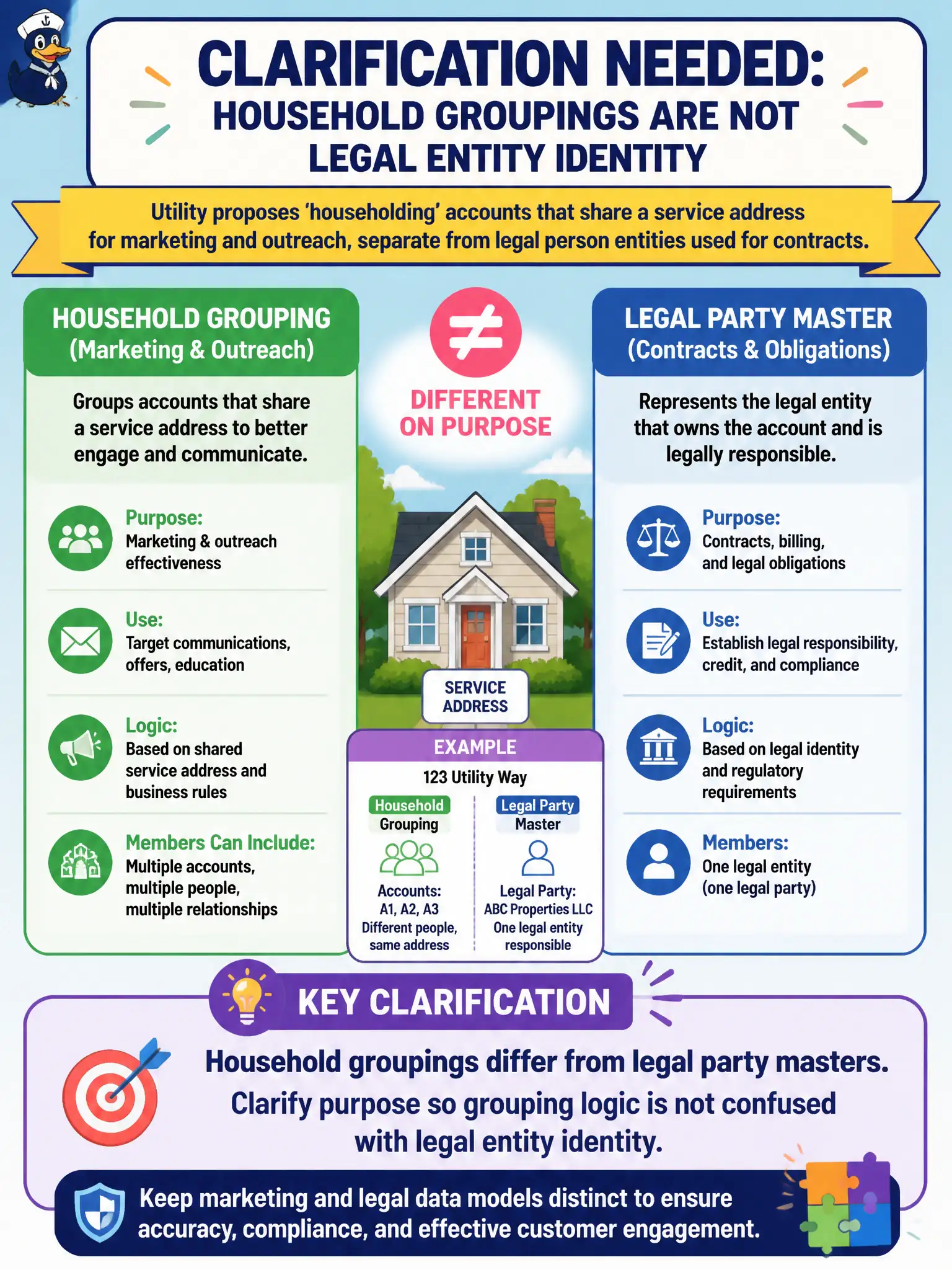
A utility proposes 'householding' accounts that share a service address for marketing and outreach, separate from legal person entities used for contracts. What clarification is needed?
Select an answer to reveal the explanation.
Short Explanation
A household is a mailing-club for the porch; a legal party is who signs the contract. Useful cousins, not twins. Say which purpose you are serving so you do not merge roommates into one legal person by accident.
Full Explanation
A utility proposing ‘householding’ accounts that share a service address for marketing and outreach, separate from legal person entities used for contracts, needs clarification that household groupings differ from legal party masters; purpose must be clear so grouping logic is not confused with legal entity identity. Civic outreach lists are not the same as contractual party masters. Treating householding and legal party masters as the same construct that must always share one golden ID fails distinct purposes and risk profiles. Declaring householding illegal in MDM and deleting all multi-person addresses fails legitimate outreach analytics when properly governed. Discarding legal party masters once householding lists exist fails contractual and billing needs. Exam caveat: householding ≠ legal party—purpose separation matters on exams. Operational check: define separate models and stewardship for legal party versus household groups, document permitted uses, and prevent outreach groupings from overriding legal identity in billing. Review privacy implications of householding with municipal counsel before production use. Keep verification evidence with the municipal runbook so audits can prove the chosen control was applied as designed and that rejected alternatives would have left city services exposed to the failure modes described above.