
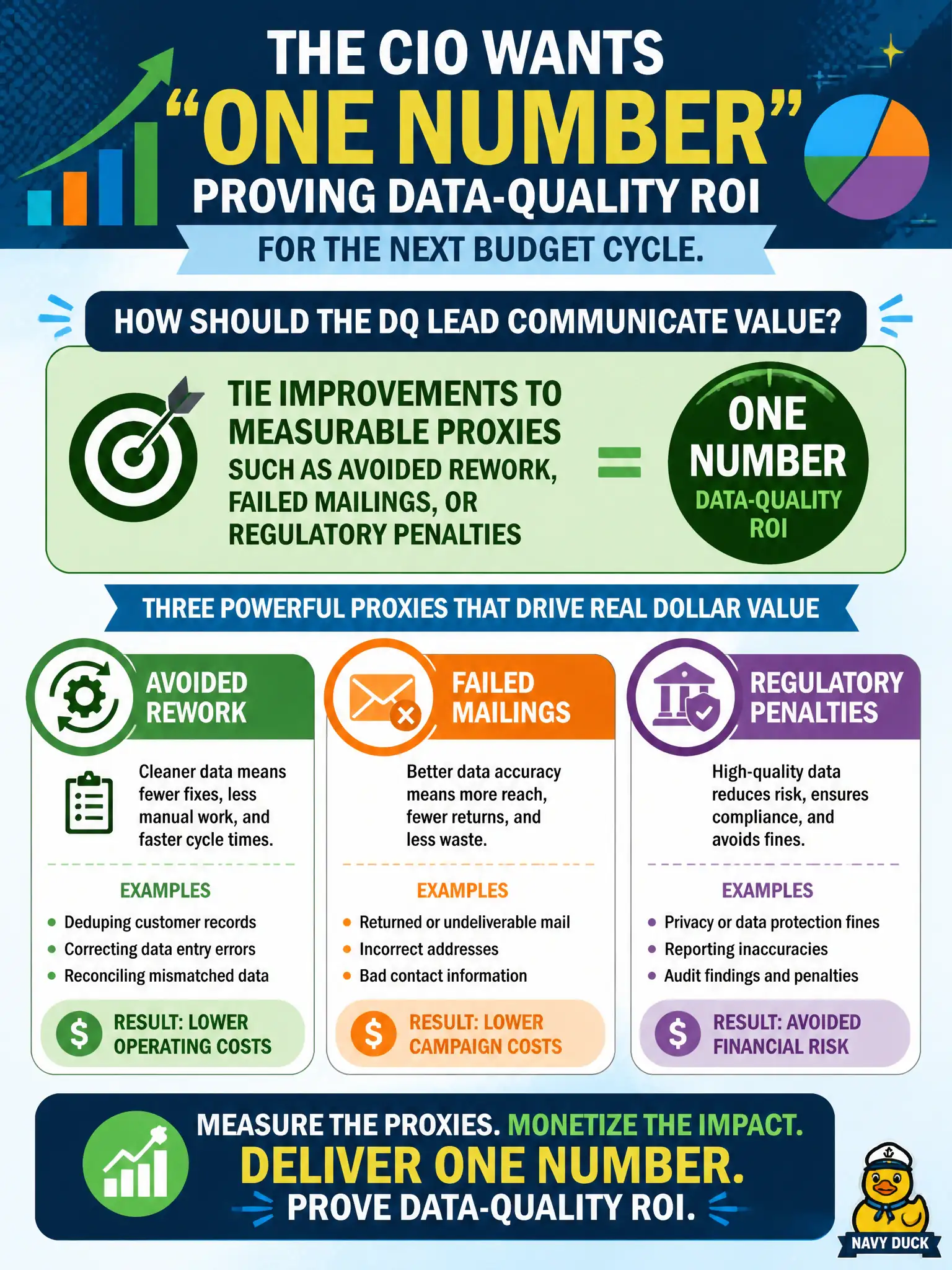
The CIO wants 'one number' proving data-quality ROI for the next budget cycle. How should the DQ lead communicate value?
Select an answer to reveal the explanation.
Short Explanation
Budget makers buy avoided pain, not vibes. Speak ROI in proxies like rework hours, returned mail, or penalty exposure you can measure. Vague 'better data' slogans rarely fund a program.
Full Explanation
DQ value for budget cycles should be tied to measurable proxies such as avoided rework, failed mailings, penalty exposure, or cycle-time improvement—not slogans alone. When a CIO wants one number proving data-quality ROI, the lead should connect improvements to municipal cost and risk outcomes that finance and council recognize. Replying only that better data is always better fails sponsorship tests in constrained public budgets where every program competes for funds. Refusing any metrics because quality value cannot be estimated concedes the budget narrative unnecessarily; imperfect but honest proxies beat none. Counting only lines of cleansing code as the ROI numerator invents a vanity engineering metric unrelated to resident outcomes or avoided penalties. Exam caveat: correlate cautiously; attribute savings with finance partners and avoid claiming causality beyond the evidence available in civic operations. Operational check: baseline failed tax-notice mailings, duplicate-payment rework hours, or state reject fees; remeasure after targeted DQ controls; and present the delta with method notes in the budget book. Civic finance partners should co-sign the measurement method so ROI claims survive audit scrutiny and council budget hearings.