
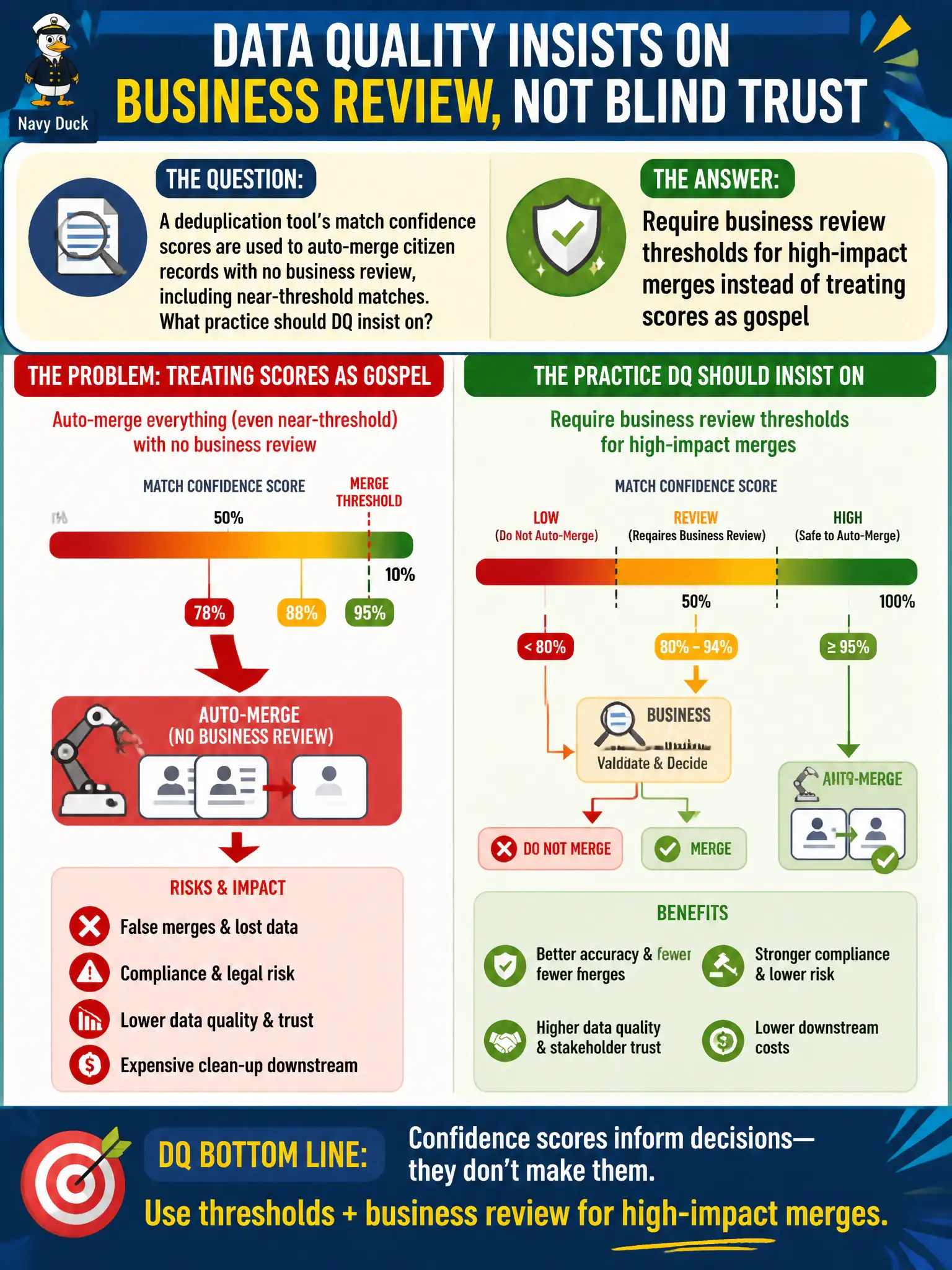
A deduplication tool's match confidence scores are used to auto-merge citizen records with no business review, including near-threshold matches. What practice should DQ insist on?
Select an answer to reveal the explanation.
Short Explanation
Match scores are weather forecasts, not marriage licenses. High-impact citizen merges need business review thresholds, not blind faith in a confidence number. Keep humans in the loop where wrong merges hurt.
Full Explanation
High-impact citizen-record merges need business review thresholds; match confidence scores are decision support, not automatic gospel for municipal identity. When a deduplication tool auto-merges civic records including near-threshold matches with no business review, DQ should insist on human stewardship for merges that can break benefits, billing, voting rolls adjacency, or service history. Treating every score above zero as an automatic merge mandate will create false merges and tangible resident harm that is hard to unwind. Disabling matching tools entirely because volumes are high abandons necessary uniqueness work; the answer is tiered automation with explicit review bands. Publishing scores only to vendors and never to stewards removes municipal accountability for identity decisions that affect public services. Exam caveat: auto-merge may be acceptable above a very high threshold with immutable audit logs; near-threshold and contested matches need review queues and appeal paths. Operational check: define auto-merge, review, and no-merge bands with the identity steward; sample recent auto-merges for false-positive rate; and halt automation if error rates exceed policy. City customer-master owners should publish the merge policy so call centers know when records may change overnight and how residents escalate identity disputes.