
A DQ assessment lists defects by system, owner, and recommended control. How should leadership treat that report?
Select an answer to reveal the explanation.
Short Explanation
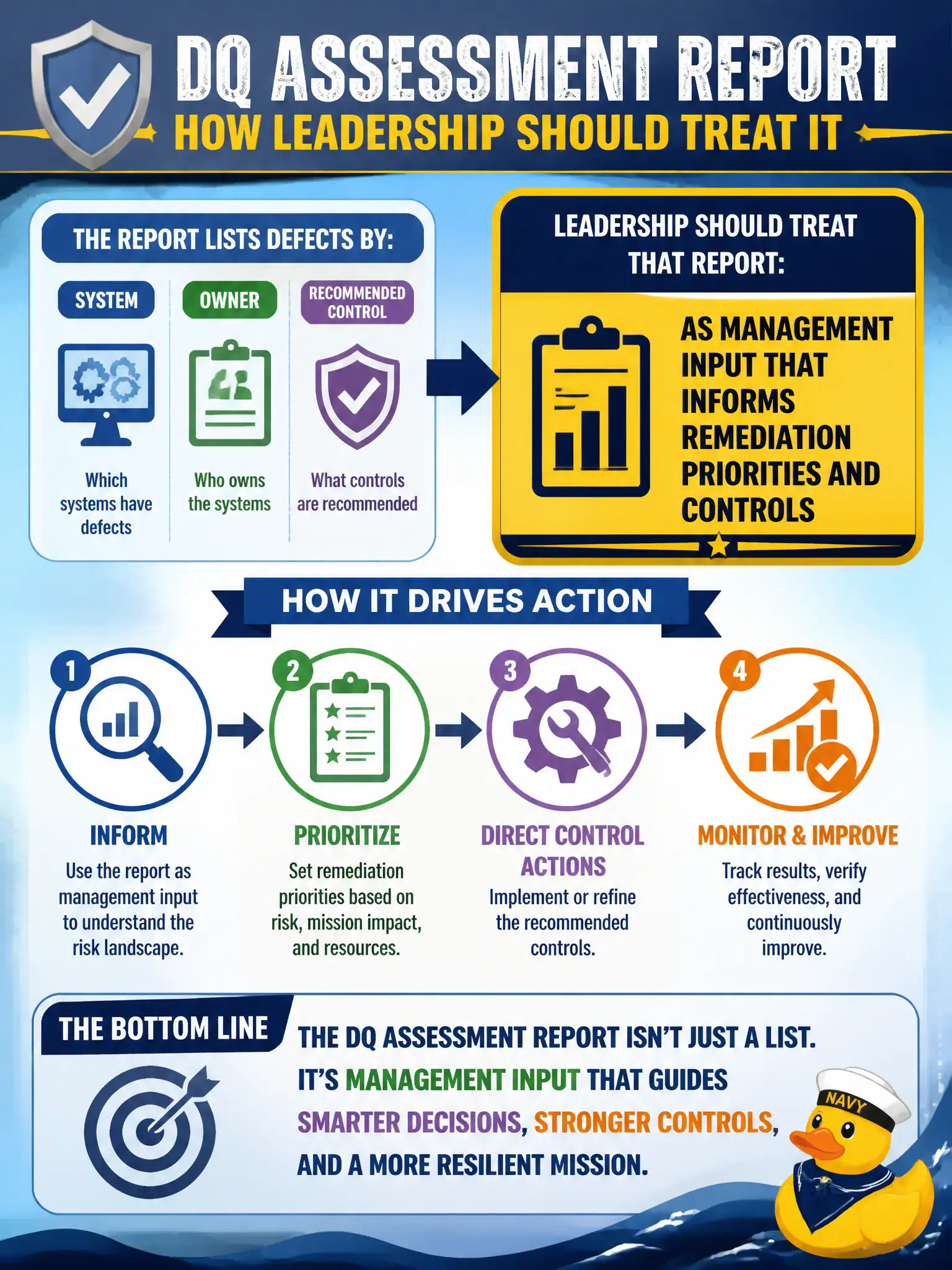
A good assessment is a maintenance clipboard, not a wanted poster. Listing defects by system, owner, and recommended control feeds remediation decisions. Treat it as management input, not theater for blame.
Full Explanation
DQ assessment reports are management inputs that inform remediation priorities and controls—not blame lists or replacements for ongoing monitoring in city programs. When an assessment lists defects by system, owner, and recommended control, civic leadership should use it to schedule work, assign owners, and fund prevention where resident impact is highest. Treating the report as a public shaming list whose only purpose is blame destroys psychological safety and reduces honest defect reporting across departments. Using one assessment as a replacement for all future monitoring and issue tracking freezes a point-in-time view and misses regressions after the binders are filed. Filing the report as optional reading outside planning forums wastes the investment and leaves risks unowned until the next incident. Exam caveat: assessments should include severity, resident or financial impact, and recommended control type so prioritization is evidence-based rather than political. Operational check: convert top findings into dated issues with owners in the DQ backlog, track closure in the monthly civic data forum, and schedule a follow-up assessment on critical systems. Department heads should be evaluated on remediation progress for their owned findings, not on whether the original report made them uncomfortable in a public meeting.