
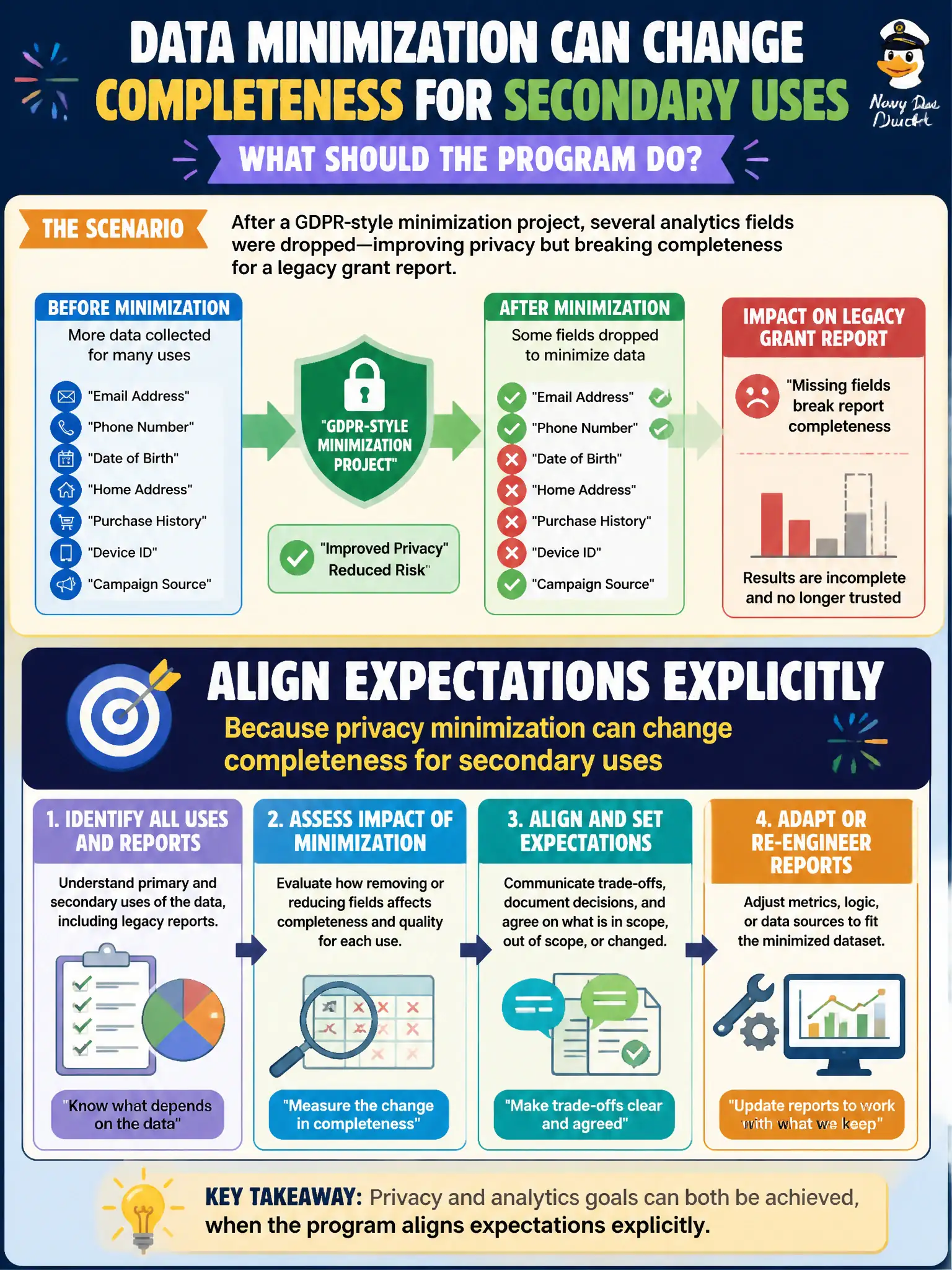
After a GDPR-style minimization project, several analytics fields were dropped—improving privacy but breaking completeness for a legacy grant report. What should the program do?
Select an answer to reveal the explanation.
Short Explanation
Trimming fields for privacy can starve a legacy report that still expected them. Minimization and completeness for secondary uses can trade off—name that trade explicitly. Realign expectations instead of pretending both goals never collide.
Full Explanation
Privacy minimization can change completeness for secondary uses; programs must align expectations explicitly rather than pretend dimensions never conflict. After a GDPR-style minimization project drops analytics fields—improving privacy but breaking completeness for a legacy grant report—the municipal program should renegotiate that secondary use’s requirements and lawful basis. Restoring every dropped field without revisiting purpose and lawful basis can reintroduce unnecessary personal data contrary to civic privacy commitments. Treating privacy goals as irrelevant to any data-quality scorecard hides real fitness trade-offs from leadership. Deleting the legacy report so completeness metrics never need updating avoids governance instead of resolving purpose, retention, and alternative measures. Exam caveat: primary operational uses and secondary analytic uses may need different field sets; document which completeness rules apply to which purpose. Operational check: inventory consumers of dropped fields, retire or redesign the grant report with privacy-preserving aggregates if possible, update DQ scorecards and glossaries, and record the decision with legal and program owners. City privacy and grant offices should jointly sign the new fitness statement so auditors see intentional alignment, not accidental breakage.