
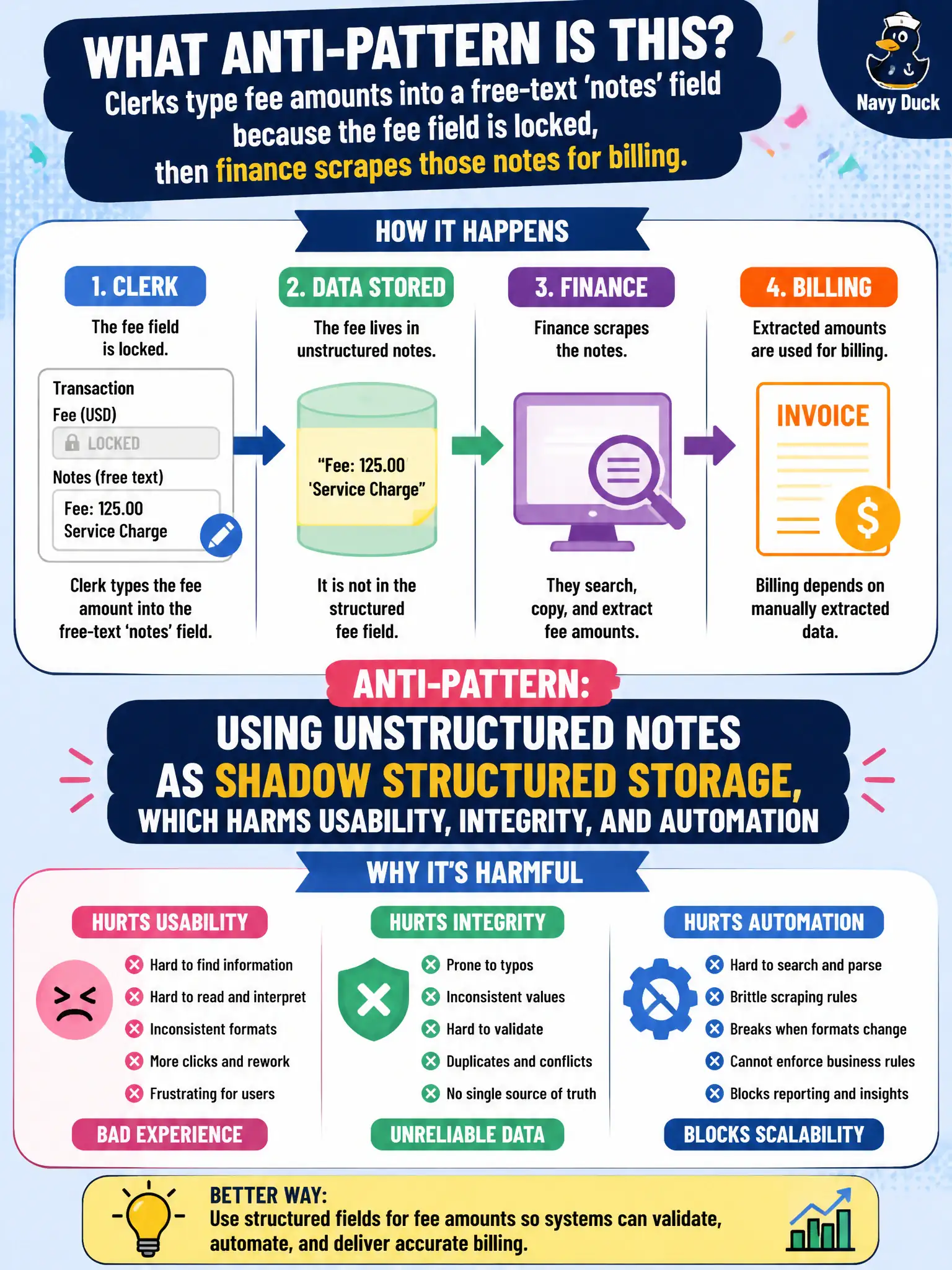
Clerks type fee amounts into a free-text 'notes' field because the fee field is locked, then finance scrapes those notes for billing. What anti-pattern is this?
Select an answer to reveal the explanation.
Short Explanation
Stuffing fee amounts into Notes is like writing the price on a napkin and calling it the cash register. Shadow structured use of free text wrecks usability, integrity, and automation. Put fees in a real field with rules.
Full Explanation
Using unstructured notes as shadow structured storage harms usability, integrity, and automation in municipal finance and permitting. When clerks type fee amounts into free-text notes because the fee field is locked, and finance scrapes those notes for billing, the city creates a brittle, unauditable shadow ledger. Calling this a preferred pattern that keeps structured fields free of monetary values inverts good design and blocks reliable civic billing. Treating free-text fields as always the system of record for fees contradicts controlled financial data practices. Framing note-scraping as a privacy control that intentionally hides fees from structured reports confuses concealment with protection and breaks transparency. Exam caveat: temporary workarounds during outages need time limits and mandatory write-back; chronic note-as-database patterns need UI unlocks and process redesign. Operational check: unlock or redesign the fee field with proper controls, prohibit monetary amounts in notes via guidance and sampling, backfill structured fees from recent notes under finance stewardship, and monitor recurrence. Treasurers should refuse to accept scraped-note billing as a permanent architecture for public funds.