
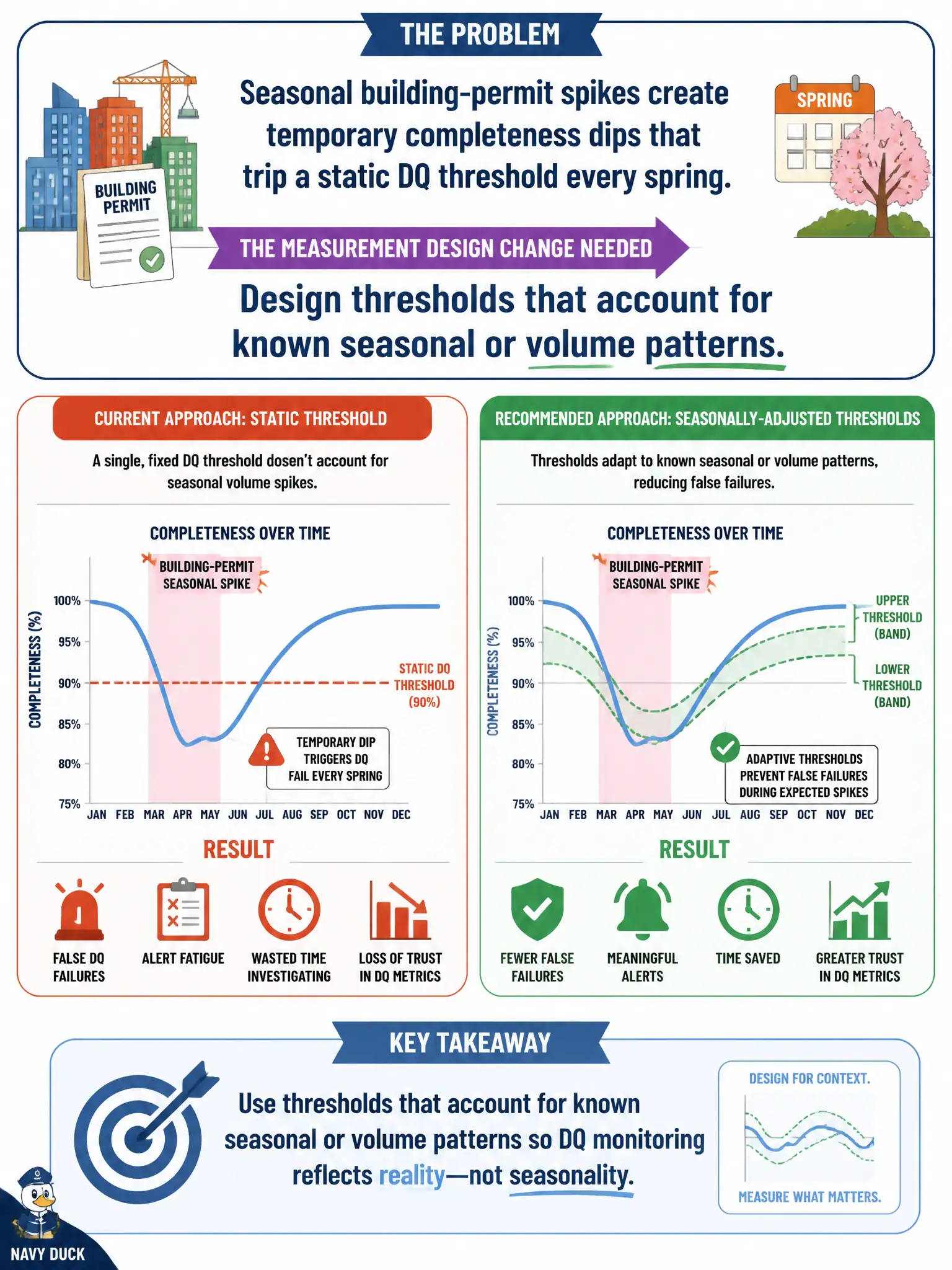
Seasonal building-permit spikes create temporary completeness dips that trip a static DQ threshold every spring. What measurement design change is needed?
Select an answer to reveal the explanation.
Short Explanation
Spring permit rushes make static completeness alarms cry wolf. Thresholds should respect known seasonal or volume patterns so real failures still stand out. Design measurement for the calendar the business actually lives.
Full Explanation
Thresholds should account for known seasonal or volume patterns so monitoring reflects real civic process behavior instead of punishing expected cycles. When seasonal building-permit spikes create temporary completeness dips that trip a static DQ threshold every spring, the measurement design—not the season itself—needs adjustment with the permitting steward. Disabling completeness checks during busy seasons permanently abandons control exactly when volume and error risk often rise for applicants and inspectors. Raising every threshold to 100 percent so seasonality never matters creates constant false alarms and steward fatigue that erodes trust in the scorecard. Ignoring seasonal patterns because static thresholds are always fair misapplies fairness and undermines the usefulness of DQ monitoring for leadership. Exam caveat: document the seasonal model and review it annually; do not hide true process failures inside an overly loose seasonal allowance that excuses capture defects. Operational check: chart completeness by week across prior years, set seasonal bands or volume-adjusted thresholds with the permitting steward, and annotate dashboards when the seasonal rule is active. Municipal permitting leaders should see both raw and seasonally adjusted views so spring volume is explained without excusing genuine capture failures that harm applicants.