
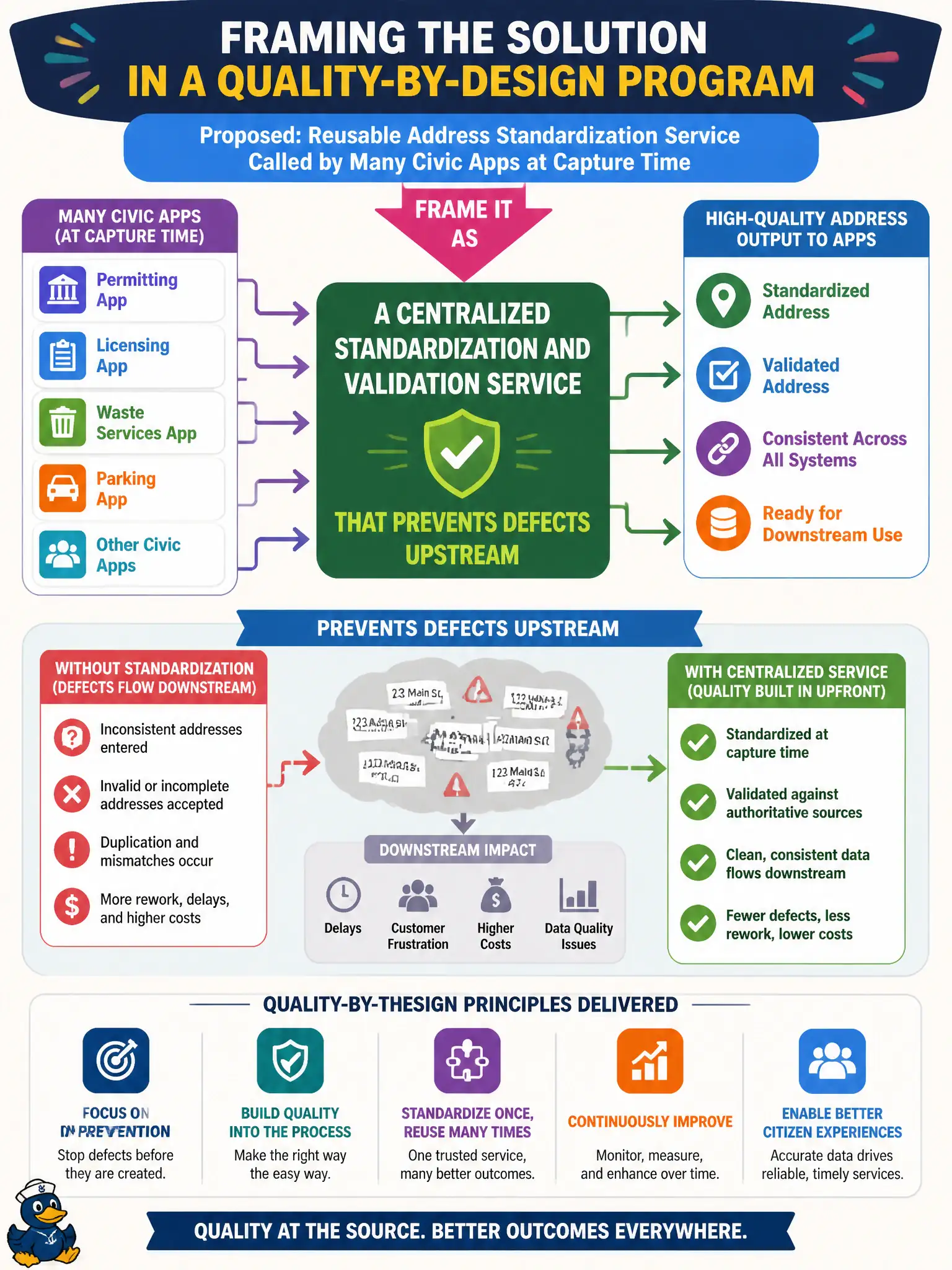
IT proposes a reusable address standardization service that many civic apps will call at capture time. How should this be framed in a quality-by-design program?
Select an answer to reveal the explanation.
Short Explanation
One shared address service is the city garage that tunes every department's vehicles the same way. Centralized standardization at capture is a prevention pattern. Quality-by-design loves reusable validation services many apps can call.
Full Explanation
Quality by design often includes centralized standardization and validation services that prevent defects upstream across many civic applications. When IT proposes a reusable address standardization service that municipal apps call at capture time, the right framing is prevention through shared validation—not a one-off annual audit script or a substitute for stewardship. Treating the service as a report that only runs after annual audits leaves daily capture unprotected and recreates warehouse cleanup cycles. Using the service as a reason to ban all local edits even when no match returns can block legitimate new addresses unless an exception workflow exists. Claiming the service replaces all business rules and stewardship accountability over-automates governance and leaves nobody owning residual defects. Exam caveat: central services need SLAs, exception handling, and versioned reference data; a shared API is not automatically high quality. Operational check: route new address entry through the service in pilot departments, measure match and exception rates, define stewarded override rules, and expand only after civic addressing owners accept the metrics. City enterprise architecture and the assessor’s address authority should jointly publish which systems must call the service before go-live of new public portals.