
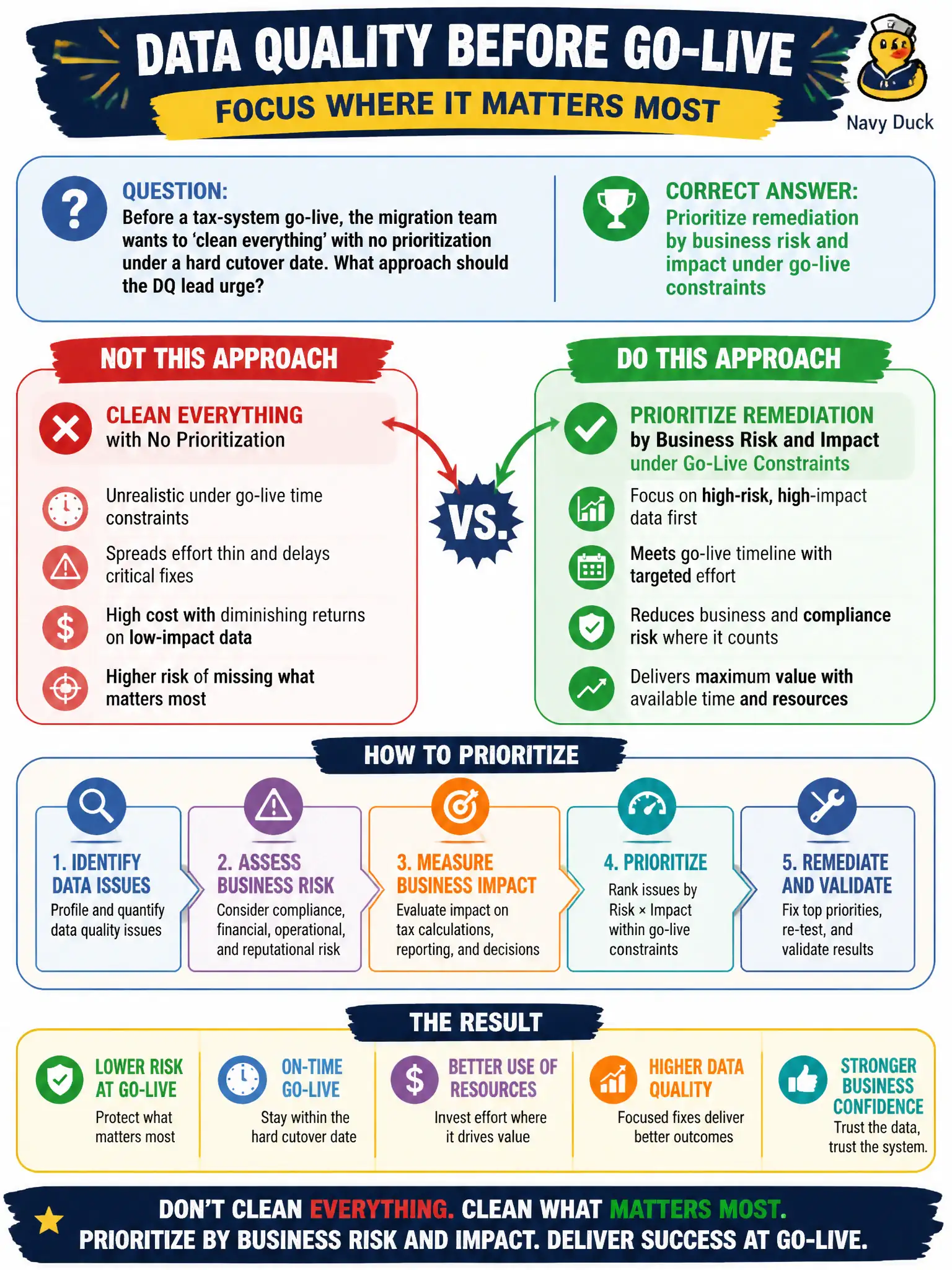
Before a tax-system go-live, the migration team wants to 'clean everything' with no prioritization under a hard cutover date. What approach should the DQ lead urge?
Select an answer to reveal the explanation.
Short Explanation
Trying to polish every record before cutover is like detailing the whole fleet the night before a parade—something critical gets skipped. Under a hard go-live, remediate by business risk and impact. Prioritize what breaks billing, safety, or compliance first.
Full Explanation
Remediation under a hard cutover should be prioritized by business risk and impact, not by equal scrubbing of every column before a tax-system go-live. Urging the migration team to 'clean everything' with no prioritization threatens schedule and still may miss billing-critical and notice-critical defects that harm taxpayers. Cleaning every noncritical column first so executives see volume of fixes optimizes theater over protecting assessment accuracy and statutory notice delivery. Skipping remediation entirely and relying on users to notice errors after cutover shifts risk onto residents and damages trust in civic systems. Equalizing effort across all tables regardless of regulatory or billing exposure ignores triage and scarce cutover capacity. Exam caveat: document accepted residual risk for lower-priority defects with owners and dated post-go-live commitments visible to auditors. Operational check: rank migration defects by tax calculation, notice delivery, and legal exposure; clear the top tier before cutover; park the rest on a stewarded backlog with explicit dates. Assessors and treasurers should jointly sign the priority list so civic go-live decisions are risk-based, auditable, and defensible to council if residual issues surface.