
Daily DQ dashboards turn red when thresholds fire, but nobody is on-call and no playbook assigns owners. What management failure is this?
Select an answer to reveal the explanation.
Short Explanation
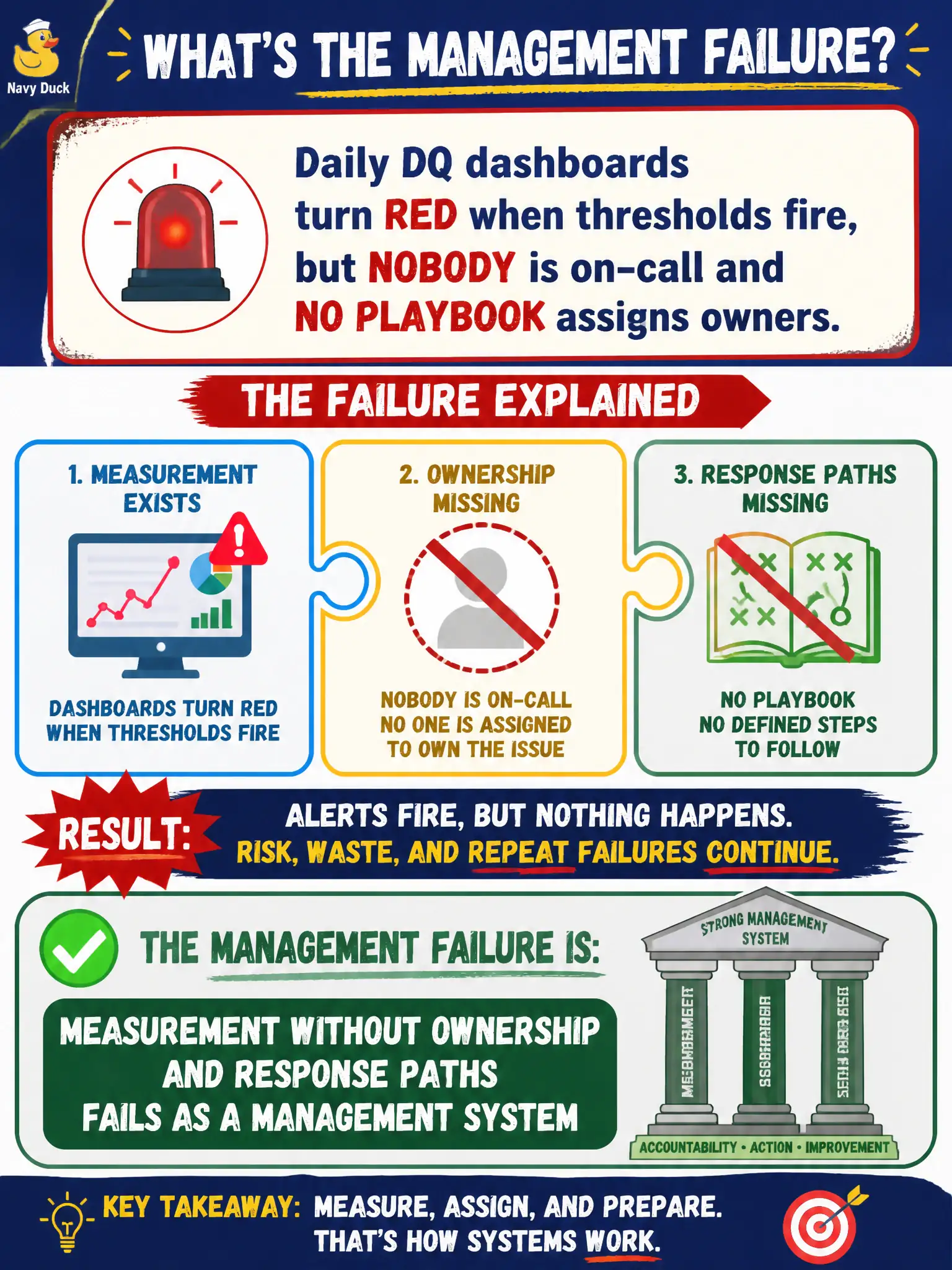
A red siren with nobody on the ladder is just expensive wallpaper. Dashboards without owners and response playbooks do not manage quality. Measurement needs an operating model that answers when thresholds fire.
Full Explanation
Measurement without ownership and response paths fails as a management system—even when daily DQ dashboards turn red correctly on civic metrics. If thresholds fire but nobody is on-call and no playbook assigns owners, the municipal program has visibility without control and red tiles become wallpaper. Calling the situation excessive ownership that overstaffs routine monitoring misreads the absence of any response design and accountability. Claiming dashboards alone constitute a complete operating model confuses display with decision rights, escalation, and remediation capacity. Designing for red metrics to self-remediate overnight without owners is wishful thinking, not public-sector operations. Exam caveat: severity should drive response time; not every yellow tile needs midnight pages, but critical reds affecting billing, safety, or legal reporting need named coverage. Operational check: map each threshold to an owner, backup, and playbook step; run a monthly fire-drill on a synthetic red alert; and track mean time to acknowledge civic DQ alerts. CIO and department leads should fund business-hours or on-call coverage proportional to resident impact and financial exposure, then review missed acknowledgements in the governance forum.