
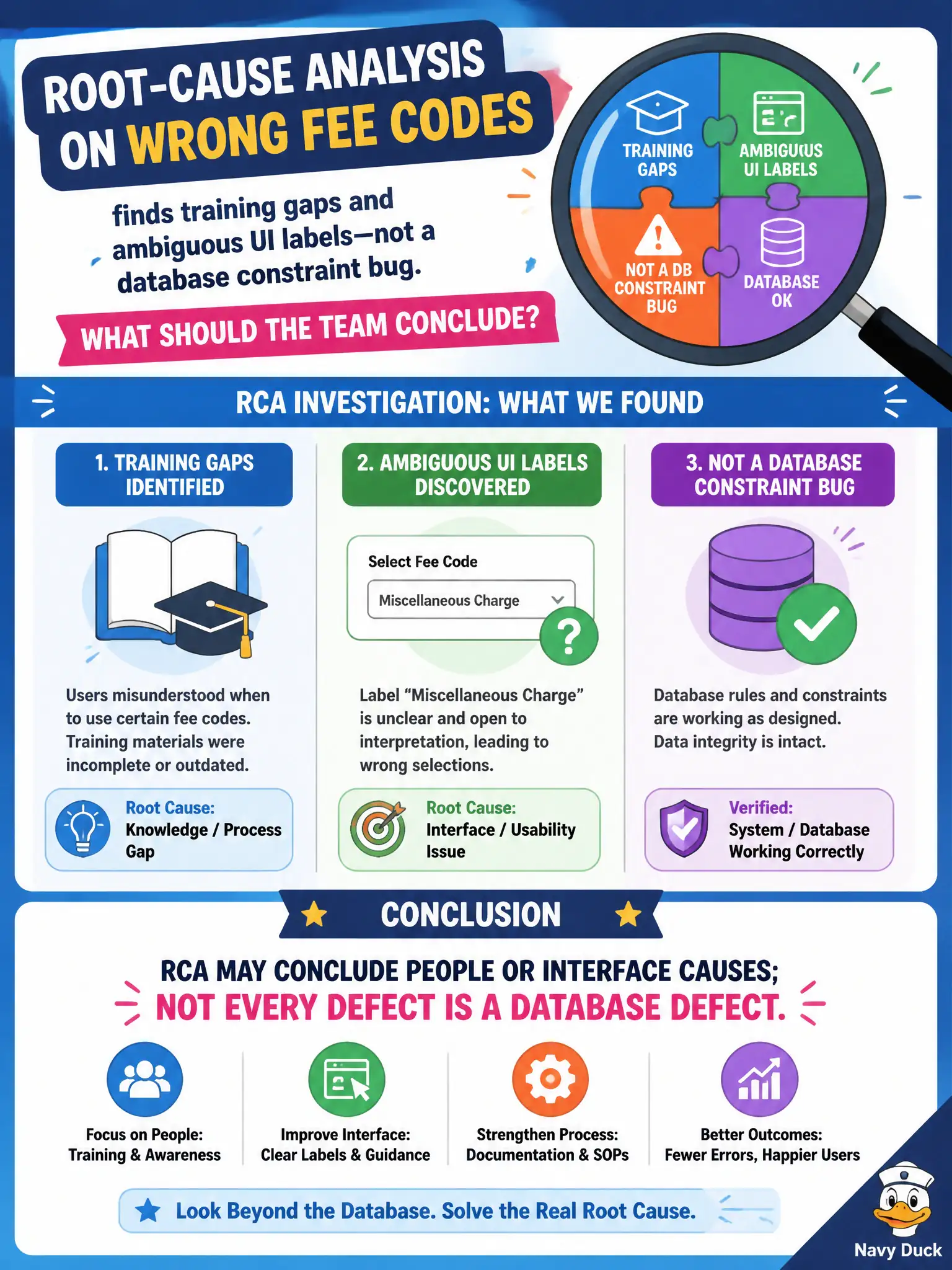
Root-cause analysis on wrong fee codes finds training gaps and ambiguous UI labels—not a database constraint bug. What should the team conclude?
Select an answer to reveal the explanation.
Short Explanation
Sometimes the database is fine and the form label reads like a riddle. Root cause can land on training gaps or ambiguous UI—not every defect is a schema bug. Fix the people and interface paths when that is what RCA finds.
Full Explanation
Root-cause analysis may conclude people or interface causes; not every defect is a database constraint bug in municipal fee and permitting systems. When RCA on wrong fee codes finds training gaps and ambiguous UI labels—not a schema bug—the team should accept those causes and remediate training and UX for cashiers and clerks. Declaring RCA failed because only database defects count as true root causes artificially narrows cause classes taught in information-management practice. Discarding training and UX findings until a schema bug appears delays the fixes that would stop recurring miscodes and resident billing disputes. Claiming ambiguous labels prove the issue is solely network latency misattributes cause without evidence and wastes infrastructure effort. Exam caveat: document cause class and corrective action type; mixed causes are common, and more than one control may be required for durable civic improvement. Operational check: rewrite confusing fee labels, add in-app guidance, retrain affected clerks, remeasure miscode rate for two billing cycles, and only then reopen schema changes if errors persist. Finance and UX owners should share the RCA record so budget covers interface and training fixes, not only database tickets that will not address the true drivers.