
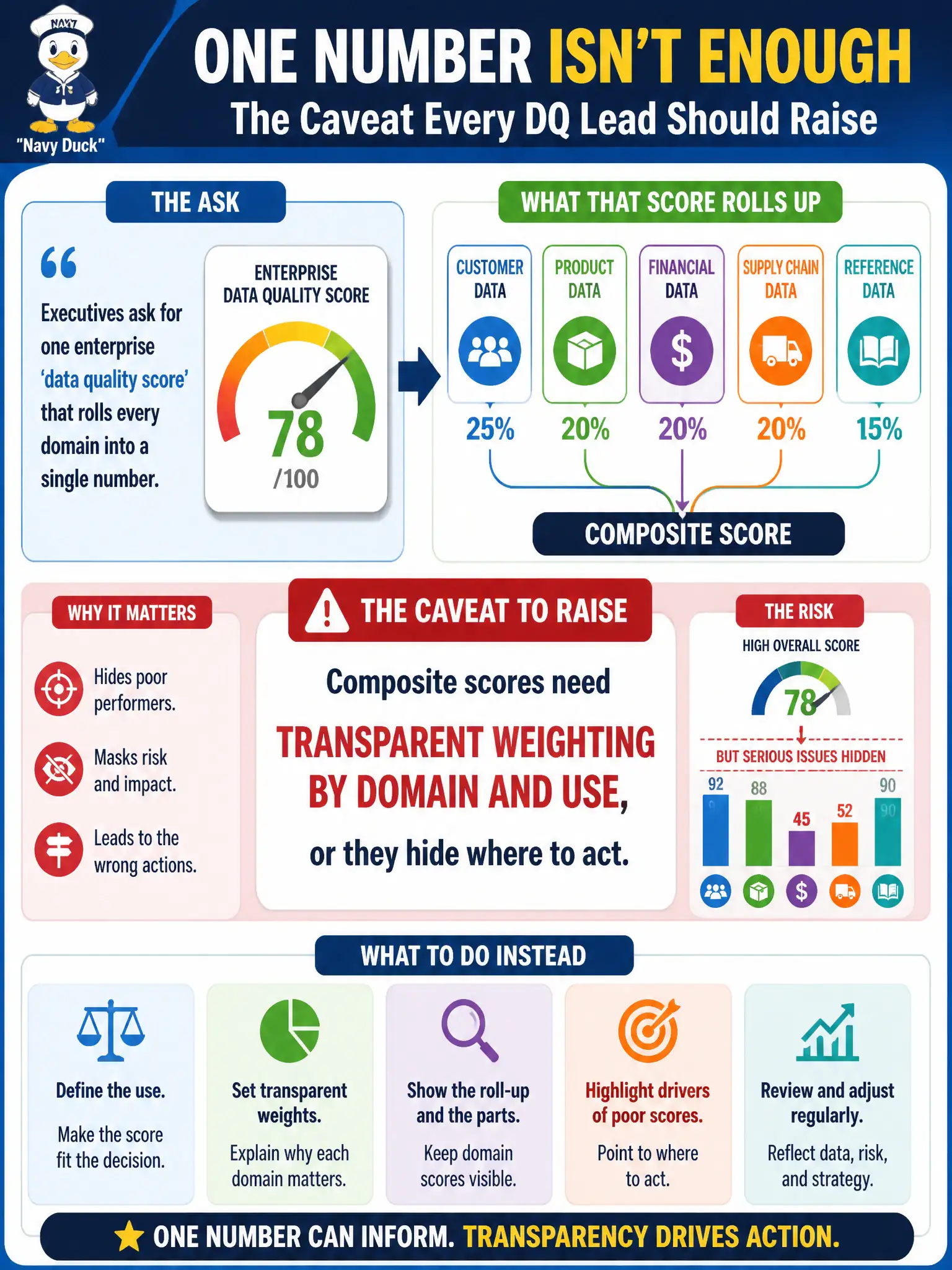
Executives ask for one enterprise 'data quality score' that rolls every domain into a single number. What caveat should the DQ lead raise?
Select an answer to reveal the explanation.
Short Explanation
One blended score without weights is a smoothie that hides whether you put in spinach or candy. Enterprise composites can help, but only with transparent weighting by domain and use. Opaque averages bury where to act.
Full Explanation
Composite enterprise quality scores need transparent weighting by domain and use, or they hide where municipal teams must act. When executives ask for one number rolling every domain into a single score, the DQ lead should raise that caveat rather than celebrate an opaque average that conceals red critical elements. Claiming a single opaque average is ideal because it hides conflicting priorities undermines accountability across departments that serve different resident outcomes. Saying composite scores are forbidden in information management practice is too absolute; composites can help communication if methodology, weights, and sub-scores remain visible. Asserting weighting is unnecessary if every metric uses the same percentage scale ignores different criticality of billing accuracy versus low-risk log completeness. Exam caveat: never let a green composite override a red critical-element breach for safety, tax, or regulatory data in council or CIO reporting. Operational check: if leadership insists on a rollup, publish weights, domain sub-scores, and the worst CDE breaches beside the headline number in the monthly civic data pack. City executives should be briefed that the composite is a communication aid for sponsors, not a substitute for domain stewardship decisions or issue escalation.