
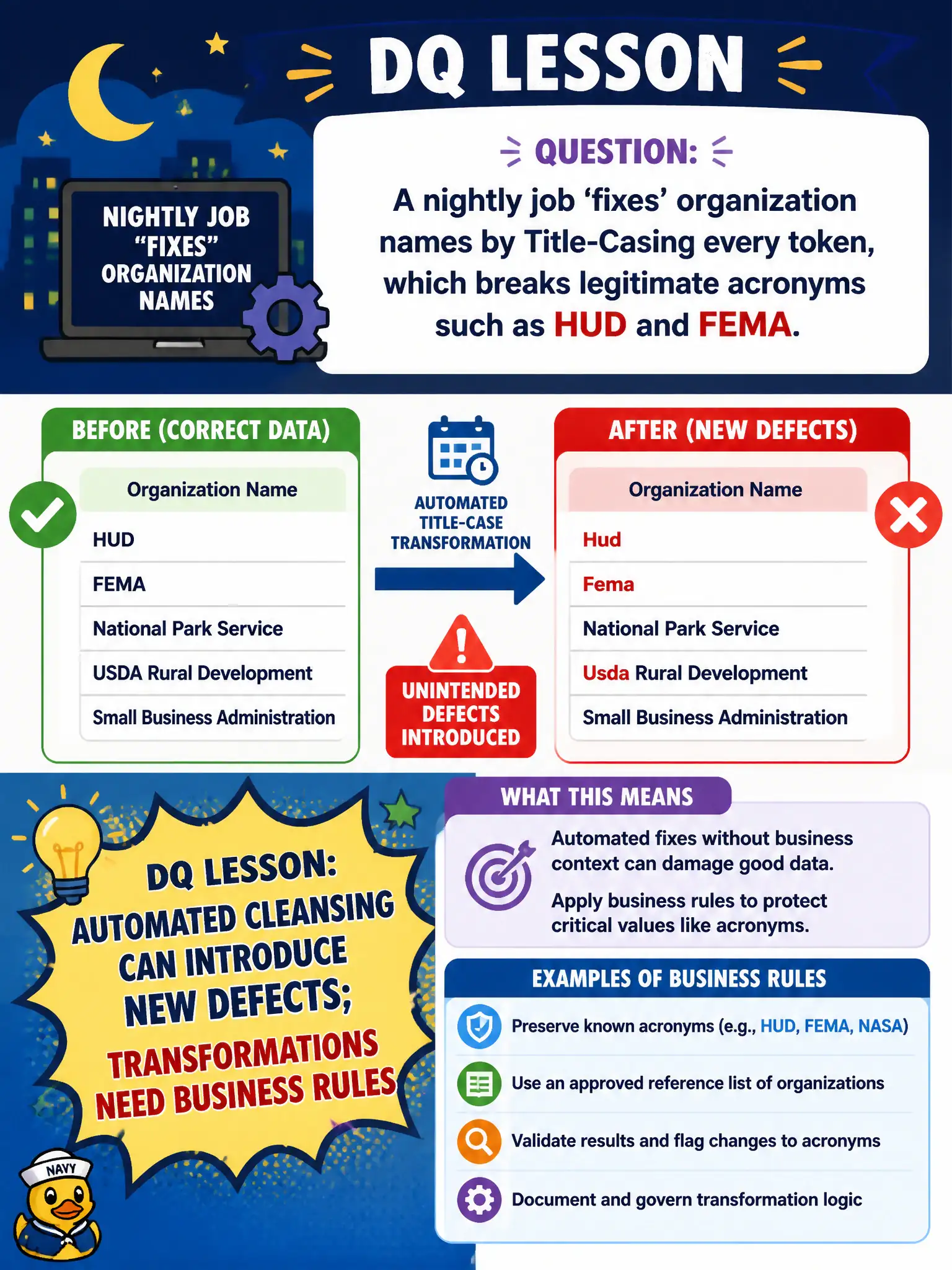
A nightly job 'fixes' organization names by Title-Casing every token, which breaks legitimate acronyms such as HUD and FEMA. What DQ lesson applies?
Select an answer to reveal the explanation.
Short Explanation
Auto Title-Case that turns HUD into Hud is a robot with a paintbrush and no art brief. Automated cleansing can invent new defects when it ignores legitimate acronyms. Transformations need business rules, not blind casing jobs.
Full Explanation
Automated cleansing can introduce new defects; transformations need business rules that respect legitimate civic data patterns and legal names. A nightly job that Title-Cases every organization-name token and breaks acronyms such as HUD and FEMA illustrates harmful over-cleansing in government directories and partner lists. Assuming any automated casing change improves usability and should run unchecked ignores domain exceptions common in municipal and federal entity names. Removing acronyms from master data so casing jobs stay simple destroys meaningful identifiers that residents, auditors, and partner agencies recognize. Claiming Title-casing is always safer than leaving source casing intact is false when acronyms, legal entity styles, and bilingual names matter for service delivery. Exam caveat: maintain allow-lists for known acronyms and legal suffixes; test cleansing on a stewarded sample before enterprise rollout across civic systems. Operational check: compare pre/post samples for agency acronyms, add exception rules, pause the job if exception fail rate rises, and require steward sign-off on the transformation specification. Municipal MDM or DQ owners should version cleansing rules like application code, with rollback capability when public-facing directories suddenly look wrong to partners.