
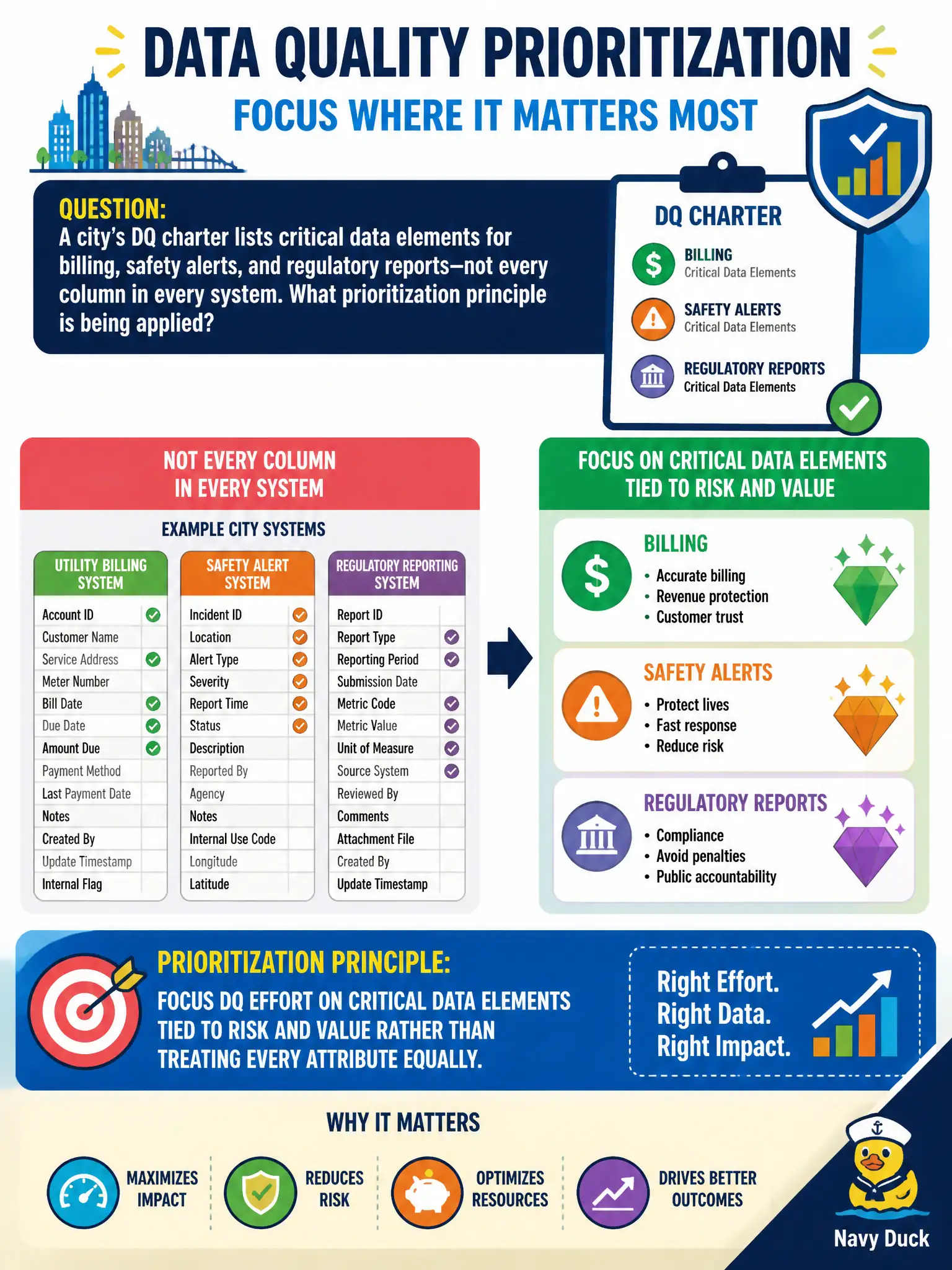
A city's DQ charter lists critical data elements for billing, safety alerts, and regulatory reports—not every column in every system. What prioritization principle is being applied?
Select an answer to reveal the explanation.
Short Explanation
You don't polish every pebble when the bridge bolts are loose. A DQ charter that names billing, safety, and regulatory elements is prioritizing risk and value. Critical data elements focus scarce effort where failure hurts.
Full Explanation
DQ effort should focus on critical data elements tied to risk and value rather than treating every attribute equally across the municipal estate. A city's DQ charter that lists CDEs for billing, safety alerts, and regulatory reports—not every column in every system—applies that prioritization principle under scarce public-sector capacity. Measuring every column to the same depth so no stakeholder feels deprioritized dilutes controls where resident harm, revenue leakage, and compliance exposure concentrate. Ignoring billing and safety fields until cosmetic fields meet cosmetic thresholds inverts risk and misuses limited steward time. Deferring element selection until a single enterprise quality score exists delays protection of the highest-impact civic uses while committees debate rollups. Exam caveat: the CDE list should be reviewed as services and regulations change; prioritization is living governance, not a one-time poster on a wall. Operational check: rank candidate elements by financial, safety, and compliance impact with stewards and risk officers; publish the short CDE register with owners and thresholds; and fund measurement jobs for that list first. Council and CIO forums should ask for CDE health and open issues on those elements—not a vanity count of columns profiled—when judging whether the DQ program is working for residents.