
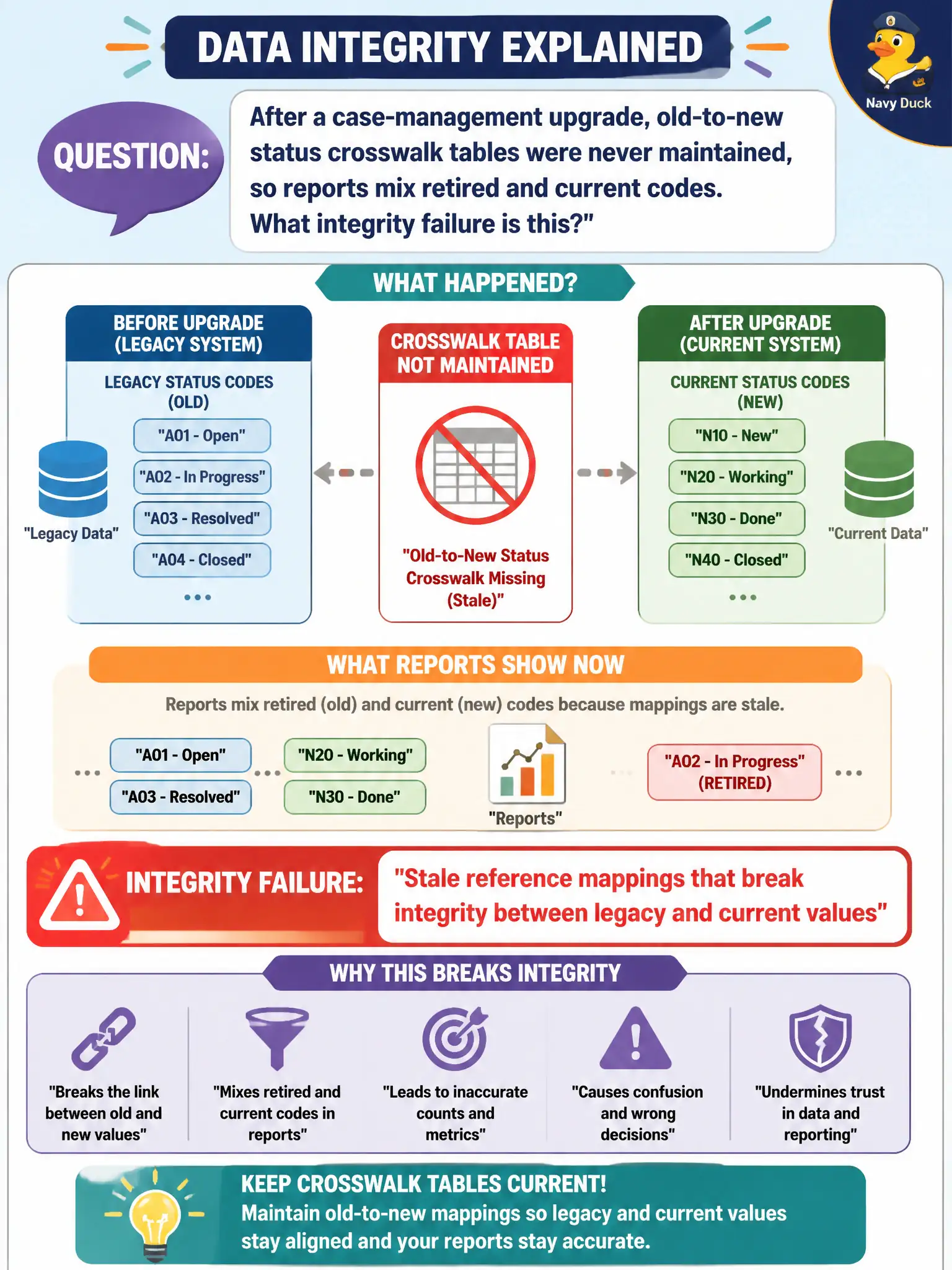
After a case-management upgrade, old-to-new status crosswalk tables were never maintained, so reports mix retired and current codes. What integrity failure is this?
Select an answer to reveal the explanation.
Short Explanation
Old maps that never get updated send every delivery to the wrong building. Stale status crosswalks after an upgrade break integrity between legacy and current codes. Reference mappings need owners and maintenance, not a one-time migration script.
Full Explanation
Stale reference mappings break integrity between legacy and current values after system upgrades—a frequent civic migration failure. When old-to-new status crosswalk tables are never maintained after a case-management upgrade, reports that mix retired and current codes illustrate that integrity failure for municipal analytics and supervisor dashboards. Calling the situation a harmless labeling issue that never affects joins or filters understates how mixed codes fragment caseload metrics and mislead funding reports. Pushing reference data only into end-user spreadsheets worsens uncontrolled drift instead of governing enterprise crosswalks with effective dates. Claiming status codes need no mapping when systems are upgraded ignores migration reality in multi-year civic estates with overlapping reporting obligations. Exam caveat: freeze and version crosswalks with effective dates; temporary dual-code periods need explicit report logic and communication, not hope that users will 'know what it means.' Operational check: inventory status codes in source and warehouse, refresh the crosswalk with the product owner, fail integration builds when unmapped codes appear, and republish official caseload definitions to all consuming civic reports. County program managers should validate one month of reports against known case samples after every status-model change before those numbers go to board packets.