
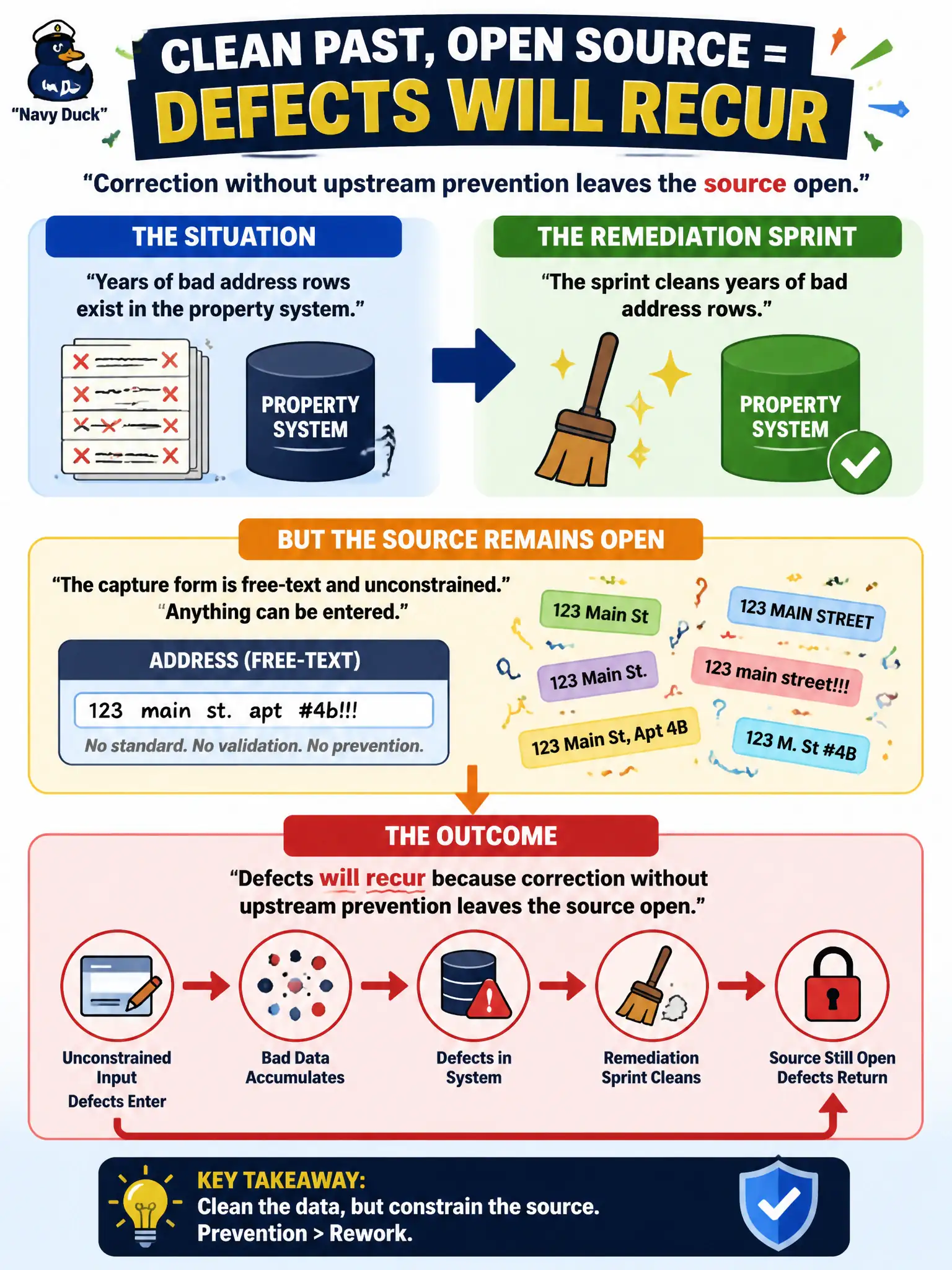
A remediation sprint cleans years of bad address rows in the property system but leaves the capture form free-text and unconstrained. What outcome should the program expect?
Select an answer to reveal the explanation.
Short Explanation
Mopping the floor while the tap still runs just schedules the next flood. Cleaning history without locking down the capture form invites the same defects back. Prevention has to ride with remediation.
Full Explanation
Correction without upstream prevention leaves the source open, so defects recur after remediation sprints in municipal systems. When a property or parks system cleans years of bad address rows but leaves the capture form free-text and unconstrained, the program should expect new bad addresses to re-enter through the same weak design. Believing historical cleanup permanently prevents new defects without further controls confuses one-time remediation with quality by design and wastes scarce city remediation budgets. Claiming form constraints are unnecessary once the warehouse has been scrubbed once abandons capture as the highest-leverage control point for ongoing civic operations. Saying only batch reloads matter and capture design cannot affect ongoing data quality contradicts practitioner prevention guidance taught in information-management programs. Exam caveat: remediation and prevention are both needed; sequence a source control change before declaring the sprint's ROI durable to finance and council sponsors. Operational check: after address cleanup, add validation and master-address lookup on the capture form, monitor new-defect incidence weekly for at least one full service cycle, and keep a stewarded exception path for legitimate addresses the matcher misses. Municipal property and permitting owners should fund prevention in the same project charter as the cleanup so budget does not stop at the warehouse scrub while clerks keep typing free-text streets.