
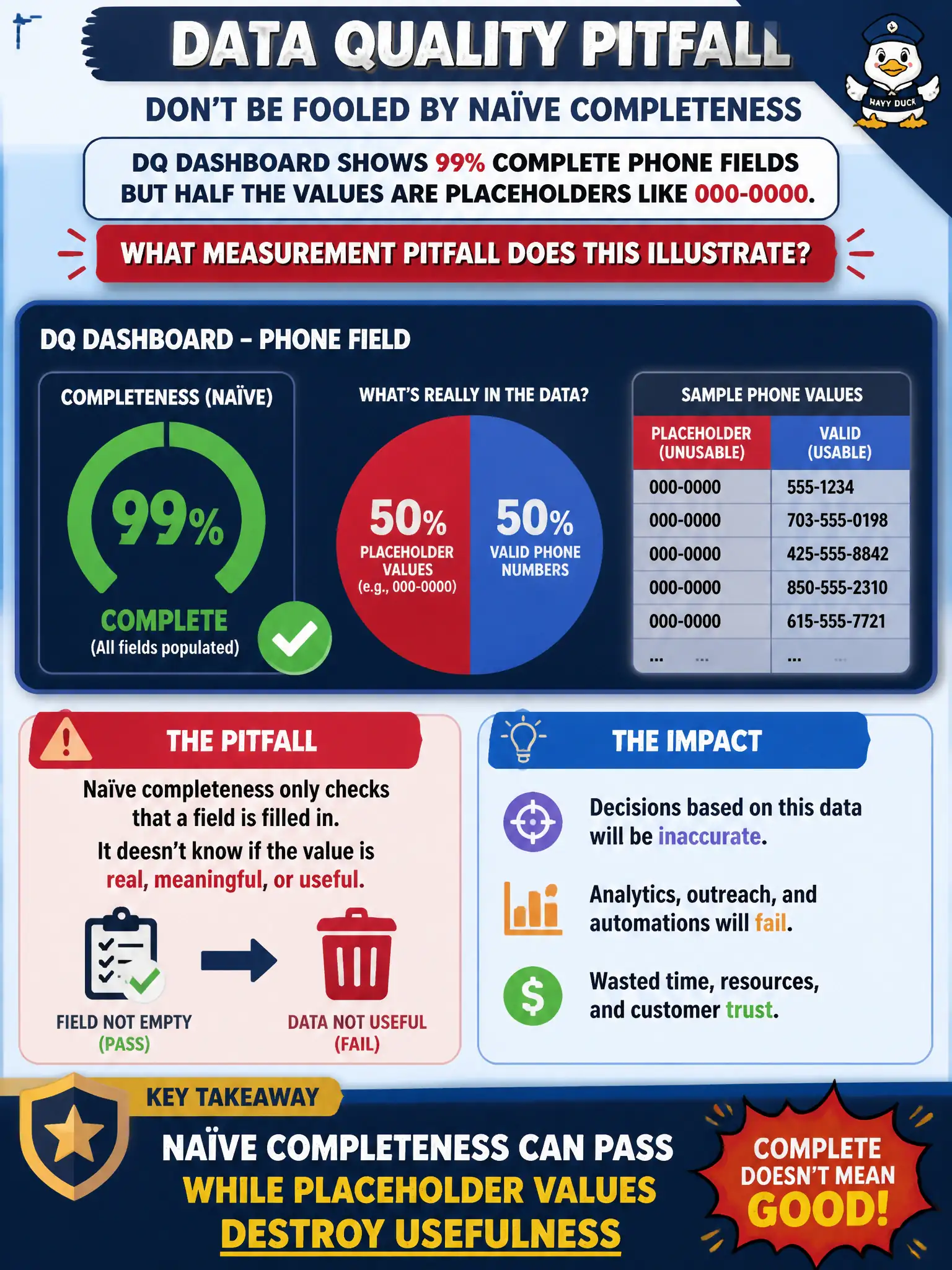
A DQ dashboard shows 99% complete phone fields for utility customers, but half the values are placeholders like 000-0000. What measurement pitfall does this illustrate?
Select an answer to reveal the explanation.
Short Explanation
A full mailbox of junk mail still looks 'complete.' Ninety-nine percent filled phones mean little when half are 000-0000 placeholders. Completeness without usefulness is a vanity metric.
Full Explanation
Naïve completeness can pass while placeholder values destroy usefulness—a classic municipal measurement pitfall on contact and identity fields. A DQ dashboard showing 99% complete phone fields for utility customers while half the values are placeholders like 000-0000 reports high fill rates that still cannot support outbound contact, emergency notices, or collections outreach. Treating completeness as the only dimension needed when fill rates look high ignores accuracy, validity, and usability of the content that call centers actually dial. Claiming placeholder codes always improve accuracy by preventing true nulls invents a false trade and pollutes analytics with fake saturation. Excluding phone fields from scorecards solely because they are personal data abandons stewardship; privacy controls and quality measurement can and should coexist under civic policy. Exam caveat: define invalid sentinel lists and score 'meaningful completeness' separately from raw null rates for contact fields used in resident services. Operational check: profile the top phone values, flag known placeholders as invalid, remeasure meaningful completion, block placeholders at CRM capture with a clear user message, and retrain staff who relied on fake numbers to bypass required fields. Utility customer-service leaders should see both raw and meaningful completeness so they do not celebrate a green tile that still yields failed outbound campaigns and frustrated residents.