
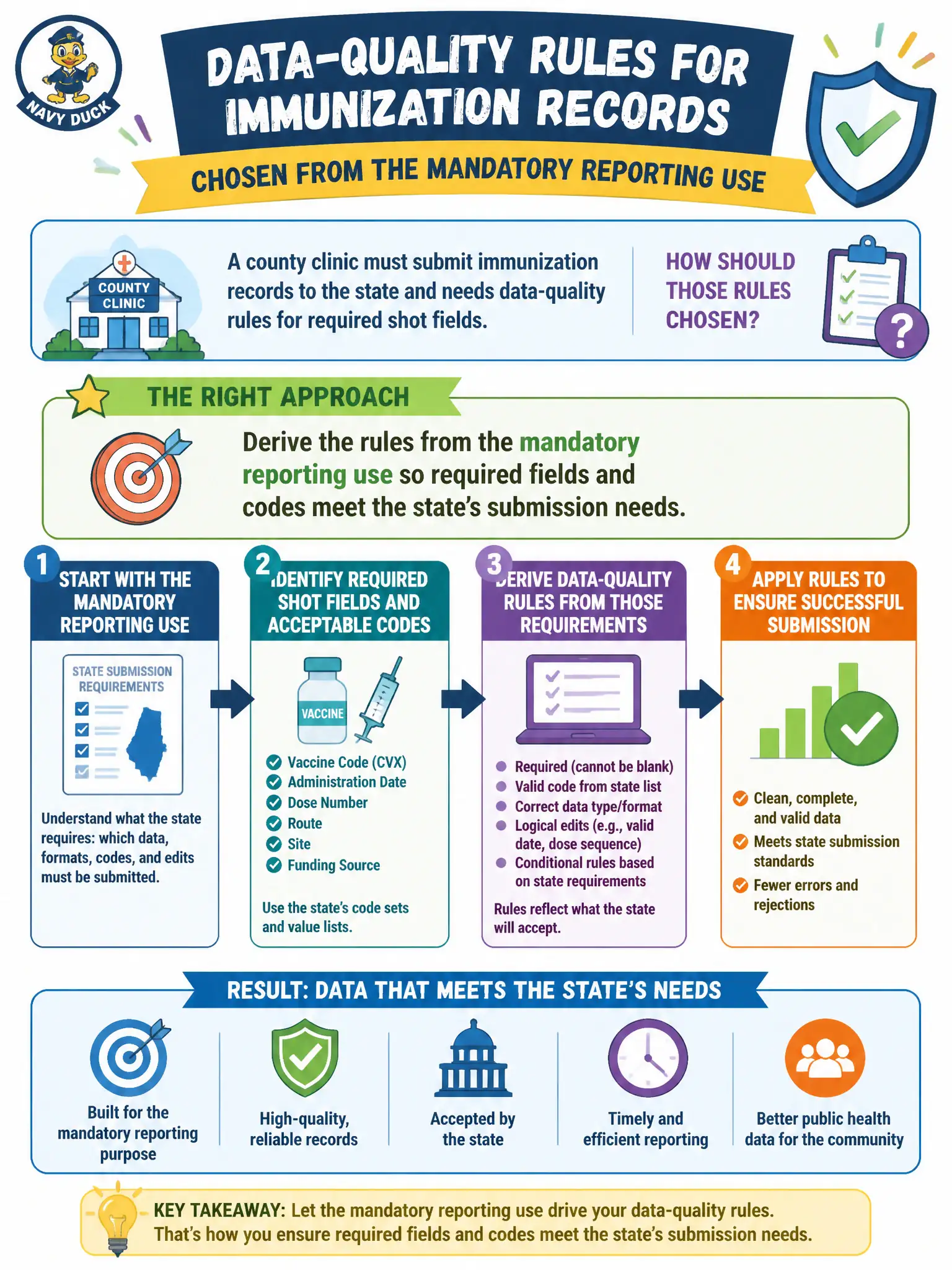
A county clinic must submit immunization records to the state and needs data-quality rules for required shot fields. How should those rules be chosen?
Select an answer to reveal the explanation.
Short Explanation
Rules should chase the real finish line, not pretty screens. If the state reporting pack needs certain immunization fields and codes, those uses define the quality bar. Derive rules from mandatory downstream use, not from taste.
Full Explanation
Data-quality rules should be derived from the mandatory reporting or operational use they must satisfy, especially in regulated civic health exchanges. When a county clinic must submit immunization records to the state, rules for required shot fields and codes should follow the state's submission companion guide—not screen cosmetics or unrelated ecommerce templates. Preferring cosmetic formatting rules that make clinic screens look tidy while report-critical fields stay optional leaves the jurisdiction failing state edits and delaying public-health surveillance. Copying generic ecommerce completeness rules because 'all customer systems share the same needs' ignores domain-specific immunization mandates and code sets. Deferring all rules until after the state rejects a batch makes residents, clinics, and auditors pay for a retrospective rulebook written under incident pressure. Exam caveat: when state specifications change, version the clinic's DQ rules with the reporting period; do not assume last year's edits still apply without a diff review. Operational check: obtain the current state companion guide, translate required fields and code sets into automated pre-submission checks, measure reject reasons weekly, and assign a clinical data steward accountable for the gate. Civic health programs should run that pre-submission DQ gate in the municipal interface so batches are clean before they enter the state system and before leadership sees false 'complete' clinic metrics.