
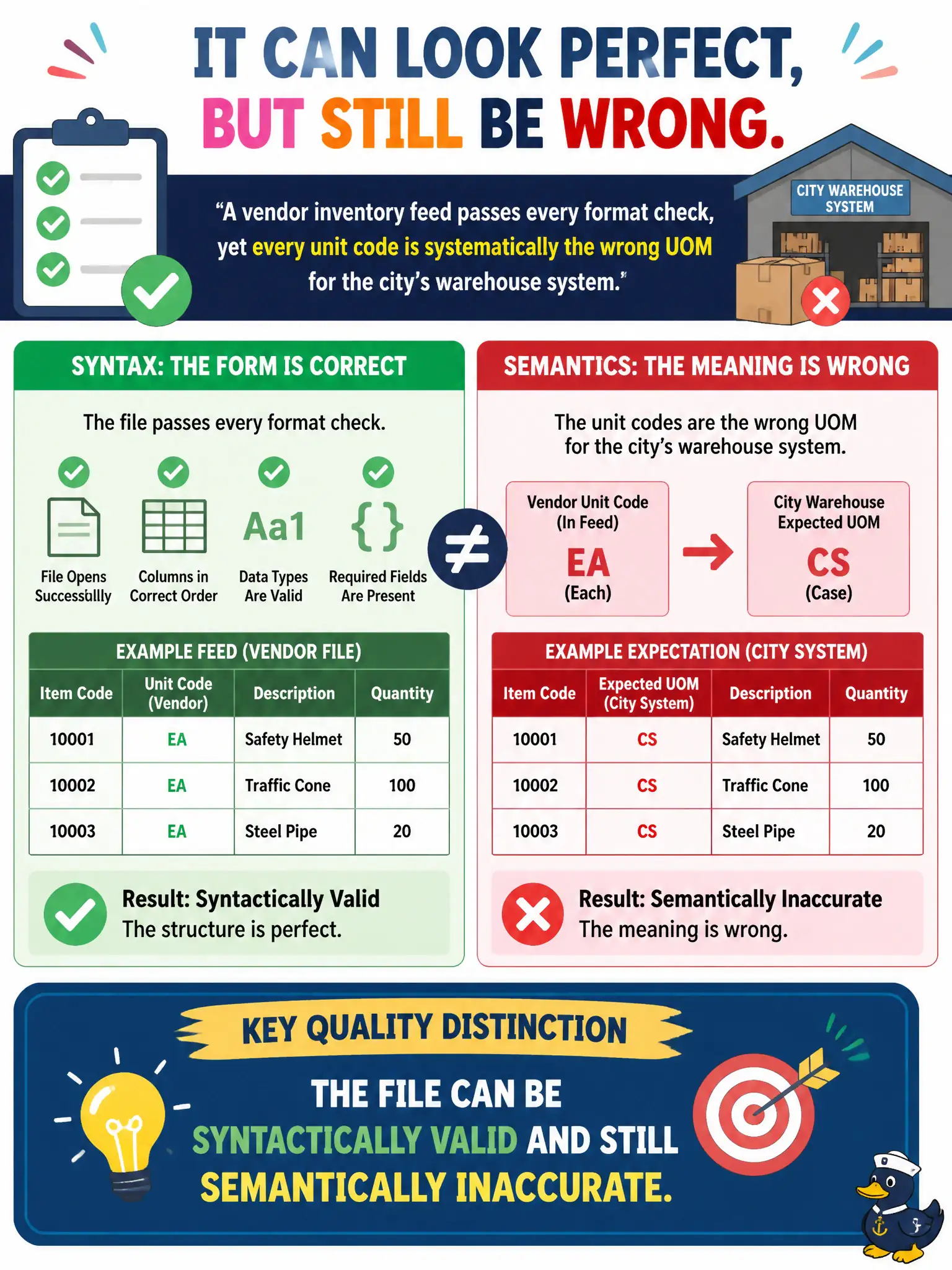
A vendor inventory feed passes every format check, yet every unit code is systematically the wrong UOM for the city's warehouse system. What quality distinction should the analyst make?
Select an answer to reveal the explanation.
Short Explanation
A file can look perfectly dressed and still be wearing the wrong shoes. Passing format checks only proves the shape is right, not that unit codes mean what the warehouse expects. Syntactic validity and semantic accuracy are different gates.
Full Explanation
Syntactic validity and semantic accuracy are different: a file can pass format checks and still be wrong in meaning for municipal use. When a vendor inventory feed passes every format check yet every unit code is systematically the wrong UOM for the city's warehouse system, the analyst must call out semantic inaccuracy despite syntactic success. Treating syntactic validity and semantic accuracy as the same once the schema matches collapses two fitness judgments and can green-light unfit civic supply data. Claiming format success means the feed is fit for use regardless of coded meanings ignores how wrong UOMs break reorder math and audits. Saying only completeness metrics matter when a vendor file parses without errors neglects accuracy of codes that are fully populated but wrong. Exam caveat: map vendor code lists to city reference data explicitly; schema match is necessary but not sufficient for acceptance. Operational check: sample unit-of-measure codes against the civic warehouse dictionary, quantify mismatch rate, reject or quarantine the feed until the crosswalk is corrected, and add the check to vendor acceptance tests. Procurement and warehouse stewards should own the UOM crosswalk so public-works stock levels remain trustworthy.