
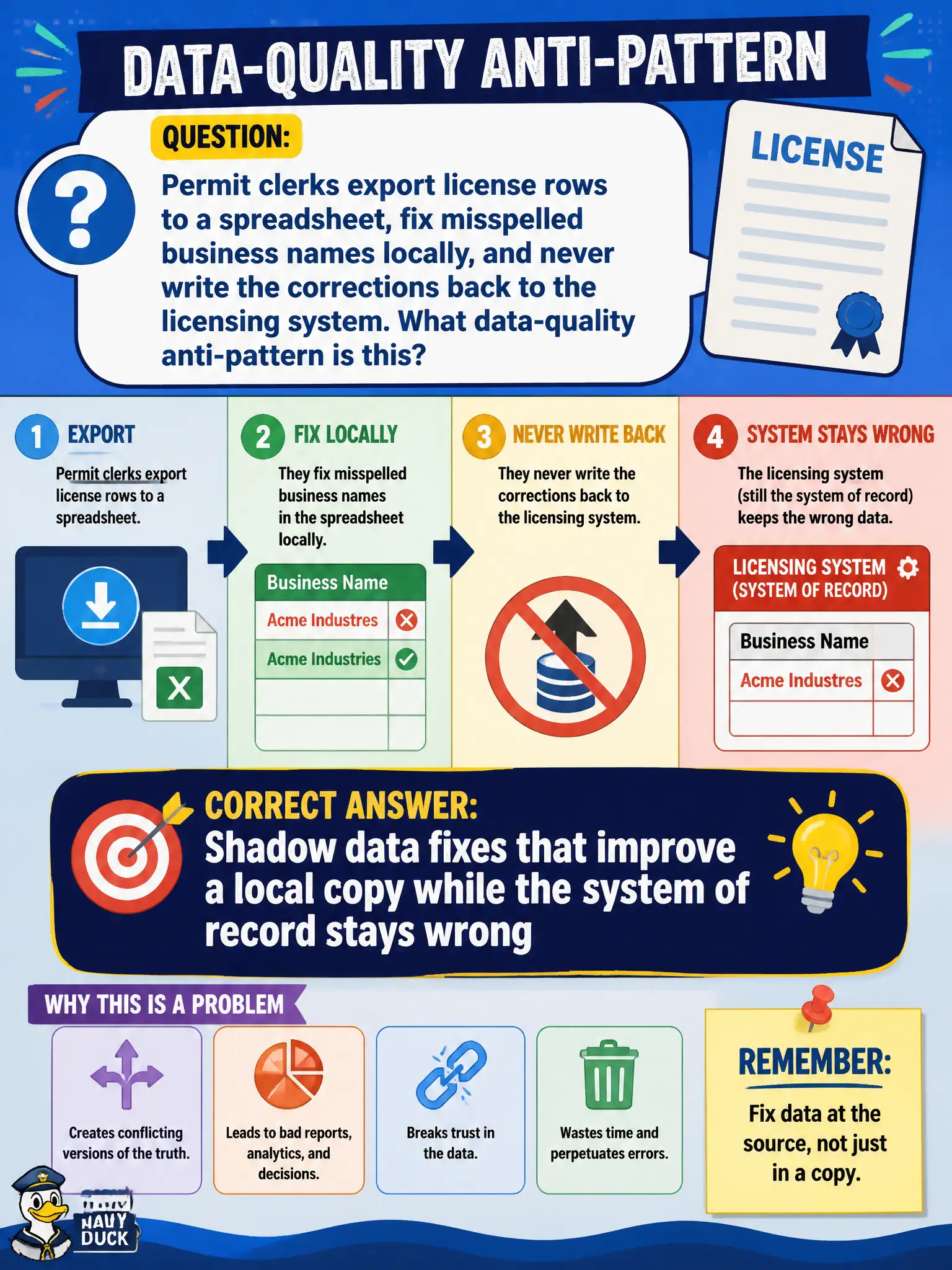
Permit clerks export license rows to a spreadsheet, fix misspelled business names locally, and never write the corrections back to the licensing system. What data-quality anti-pattern is this?
Select an answer to reveal the explanation.
Short Explanation
Fixing names in a personal export is like painting over a crack in a photocopy—the real wall still has the crack. Local spreadsheet patches that never write back leave the system of record wrong for everyone else. Shadow fixes feel productive and quietly poison downstream work.
Full Explanation
Shadow data fixes improve a local copy while the system of record stays wrong—an anti-pattern that quietly undermines municipal licensing and inspections. When permit clerks export license rows to a spreadsheet, fix misspelled business names locally, and never write corrections back, downstream users of the licensing system continue to see defects. A healthy quarantine workflow that keeps the system of record untouched until a steward approves each change is different: approved corrections are written back under control, not stranded in a personal file. Profiling that only samples exports for format checks before production updates is discovery, not permanent local editing without write-back. A master-data merge that correctly prefers spreadsheet values over operational sources would still require governed survivorship and update of the authoritative system—not silent private fixes. Exam caveat: tactical exports for analysis are fine; the anti-pattern is treating the export as the lasting corrected truth for civic operations. Operational check: require name corrections through the licensing UI or a stewarded update API, measure how many spreadsheet 'fixes' lack a matching system-of-record change, and retire uncontrolled local masters. City clerks should be trained that if it is not in the licensing system, inspectors and renewal notices will not see it.