
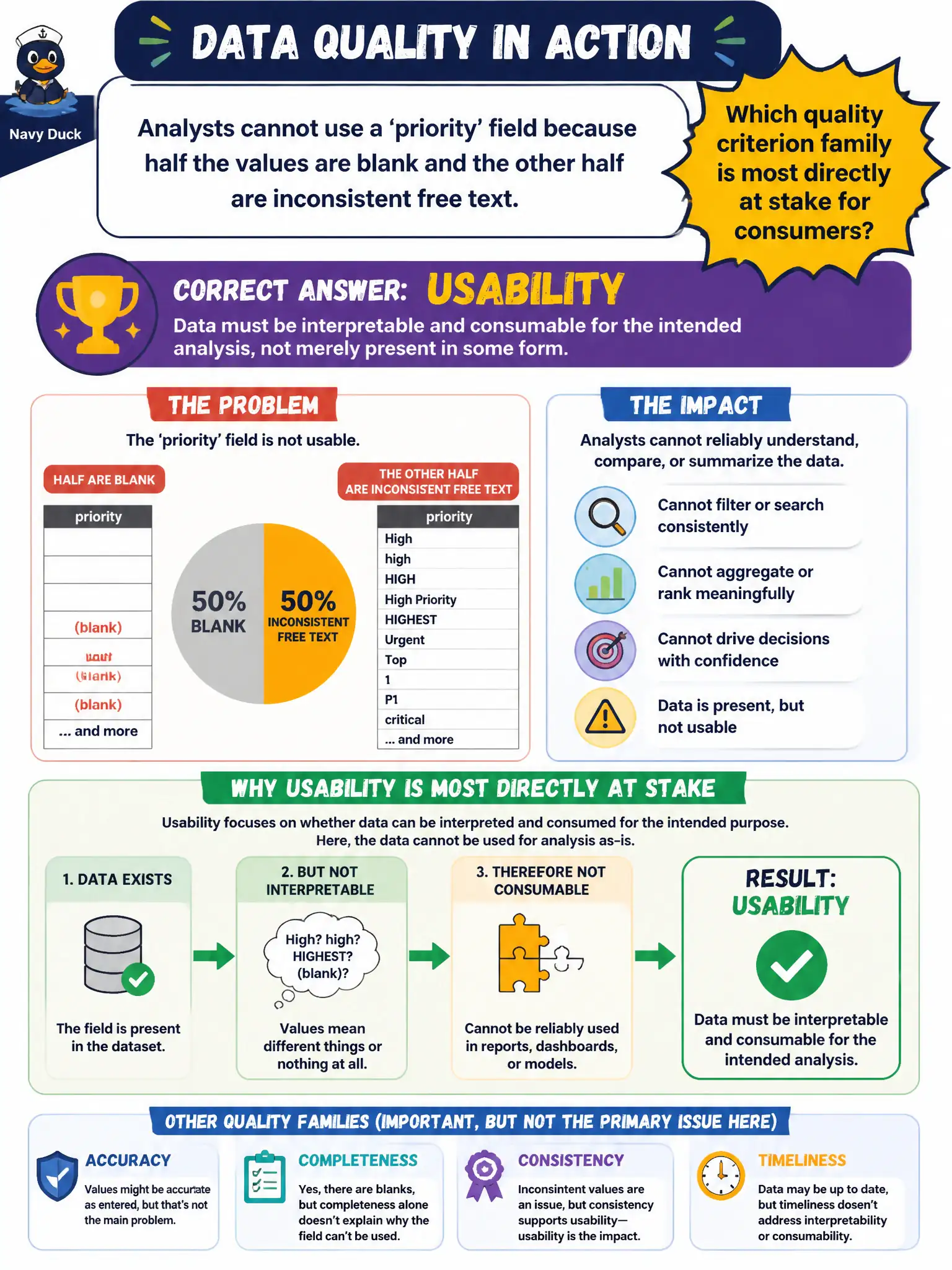
Analysts cannot use a 'priority' field because half the values are blank and the other half are inconsistent free text. Which quality criterion family is most directly at stake for consumers?
Select an answer to reveal the explanation.
Short Explanation
If analysts cannot tell high from low, the field is like a volume knob with no markings—technically there, practically useless. Usability asks whether consumers can interpret and use the data. Blanks plus free-text chaos fail that bar.
Full Explanation
Usability means data must be interpretable and consumable for the intended analysis or process—not merely present in some form. When analysts cannot use a municipal 'priority' field because half the values are blank and the other half are inconsistent free text, the criterion most directly at stake for consumers is usability of that attribute for triage and reporting. Framing the problem as encryption strength because free text somehow indicates protection confuses security with fitness for operational use. Claiming network latency or an overly fast warehouse explains blank priorities invents an infrastructure story unrelated to content quality. Calling free-text priorities only a screen-resolution or visualization theme issue mislabels a semantic and completeness-plus-consistency failure as cosmetics. Exam caveat: usability often fails when multiple DQ dimensions degrade together; naming usability highlights the consumer outcome without denying underlying completeness or consistency defects. Operational check: define allowed priority codes, measure blank and free-text rates, enforce a controlled list at capture for new records, and remap historical synonyms with steward approval before dashboards go to directors. City service desks should publish the priority definitions beside the queue so staff and analysts share one interpretable scale.