
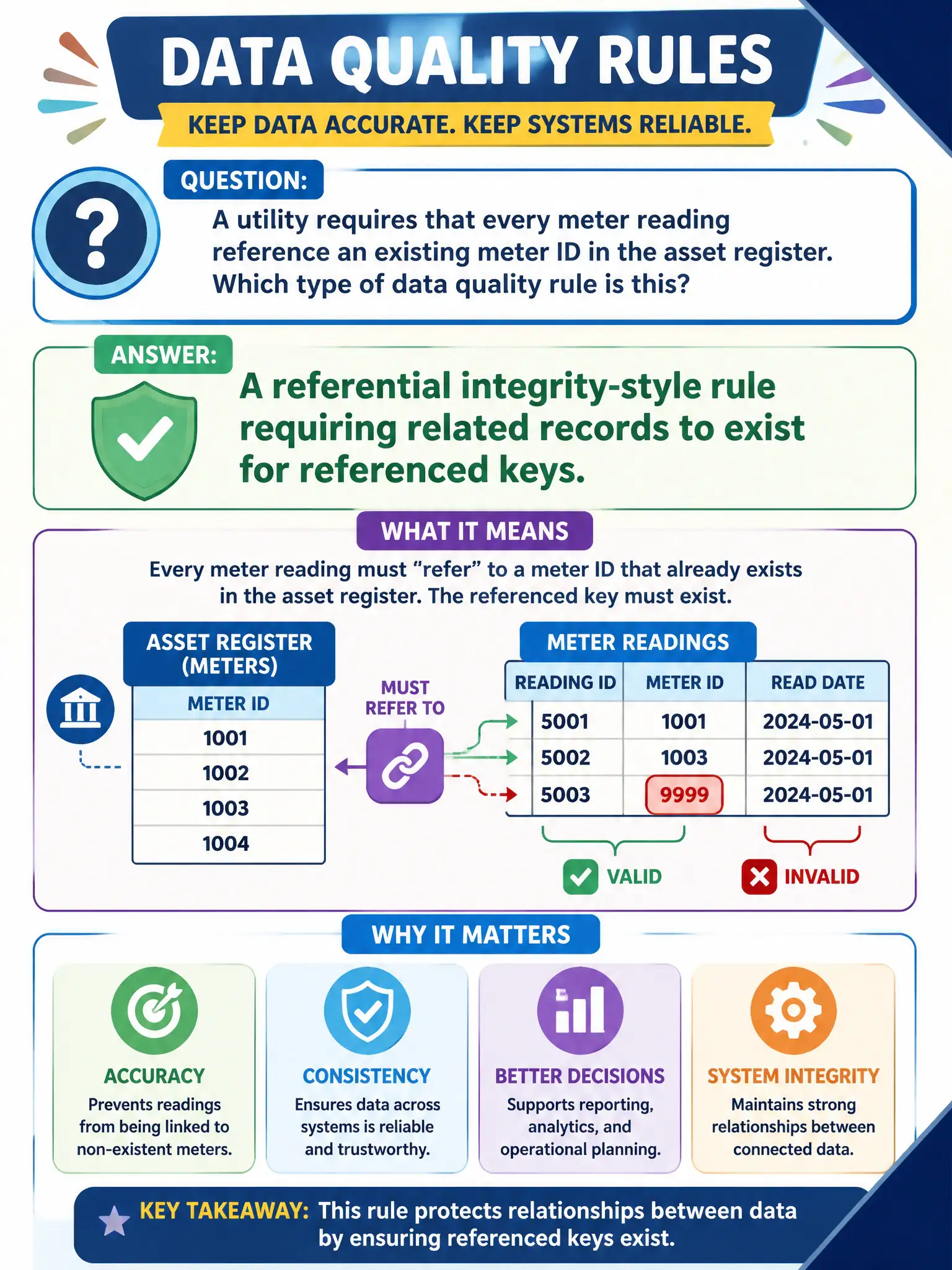
A utility requires that every meter reading reference an existing meter ID in the asset register. Which type of data quality rule is this?
Select an answer to reveal the explanation.
Short Explanation
A reading that points at a meter that does not exist is an orphan ticket—nobody can service it. Referential integrity-style rules keep child facts tied to real parents. That is integrity, not just spelling.
Full Explanation
Referential integrity-style rules require that referenced keys exist in the related master or register before dependent transactions are trusted. A utility rule that every meter reading must reference an existing meter ID in the asset register is referential integrity for operational readings—not a chart, weather-based SLA, or blank-comment completeness check. A visual profiling chart with no enforceable constraint may discover orphans but does not implement the referential requirement the billing process needs. A timeliness threshold based solely on weather forecasts does not ensure meter IDs resolve to commissioned assets. A completeness rule that only counts blank comment fields ignores the foreign-key relationship between readings and meters that prevents unbillable or misassigned consumption. Exam caveat: referential checks can fail during legitimate onboarding windows when meters are being installed; design staging or provisional statuses rather than disabling the rule forever. Operational check: validate reading.meter_id against the asset register at load time, report orphan rate daily to the meter steward, and block billing use of orphaned readings until resolved. Municipal utilities should align field-crew device provisioning with the register so trucks cannot submit readings for IDs that were never commissioned in the civic asset system.