
Before buying additional governance tools, what foundational sequence should the program complete?
Select an answer to reveal the explanation.
Short Explanation
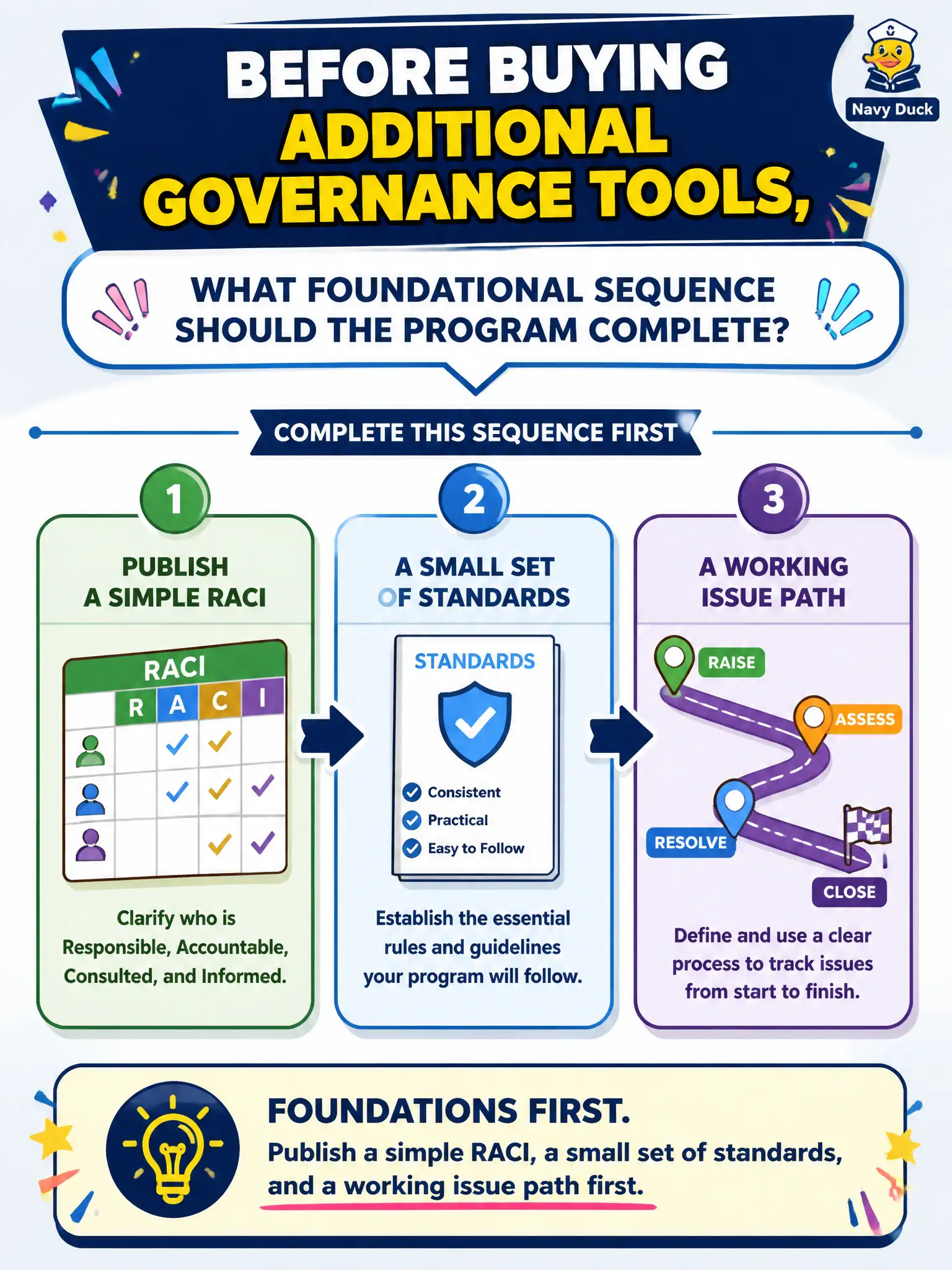
Tools without roles and a way to raise issues are just expensive shelves. Nail a simple RACI, a handful of standards, and a working issue path—then shop for software that serves that model.
Full Explanation
Before buying additional governance tools, the program should publish a simple RACI, a small set of standards, and a working issue path first—so technology amplifies an operating model rather than substituting for one. Civic tool sprawl without roles and standards multiplies catalogs without improving accountability. Purchasing multiple overlapping platforms and defining roles afterward fails by spending first and designing accountability last. Skipping standards and relying on vendors to invent enterprise policy fails because vendors do not own municipal decision rights. Expanding the tool portfolio until every team has a unique catalog product fails by fragmenting findability and stewardship. Exam caveat: foundations before tooling is a repeated CIMP-aligned sequencing theme. Operational check: finalize RACI for critical domains, ratify a minimal standard set, prove one end-to-end issue path, then evaluate tools against those operating needs. Make procurement contingent on that readiness gate so city funds buy capability, not shelfware. Keep verification evidence with the municipal runbook so audits can prove the chosen control was applied as designed and that rejected alternatives would have left city services exposed to the failure modes described above.