
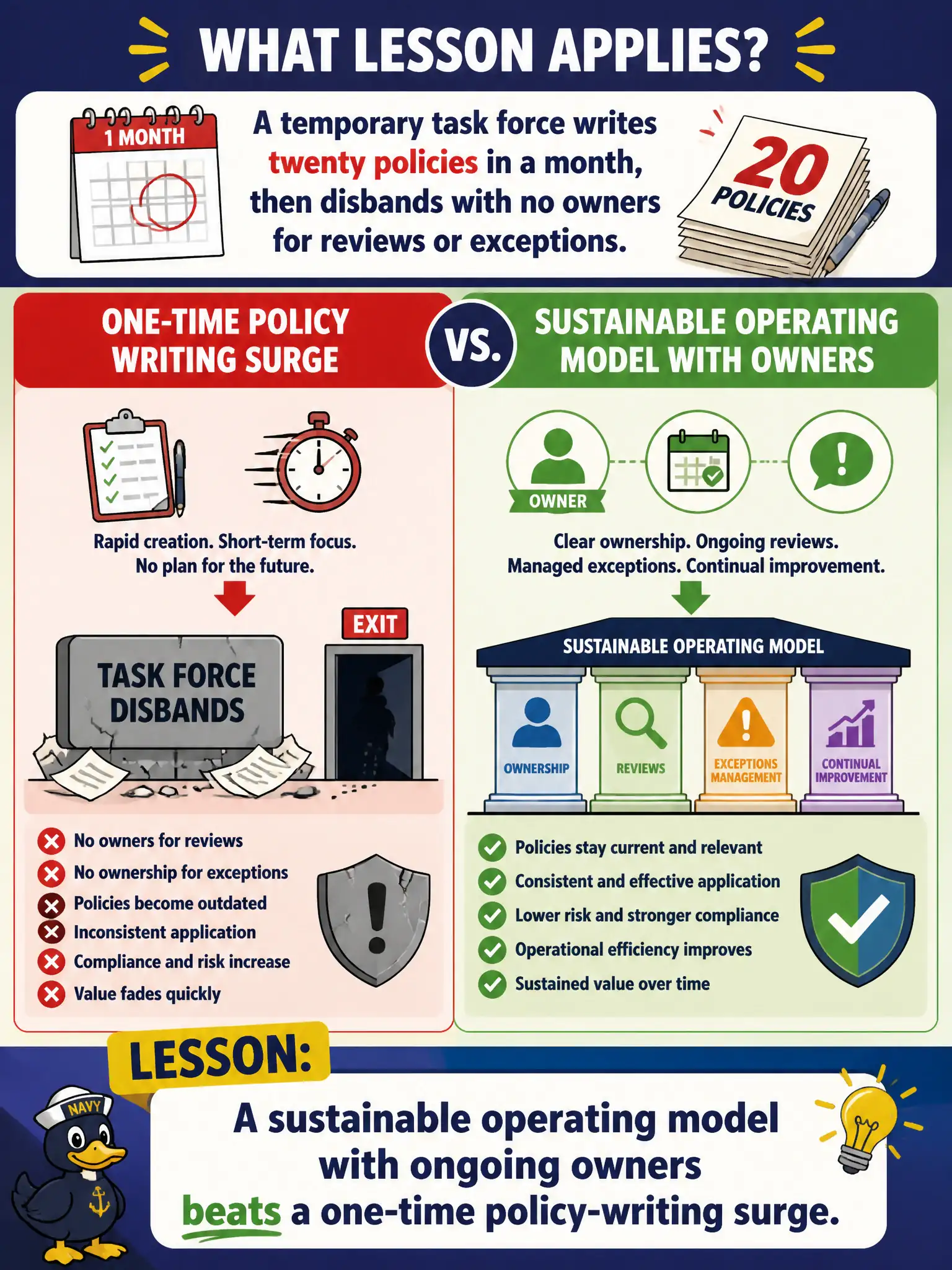
A temporary task force writes twenty policies in a month, then disbands with no owners for reviews or exceptions. What lesson applies?
Select an answer to reveal the explanation.
Short Explanation
Cranking out twenty policies and walking away is like planting a garden and never watering it. You need ongoing owners, reviews, and exception paths—not a one-month paperwork sprint.
Full Explanation
A temporary task force that writes twenty policies in a month and then disbands with no owners for reviews or exceptions teaches that a sustainable operating model with ongoing owners beats a one-time policy-writing surge. Civic governance is an operating system, not a document factory. Believing one-time policy blitzes are sufficient if the document count is high fails by confusing volume with stewardship. Assuming disbanding after drafting automatically transfers ownership to all staff fails because diffuse ownership is no ownership. Claiming volume of policies matters more than operating ownership fails the same volume-over-accountability trap. Exam caveat: operating model and ongoing ownership outrank policy count on professional governance exams. Operational check: assign policy owners, review cadences, and exception paths before celebrating draft completion; keep a living register rather than a static binder. If a blitz is used, convert outputs into owned municipal operating assets before the task force dissolves. Keep verification evidence with the municipal runbook so audits can prove the chosen control was applied as designed and that rejected alternatives would have left city services exposed to the failure modes described above.