
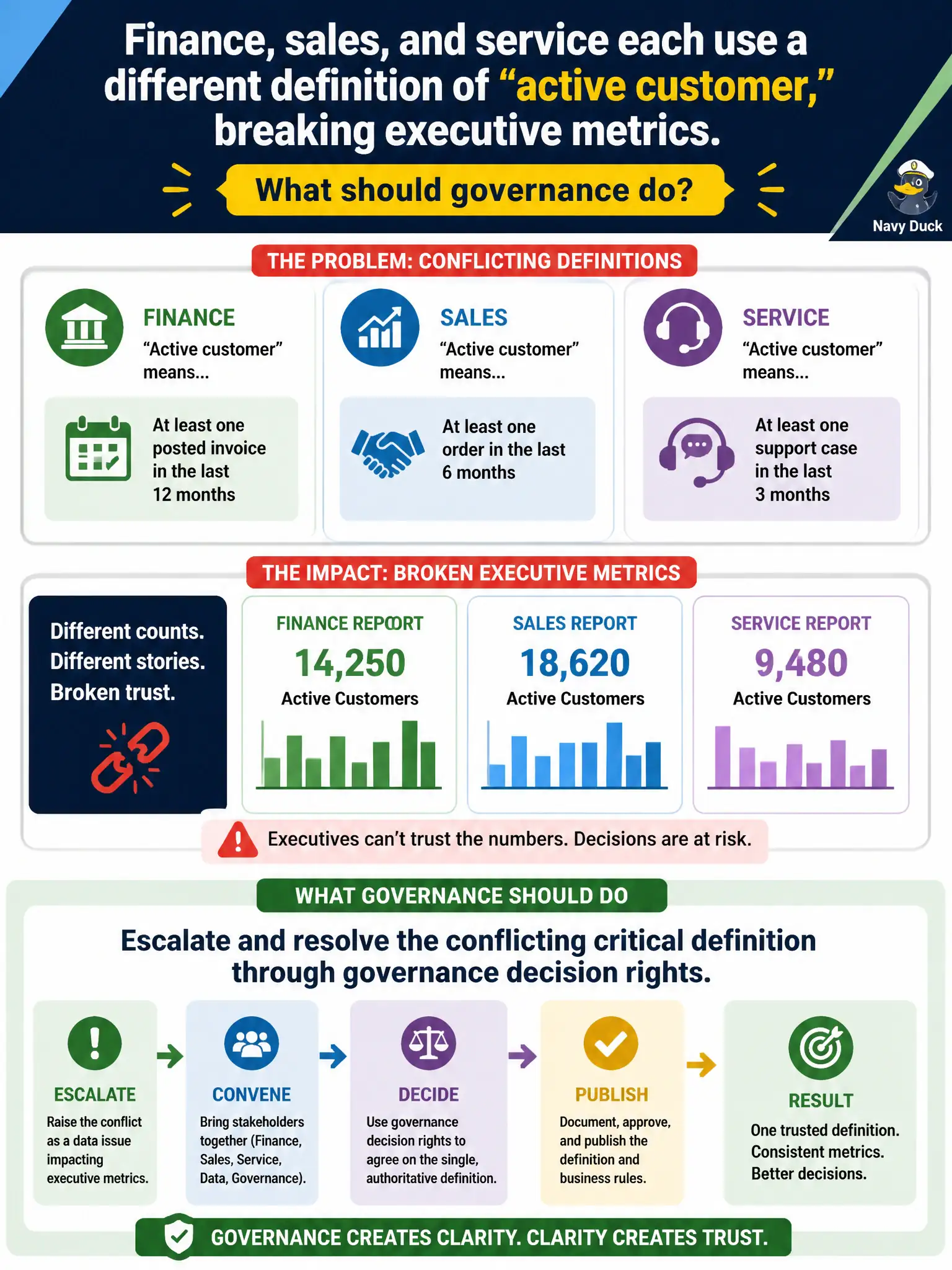
Finance, sales, and service each use a different definition of “active customer,” breaking executive metrics. What should governance do?
Select an answer to reveal the explanation.
Short Explanation
Three “active customer” definitions are three different movies with the same title. Escalate the fight to a body that can pick one enterprise meaning—or your dashboards will keep arguing with each other.
Full Explanation
When finance, sales, and service each use a different definition of “active customer,” breaking executive metrics, governance should escalate and resolve the conflicting critical definition through established decision rights. Shared civic and enterprise metrics require one ratified meaning for critical terms. Ignoring the conflict because each department’s report can stay private fails when leaders still compare numbers as if they were commensurate. Picking a random definition weekly to keep stakeholders engaged fails by institutionalizing chaos. Deleting the term from the glossary so the conflict disappears from view fails by hiding the problem while operational reports continue to diverge. Exam caveat: conflicting critical definitions are classic governance decision-rights scenarios—resolve, do not conceal. Operational check: raise the conflict to the data council, record the approved definition and effective date, update the glossary and report specs, and verify executive dashboards align after the cutover. Communicate the change to municipal report owners so shadow definitions are retired on schedule. Keep verification evidence with the municipal runbook so audits can prove the chosen control was applied as designed and that rejected alternatives would have left city services exposed to the failure modes described above.