
Teams request new data products through informal chats, causing surprise compliance gaps. What enablement practice helps?
Select an answer to reveal the explanation.
Short Explanation
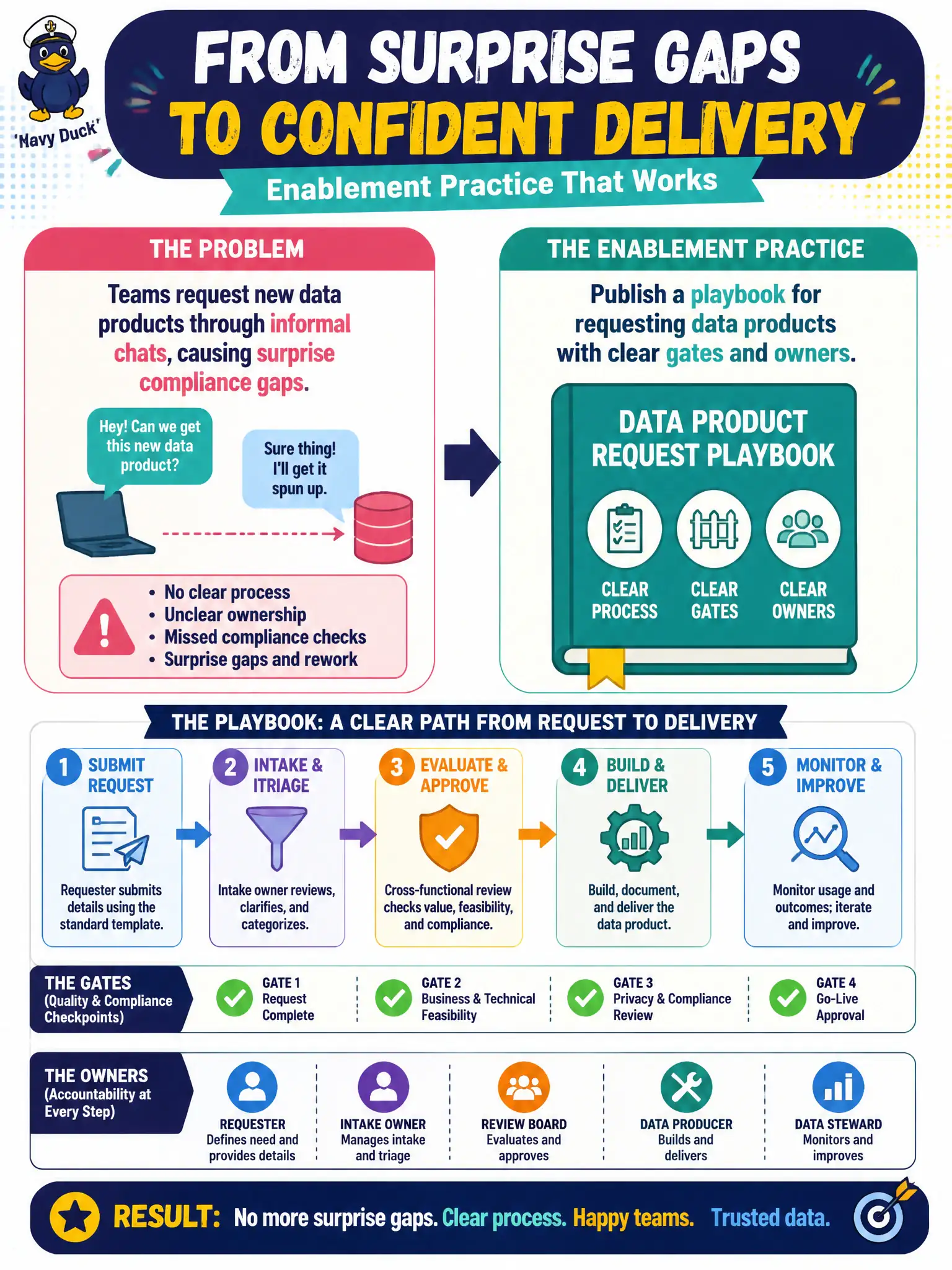
If the only way to ask for a new data product is a hallway whisper, surprises are guaranteed. A simple playbook with gates and owners makes governance predictable instead of a last-minute blocker.
Full Explanation
When teams request new data products through informal chats that create surprise compliance gaps, publish a playbook for requesting data products with clear gates and owners so intake is visible, repeatable, and governed. Civic enablement is not the same as rubber-stamping or freezing innovation. Banning all new data products until a five-year architecture program ends fails by blocking needed services while waiting for utopia. Keeping intake informal so governance never appears as a gate fails by recreating the compliance surprises that triggered the problem. Approving every request automatically to maximize speed metrics fails by abandoning privacy, quality, and security gates for vanity throughput. Exam caveat: playbooks enable speed with control—exams contrast enablement against both bureaucracy freeze and uncontrolled shadow IT. Operational check: publish the request path, name gate owners (privacy, security, stewardship), track cycle time and exception rates, and retire chat-only intake for cross-department products. Review playbook adherence in municipal project stage gates so informal channels stop being the default for risky data work. Keep verification evidence with the municipal runbook so audits can prove the chosen control was applied as designed and that rejected alternatives would have left city services exposed to the failure modes described above.