
Cross-department working groups discuss standards weekly, yet no body can approve a conflicting definition. What structural gap exists?
Select an answer to reveal the explanation.
Short Explanation
A coffee club can talk forever; a council has to decide. If nobody is chartered to pick the winning definition, you just get more meetings. Forums inform—decision bodies close the loop.
Full Explanation
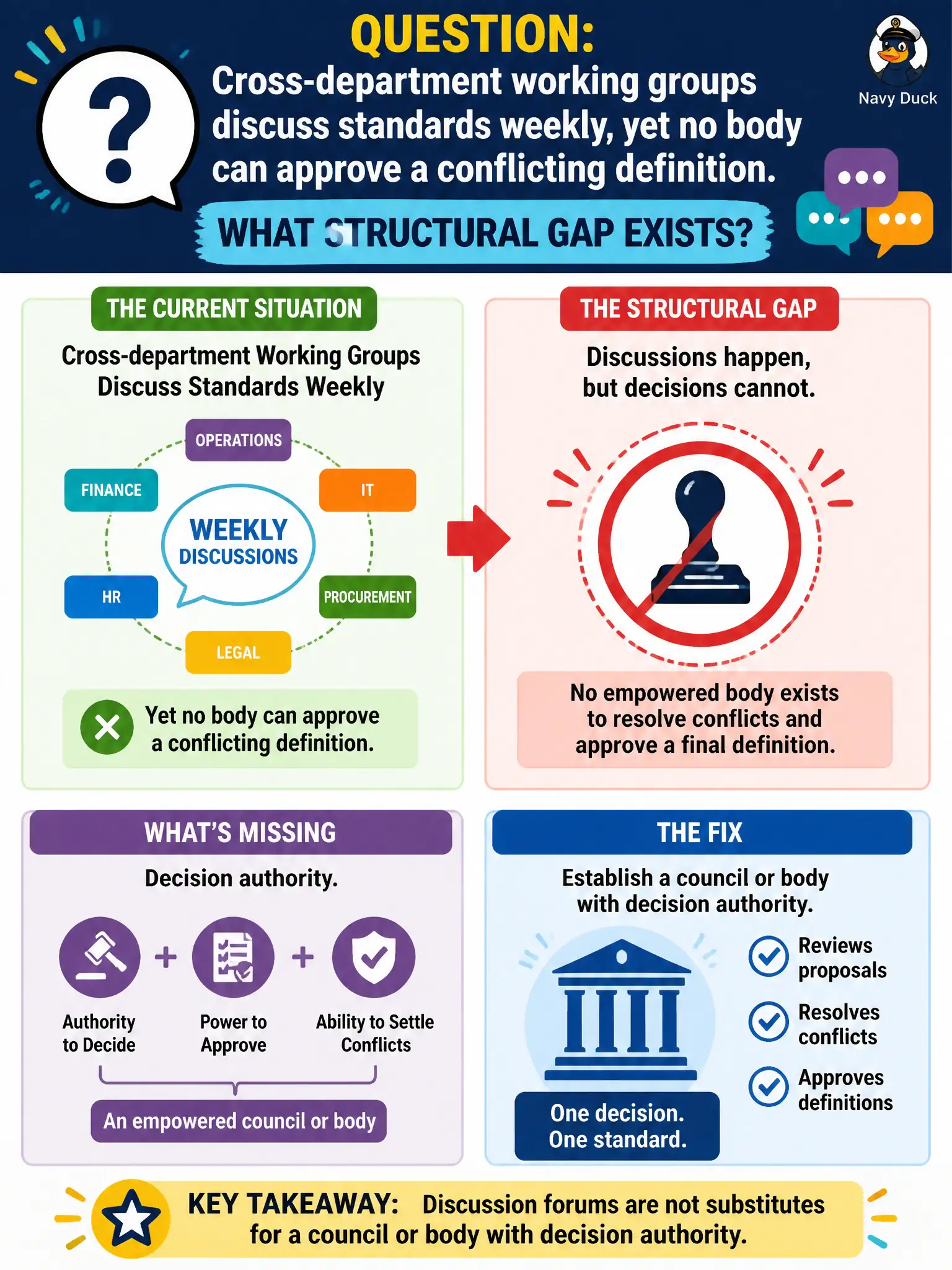
Weekly cross-department working groups that discuss standards but cannot approve a conflicting definition reveal a structural gap: discussion forums are not substitutes for a council or body with decision authority. Civic governance needs a decision rights design so debates end in ratified standards rather than perpetual talk. Assuming working groups automatically gain decision authority if attendance is high fails because quorum for conversation is not the same as charter for decisions. Saying definitions should never be approved so groups can debate indefinitely fails by institutionalizing ambiguity that breaks shared metrics and integrations. Assigning enterprise definition conflicts only to the IT help desk fails because help desks resolve tickets, not cross-agency meaning disputes that need business accountability. Exam caveat: distinguish collaborative forums from empowered governance bodies—exams often plant that trap. Operational check: charter a data council (or equivalent) with explicit authority to resolve critical definition conflicts, publish the decision log, and test one live conflict end-to-end. Without that authority path, municipal standards workshops consume time without producing enforceable civic agreements.