
Utility outage systems hold wrong emergency contact numbers for critical facilities. How should governance prioritize?
Select an answer to reveal the explanation.
Short Explanation
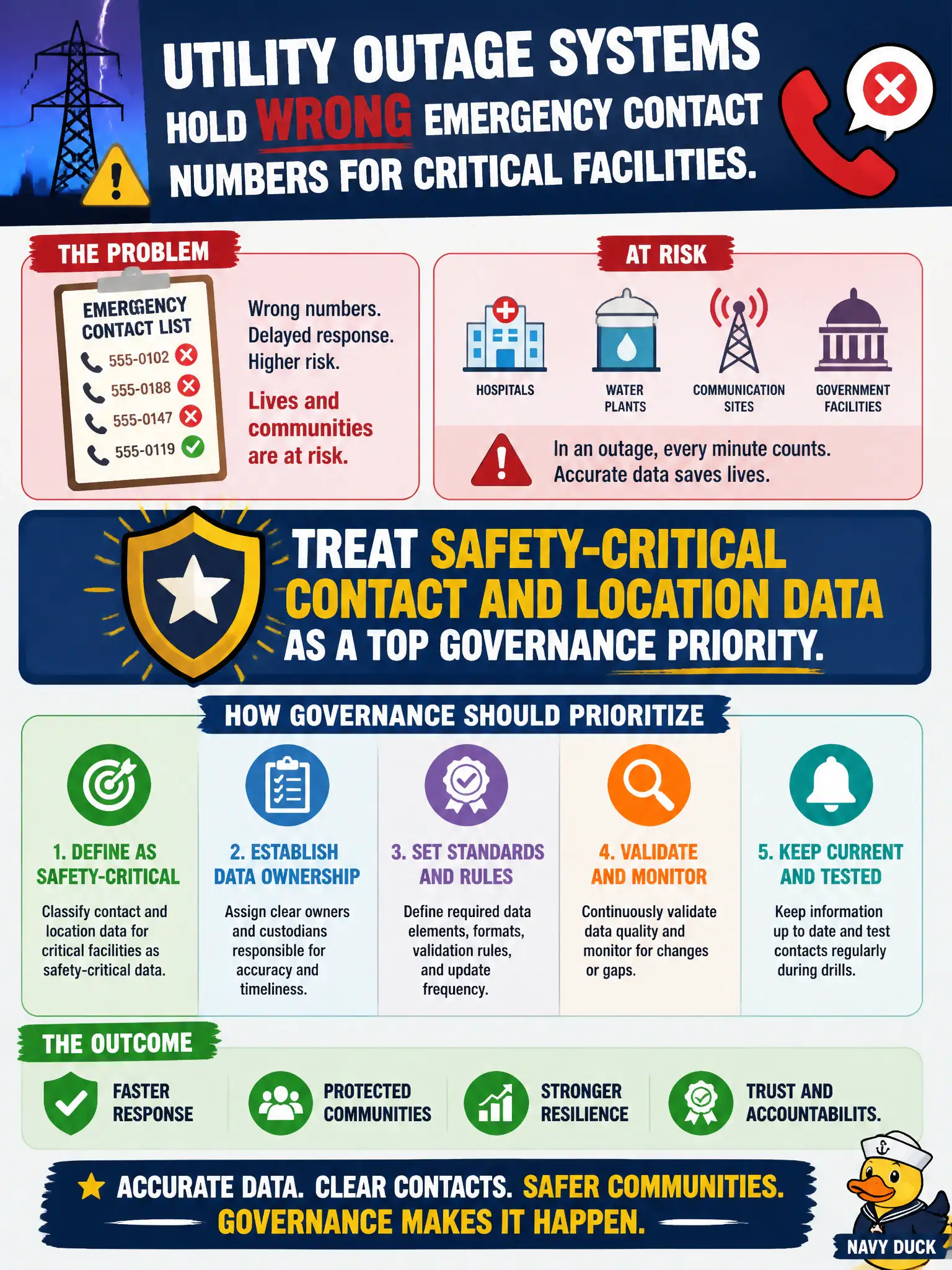
Wrong emergency numbers are not a tidy-data hobby—they are a safety problem. Put governance heat on contact and location data that people rely on when the lights go out.
Full Explanation
Wrong emergency contact numbers for critical facilities in utility outage systems are a safety-critical data defect; governance should prioritize contact and location data that protect life and continuity over cosmetic or lower-impact standards work. Civic duty elevates accuracy of who to call and where assets sit when outages threaten hospitals, shelters, and pumps. Deferring contact cleanup until branding standards for reports are finished fails by ranking presentation above public-safety fitness-for-use. Prioritizing only financial master data because safety contacts are “informal notes” fails by misclassifying operational safety attributes as optional chatter. Disabling outage notifications until every noncritical dataset is perfected fails by withholding vital civic communications while chasing perfection elsewhere. Exam caveat: prioritization follows impact and harm—safety-critical elements outrank branding and low-risk reference polish. Operational check: inventory critical-facility contacts, assign stewards, validate against facility managers, and sample match rates before the next storm season drill. Escalate unresolved critical-contact defects to the governance council with explicit safety risk language so municipal leaders see why this queue jumps the line.