
Metadata stewardship is assigned, but no role owns physical deletion when retention expires. What accountability gap should leaders close?
Select an answer to reveal the explanation.
Short Explanation
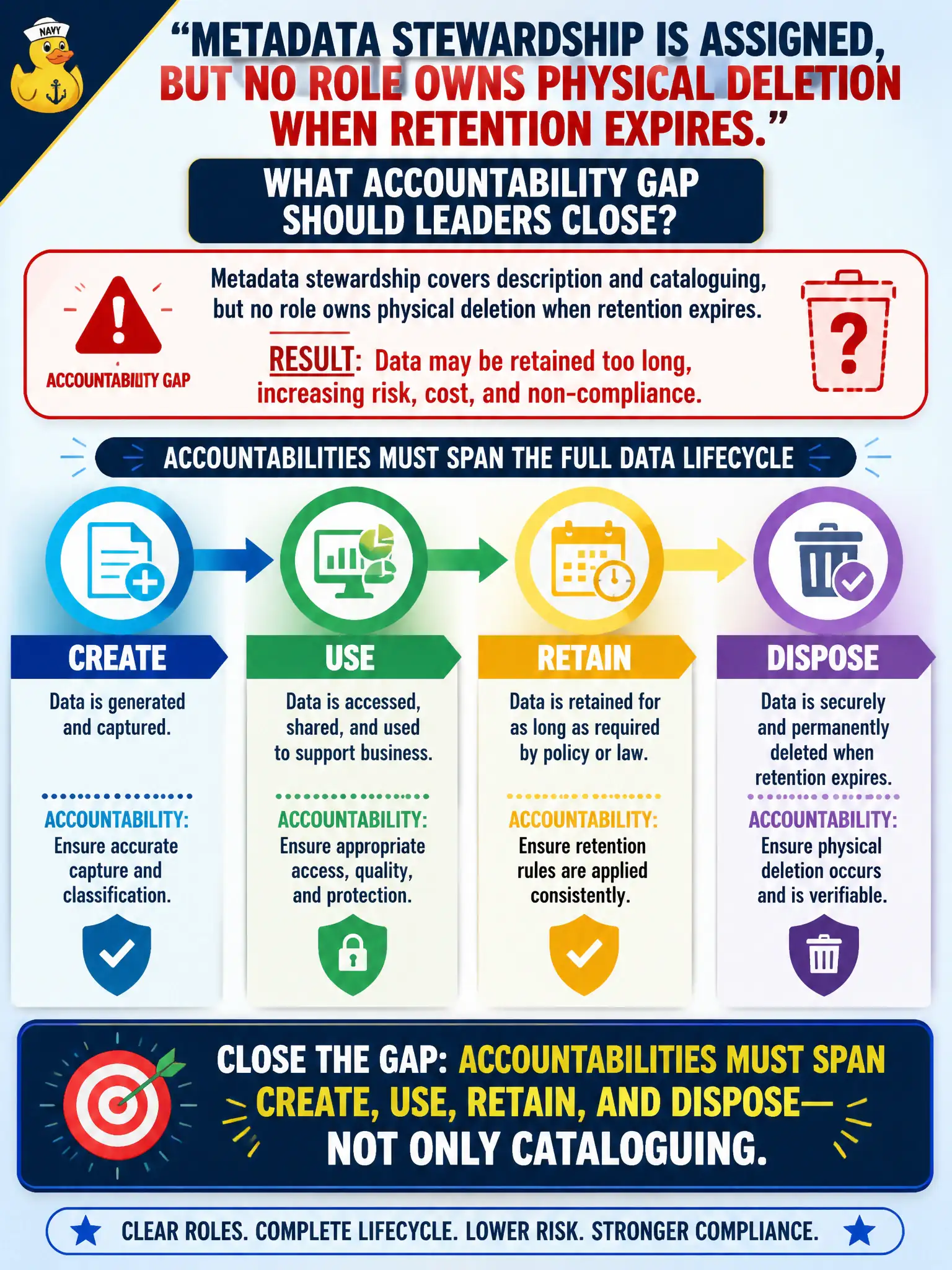
Someone owns the index cards, but nobody owns emptying the shredder when the clock runs out. Lifecycle accountability means create through dispose—not just pretty metadata entries.
Full Explanation
Assigning metadata stewardship without anyone owning physical deletion when retention expires leaves a lifecycle accountability gap: accountabilities must span create, use, retain, and dispose—not only cataloguing. Civic records and privacy expectations require someone to execute and evidence disposal when schedules say destroy or transfer. Claiming cataloguing alone completes the full data lifecycle fails by stopping at description while ignoring custody outcomes. Leaving deletion ownerless because backups exist somewhere fails because backups are not a substitute for governed disposal decisions and may themselves retain expired content unlawfully. Treating disposal as solely a facilities task unrelated to data governance fails by confusing shredding paper or retiring hardware with accountable information lifecycle control. Exam caveat: lifecycle stewardship includes disposition; metadata roles alone are incomplete. Operational check: name disposition owners for high-risk datasets, link retention schedules to actionable tickets, and verify a sample disposal completed with legal-hold checks. Record disposition evidence in the municipal retention system so audits can see create-to-dispose accountability, not only a tidy catalog.