
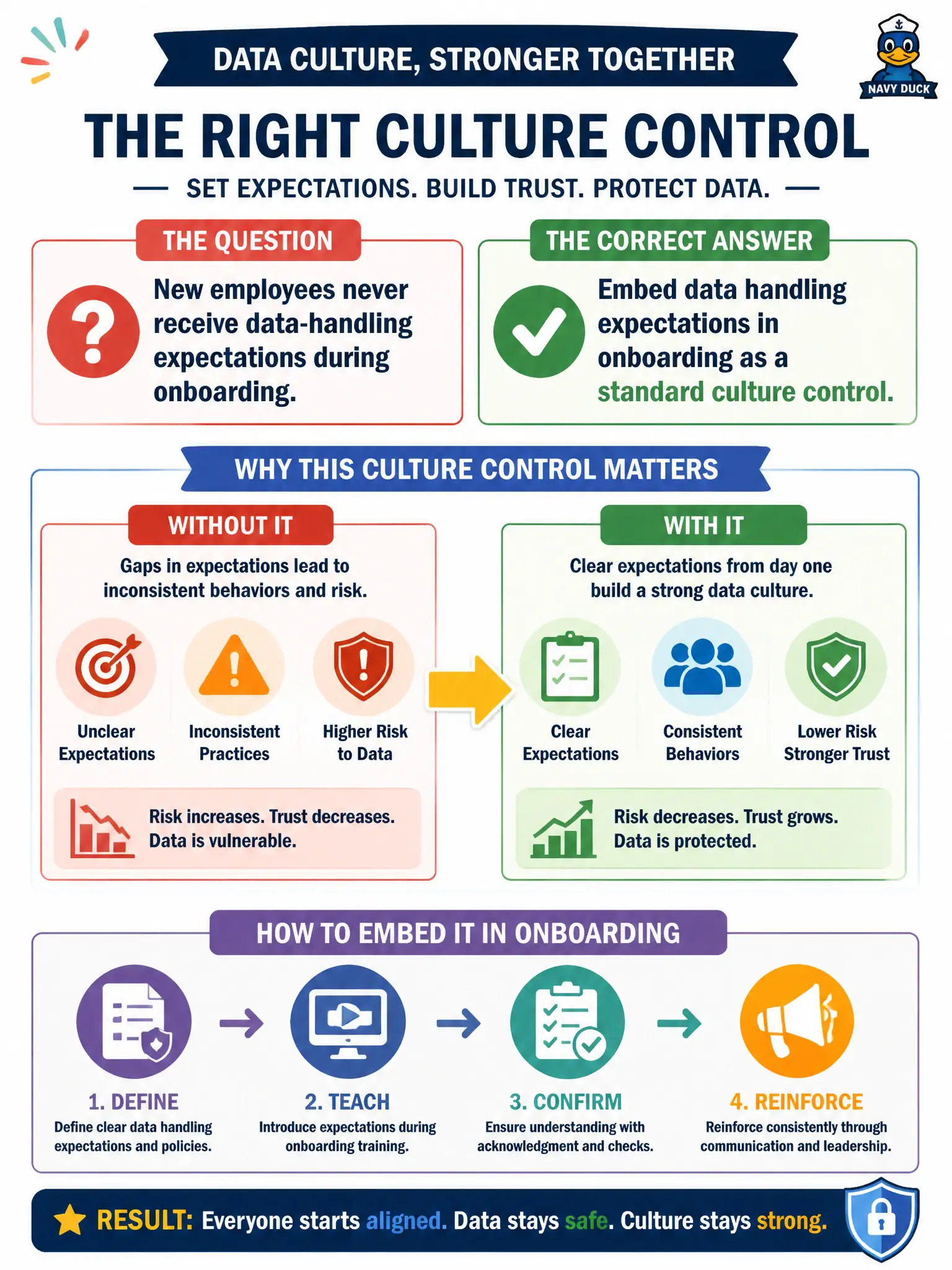
New employees never receive data-handling expectations during onboarding. Which culture control should the program add?
Select an answer to reveal the explanation.
Short Explanation
Day-one silence on data handling is how bad habits get a head start. Put expectations in onboarding—plain language, real examples—so new folks know the rules before they copy the wrong file. Culture starts at hello.
Full Explanation
Onboarding is a primary culture control for embedding data-handling expectations: classification basics, acceptable use, retention awareness, and escalation contacts. When new employees never receive those expectations, the program should add mandatory, role-appropriate modules rather than hoping osmosis works. Assuming staff absorb all policies by reading the intranet footer is unrealistic and unfair in busy municipal roles. Delaying any training until after an employee's first privacy incident is reactive and harms residents. Limiting onboarding to badge photos and skipping information management topics ignores a major operational risk area. Exam caveat: refreshers and role changes matter as much as day-one training; one module at hire is not lifetime compliance. Operational check: insert a short data-handling module into onboarding, track completion before system access provisioning, and survey new hires on whether they know how to escalate DQ and privacy issues. HR and DG should jointly block elevated data access for staff who have not completed the civic data-handling orientation. Include contractors and seasonal hires in the same orientation gate when they touch resident data.