
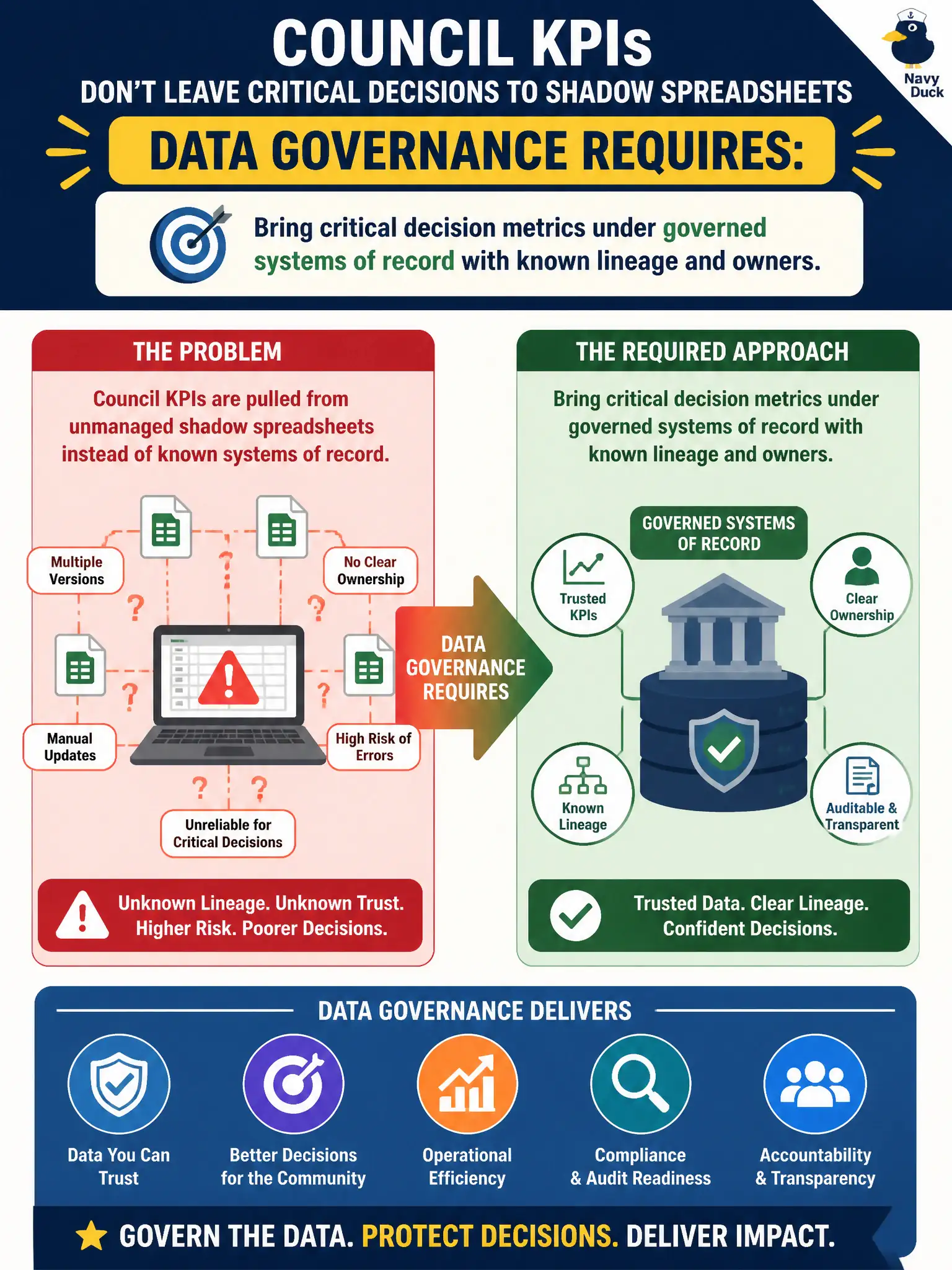
Council KPIs are pulled from unmanaged shadow spreadsheets instead of known systems of record. What should data governance require?
Select an answer to reveal the explanation.
Short Explanation
If the council steers by mystery spreadsheets, you are navigating with sticky notes on the windshield. Critical KPIs need a known system of record, an owner, and lineage. Shadow files are fine for drafts—not for the vote.
Full Explanation
Decision-critical metrics require governed systems of record, documented lineage, and accountable owners so numbers are reproducible and defensible. When council KPIs are pulled from unmanaged shadow spreadsheets instead of known systems of record, DG should bring those metrics under governed sources. Celebrating shadow spreadsheets as the most agile analytics architecture normalizes unverifiable civic performance reporting. Hiding spreadsheet sources from auditors while keeping them for council packs increases integrity and trust risk. Banning all metrics so no source-of-truth debate can occur avoids accountability rather than fixing it. Exam caveat: some exploratory analysis may begin in spreadsheets; promotion to council KPI status requires certification of source, lineage, and owner. Operational check: inventory council KPI sources, flag shadow feeds, migrate or certify authoritative pipelines, and publish lineage beside each KPI in the packet. Council clerks should reject packs that cannot name the system of record and steward for each headline civic metric. Certify promoted KPIs in the catalog with lineage links before they appear in public dashboards. Certify each promoted council KPI in the catalog with lineage and steward fields before that metric appears on any public-facing civic dashboard.