
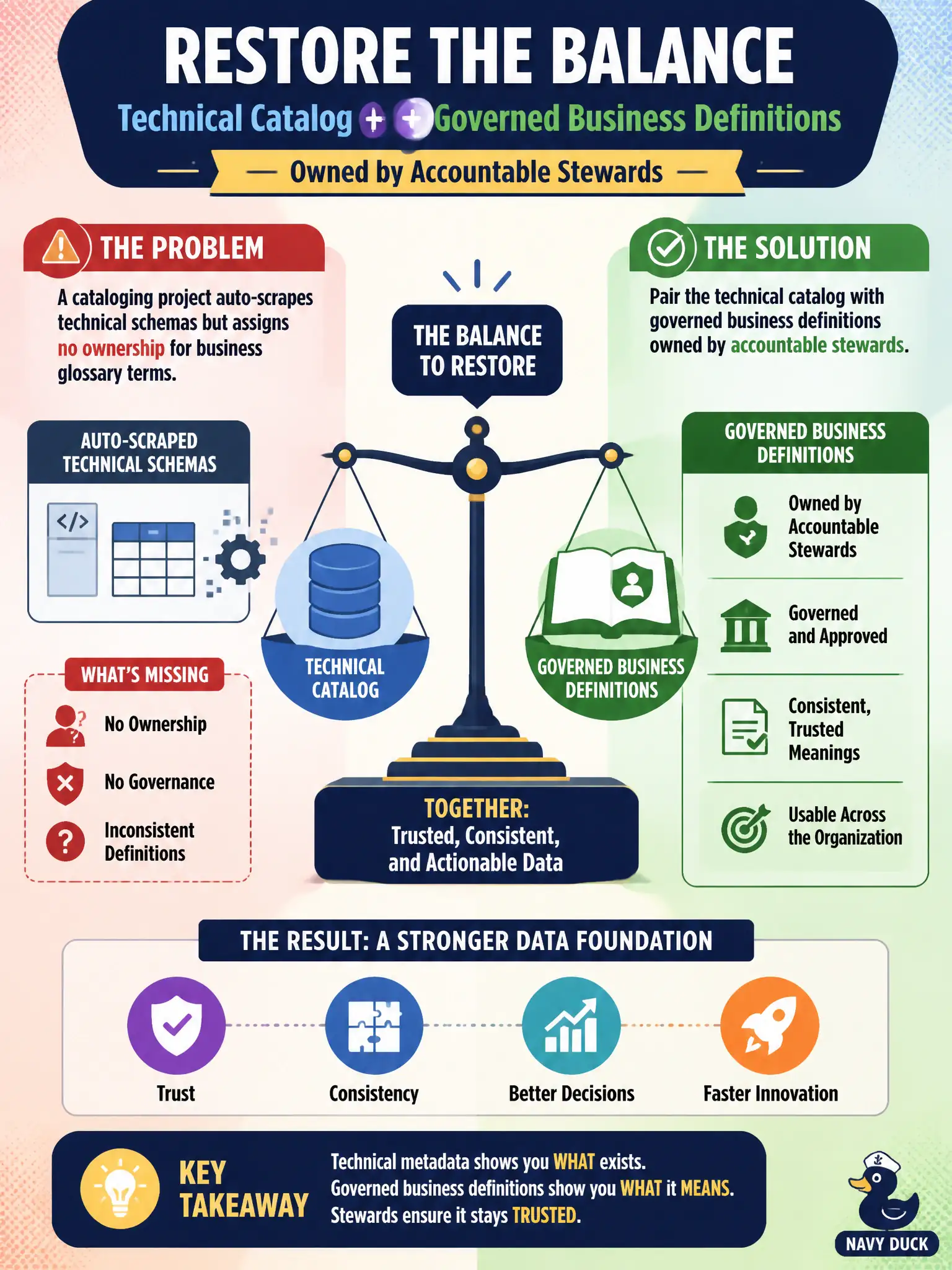
A cataloging project auto-scrapes technical schemas but assigns no ownership for business glossary terms. What balance should the team restore?
Select an answer to reveal the explanation.
Short Explanation
Scraping schemas gives you the pipes labeled in plumber-speak. Without a governed glossary, business folks still argue what 'active client' means. Catalog plus owned definitions—both, not one.
Full Explanation
Technical catalogs inventory structures and lineage; business glossaries define shared meaning under steward ownership—both layers are required. When a cataloging project auto-scrapes technical schemas but assigns no ownership for business glossary terms, the team must restore that balance for municipal consumers. Claiming schema scrape alone completes curation leaves staff without trusted definitions for critical civic terms used in KPIs and legal reports. Deleting technical metadata so only marketing slogans remain destroys discoverability and lineage needed for impact analysis. Outsourcing glossary meaning exclusively to column-name string matching will not create semantic agreement across departments. Exam caveat: auto-harvest accelerates inventory; curation and ownership remain human governance obligations for terms that drive decisions. Operational check: designate glossary owners per domain, prioritize critical terms used in council KPIs and legal reports, link glossary entries to cataloged assets, and measure term coverage for CDEs. City analysts should be told which glossary is authoritative so dashboard arguments cite stewarded definitions rather than local spreadsheet legends.