
IT is about to approve a new SaaS that creates another customer master with no integration plan. How should data governance influence the intake?
Select an answer to reveal the explanation.
Short Explanation
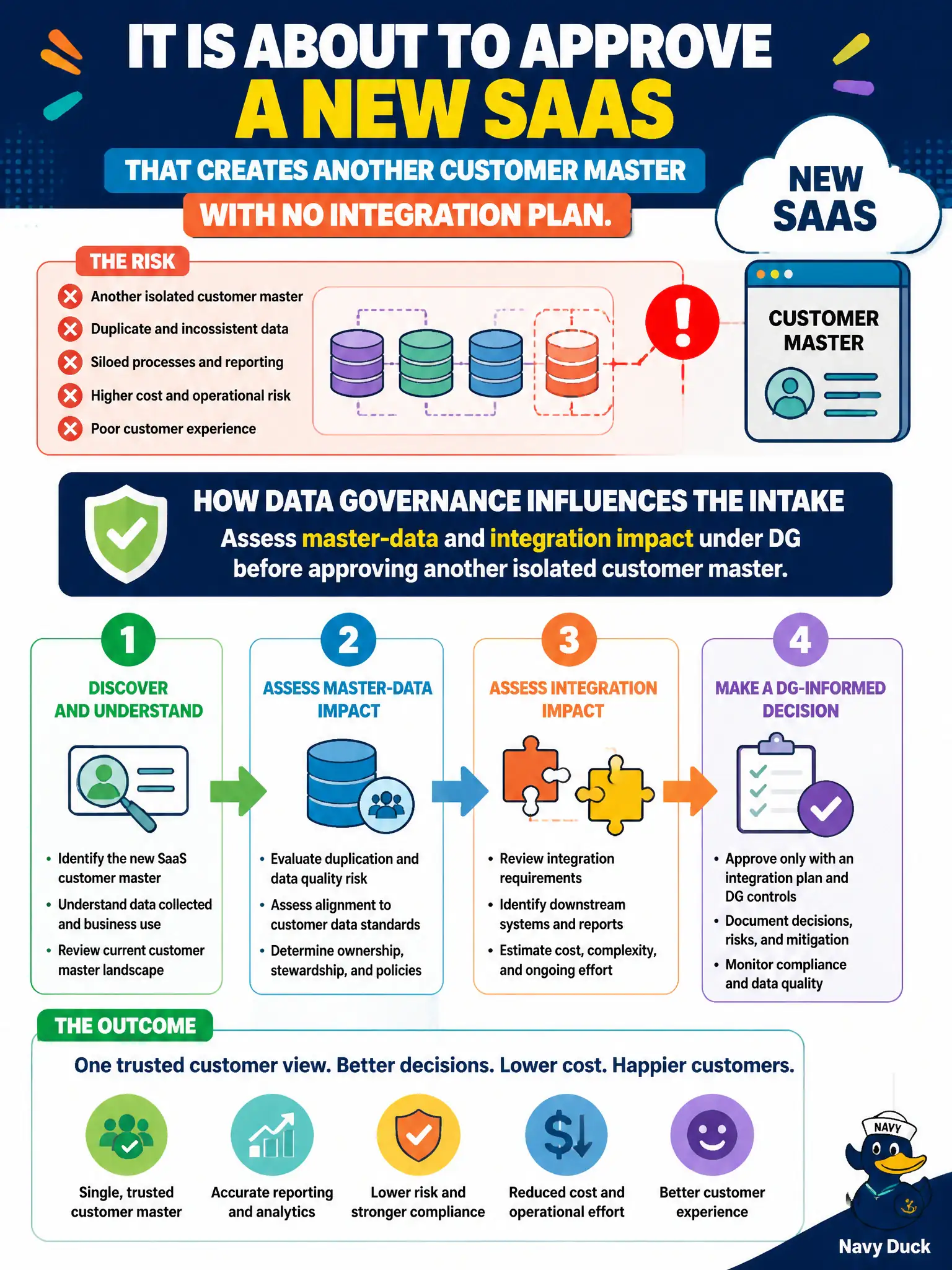
Another customer master with no integration plan is how you get five 'sources of truth' and zero truth. Governance belongs in tech intake—check master-data impact before the contract ink dries. Fix the seam early.
Full Explanation
Technology intake is a governance control point for preventing master-data proliferation and unmanaged silos in the city estate. When IT is about to approve a new SaaS that creates another customer master with no integration plan, DG should require master-data and integration impact assessment before approval. Approving every SaaS quickly because integration can wait until after production cutover locks in duplicate identities and costly remediation for residents and clerks. Requiring the SaaS to replace the network firewall as a prerequisite confuses unrelated infrastructure with data-risk intake criteria. Banning all SaaS permanently regardless of business need or integration design is a blunt instrument that blocks legitimate service improvement. Exam caveat: some tactical tools may be approved with time-boxed isolation and a funded integration roadmap; undocumented forever-silos are the failure mode. Operational check: add MDM and integration questions to the intake form, require an owner for customer identity impacts, and withhold production credentials until the plan is accepted by DG and architecture. Procurement and IT governance boards should treat a second customer master as a material risk item on the civic architecture radar.