
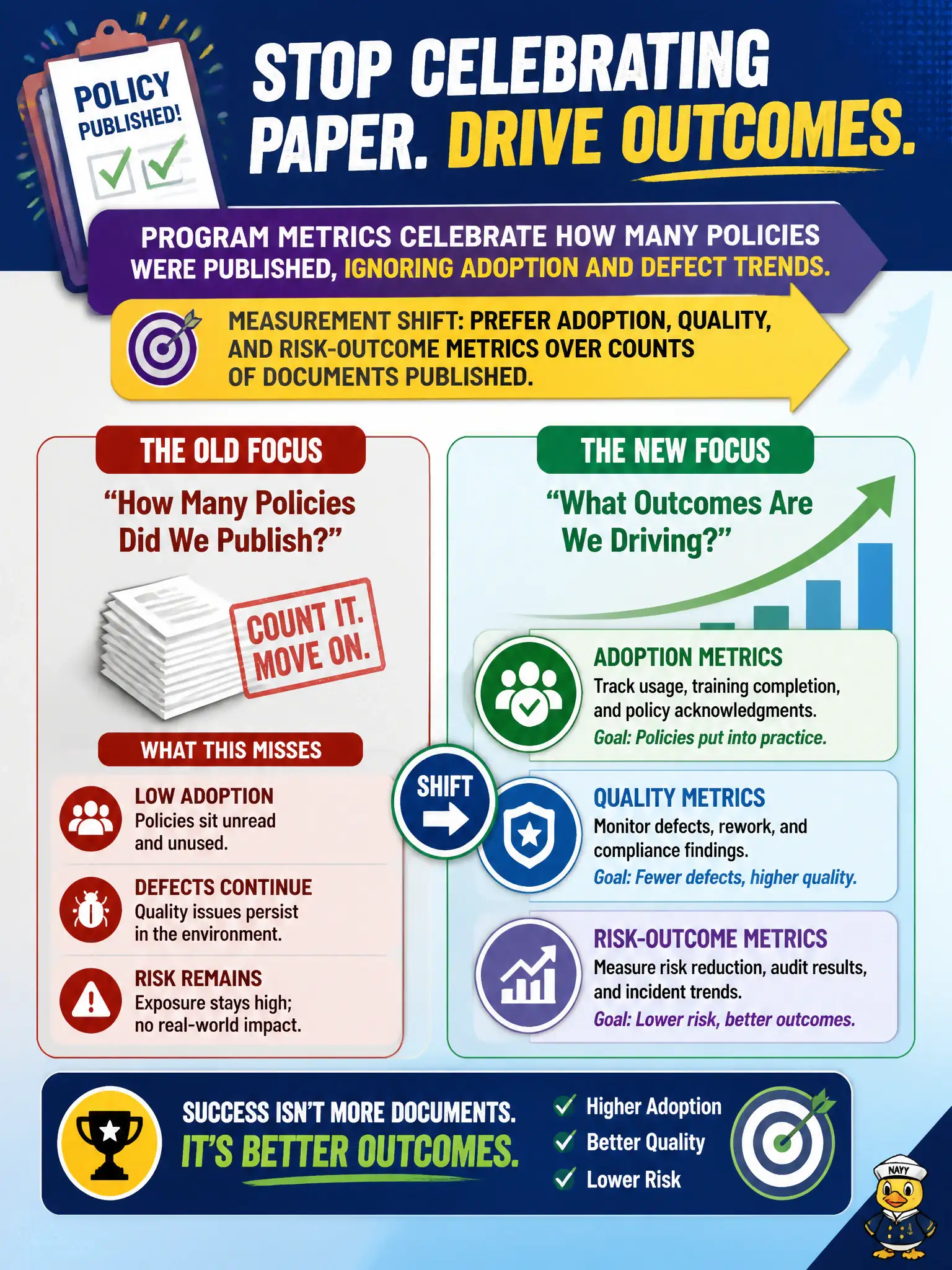
Program metrics celebrate how many policies were published, ignoring adoption and defect trends. What measurement shift should leadership make?
Select an answer to reveal the explanation.
Short Explanation
Counting PDFs on the share drive is like counting cookbooks while the kitchen stays dirty. Track whether people follow the rules and whether defects and risk actually drop. Outcomes beat vanity stacks.
Full Explanation
Mature DG measurement focuses on behavioral adoption, data quality and issue trends, exception volumes, and risk reduction—not document production volume. When program metrics celebrate how many policies were published while ignoring adoption and defect trends, leadership should shift the scorecard toward outcomes that justify civic sponsorship. Increasing the vanity count by splitting each policy into more PDF files rewards fragmentation rather than change. Stopping measurement of governance outcomes entirely removes the feedback loop managers need. Scoring success only by the word count of the governance charter confuses prose volume with operating effectiveness. Exam caveat: publication counts can be a leading activity metric if paired with adoption and quality outcomes; alone they mislead. Operational check: replace or supplement policy-count KPIs with acknowledgment rates, exception aging, CDE quality trends, and decision turnaround times reported to the CIO. Council sponsors should ask what steward behaviors and defect trends changed this quarter, not how many new PDFs landed on the intranet, and should pair leading activity counts with lagging outcome metrics before renewing program funding. Pair leading policy-publication counts with lagging adoption and defect-trend metrics before the council renews program funding for another year.