
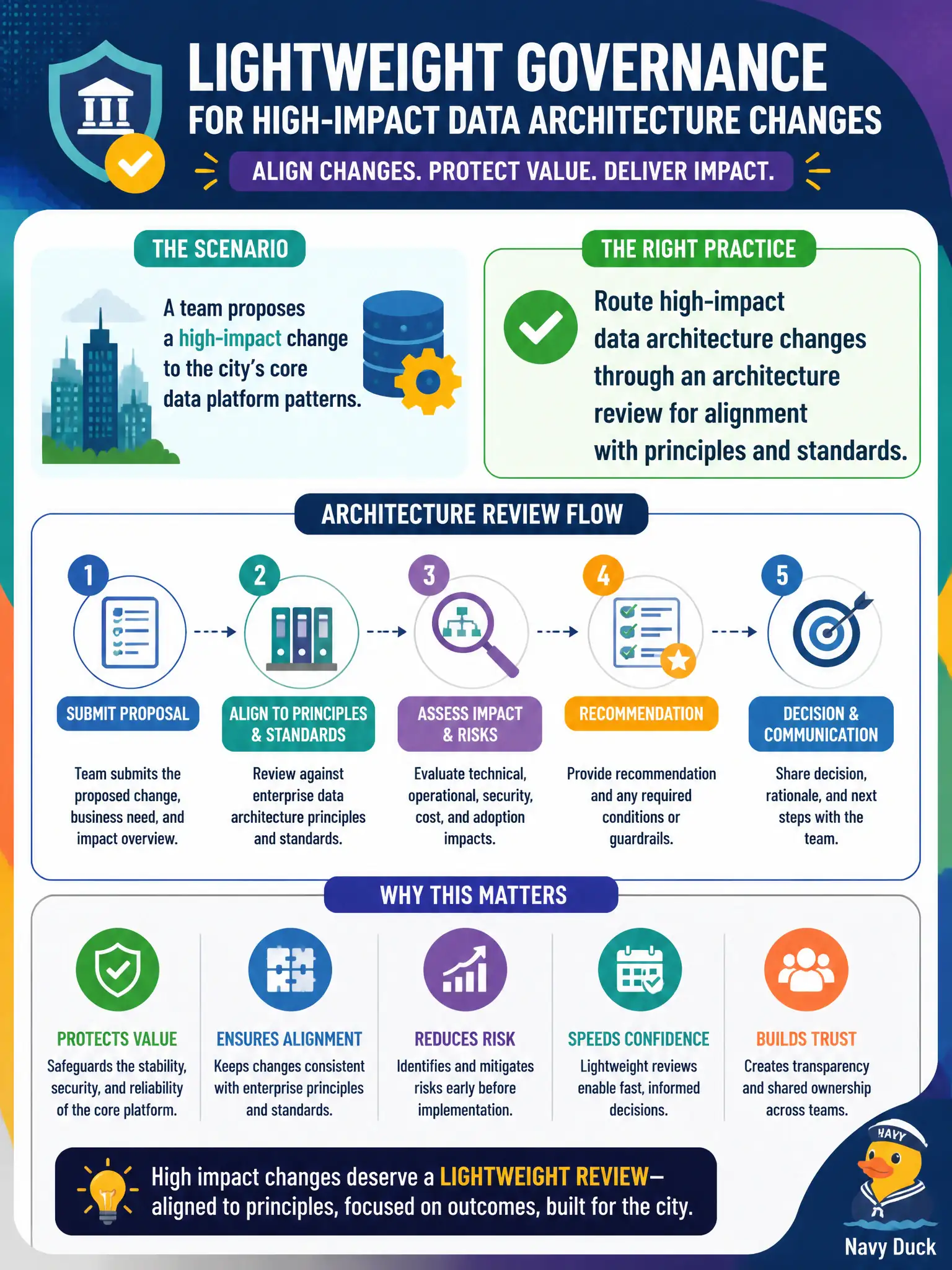
A team proposes a high-impact change to the city’s core data platform patterns. What lightweight governance practice should apply?
Select an answer to reveal the explanation.
Short Explanation
Big swings at the city’s data backbone deserve a pit stop with people who know the house rules. A lightweight architecture review checks the change against principles before it becomes everyone’s problem.
Full Explanation
High-impact changes to the city’s core data platform patterns should pass a lightweight architecture review for alignment with principles and standards before widespread adoption. Allowing any pattern change without review if a sprint demo succeeds confuses local velocity with enterprise fitness. Banning all reviews because “governance always blocks delivery” throws away risk management. Reviewing only cosmetic naming changes while ignoring platform pattern shifts misses the decisions that create lasting coupling and cost. Exam practice: architecture review for high-impact pattern changes. Caveat: keep reviews proportional—small low-risk changes can use lighter paths; the failure mode is zero review for platform-defining shifts. Operationally, define impact criteria that trigger review, run a time-boxed architecture session citing principles, record decisions and exceptions, and verify the implementing team updates reference architecture docs after approval. Log architecture-review decisions in the same repository as principles so future teams inherit rationale, not only the pattern that won a demo. Lightweight reviews still produce a written decision record citing principles; undocumented “thumbs up in chat” does not protect the city when pattern choices later fail.