
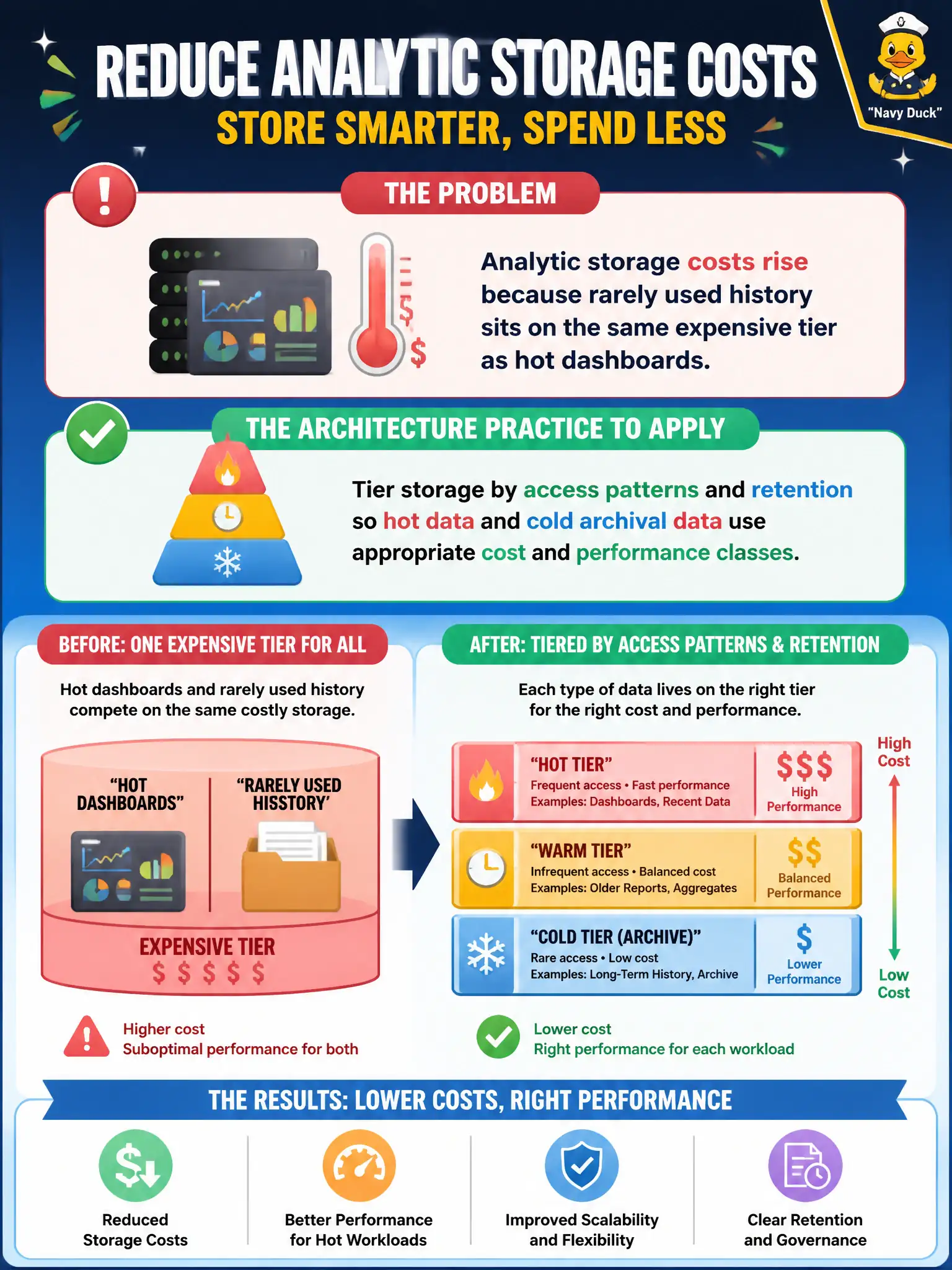
Analytic storage costs rise because rarely used history sits on the same expensive tier as hot dashboards. What architecture practice should be applied?
Select an answer to reveal the explanation.
Short Explanation
You don’t keep winter coats in the oven just because the kitchen is warm. Hot dashboard data earns the fast, pricey shelf; cold history can live on cheaper archival tiers matched to how often it’s touched.
Full Explanation
Analytic storage costs rise when rarely used history sits on the same expensive tier as hot dashboards. Architecture should tier storage by access patterns and retention so hot data and cold archival data use appropriate cost and performance classes. Keeping all history on the hottest tier indefinitely wastes budget. Deleting retention policies because “tiering is only finance” ignores that retention is an architecture and records concern. Storing cold archives exclusively inside OLTP to save analytic spend harms transactional systems. Exam practice: storage tiering by access and retention. Caveat: tiering must preserve restore and e-discovery paths so cold does not mean unrecoverable when auditors ask. Operationally, classify civic analytic datasets by access frequency and retention, move cold history to cheaper tiers with tested restore, and confirm hot dashboards still meet performance SLAs after the move. Test restore from cold tiers into an analytic sandbox before relying on tiering for grant or audit history retrieval. Retention-driven tiering must align with records schedules for civic datasets so cost savings do not violate legal hold or audit retrieval obligations. Cost dashboards for analytic storage should show hot versus cold footprint so finance and architecture can defend tiering with evidence.