
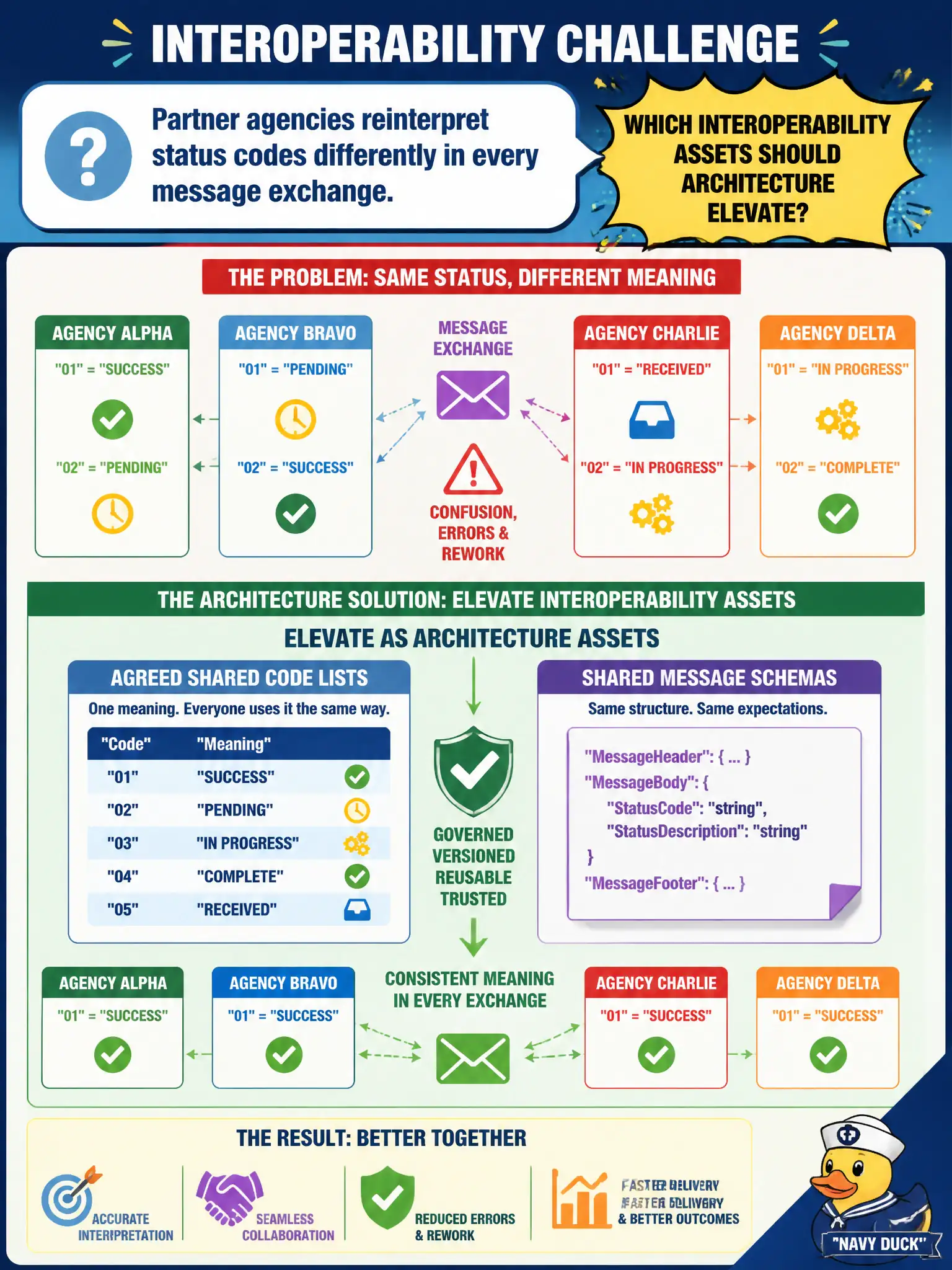
Partner agencies reinterpret status codes differently in every message exchange. Which interoperability assets should architecture elevate?
Select an answer to reveal the explanation.
Short Explanation
Shared code lists and message schemas are the Rosetta Stone for agencies—same codes, same shapes, fewer arguments. Treat them as real architecture assets, not napkin notes.
Full Explanation
Partner agencies that reinterpret status codes differently in every message exchange need shared interoperability assets: agreed code lists and message schemas treated as architecture assets, versioned and findable. Private code lists never shared outside each agency guarantee misinterpretation. Verbal agreements with no versioned schemas fail under staff turnover. Ad hoc spreadsheet mappings recreated per project recreate the same defects repeatedly. Exam elevation: code lists and schemas as interoperability architecture. Caveat: shared assets need change control and effective dating so partners do not silently diverge mid-year. Operationally, publish the status code list and message schema in a governed repository, require new exchanges to use current versions, and test round-trip interpretation across two partner systems before production traffic. Subject shared code-list changes to partner notice periods so agencies do not reinterpret status values mid-exchange without warning. Interoperability assets belong in the enterprise catalog with owners, not only in email attachments, so partner onboarding can find current schemas without archaeology. Round-trip test status codes after every shared list revision so reinterpretation defects are caught before partner message volume increases.