
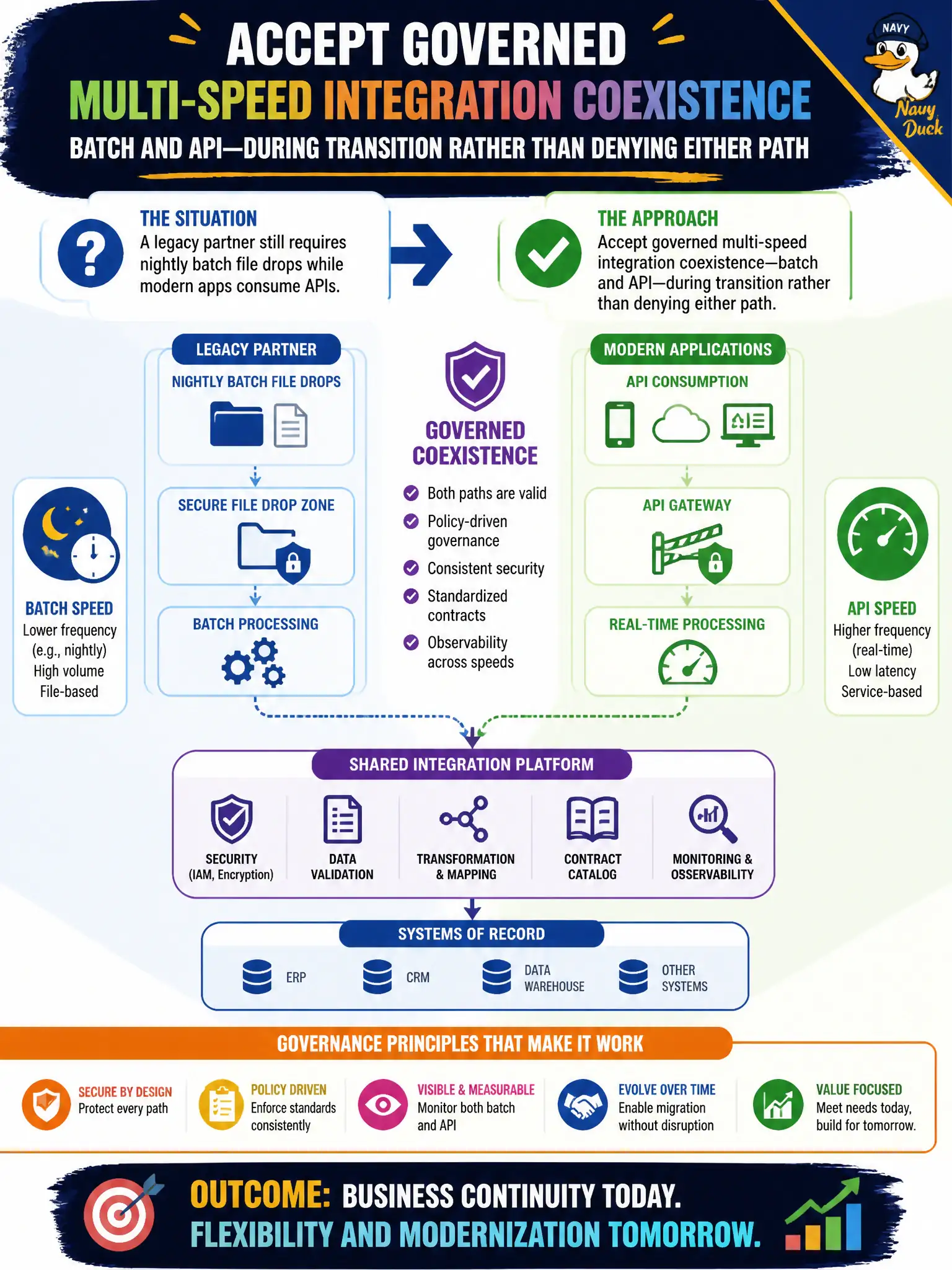
A legacy partner still requires nightly batch file drops while modern apps consume APIs. How should the architecture treat this situation?
Select an answer to reveal the explanation.
Short Explanation
During a remodel you still use the old porch door while the new front entrance goes in. Batch for a legacy partner and APIs for modern apps can live together—as long as both paths are inventoried, contracted, and governed.
Full Explanation
Legacy partners that still require nightly batch file drops while modern apps consume APIs create a multi-speed reality. Architecture should accept governed coexistence of batch and API during transition rather than denying either path. Disabling APIs until every partner abandons files freezes modernization on the slowest external party. Allowing ungoverned duplicate feeds with no inventory or contracts multiplies risk. Treating batch drops as proof that API standards are unnecessary blocks progress for partners who can modernize. Exam stance: governed multi-speed integration. Caveat: coexistence needs an inventory, contracts, and a retirement plan for redundant feeds so dual running does not become permanent chaos. Operationally, catalog each batch and API feed with owner and SLA, prevent untracked duplicates, and set migration milestones for partners able to move to APIs without stranding those who cannot yet. Inventory every duplicate batch-plus-API path and assign a retirement owner so multi-speed coexistence does not become permanent dual running. Governed coexistence includes contract tests for both batch and API paths so neither channel drifts into undocumented fields during the transition period.