
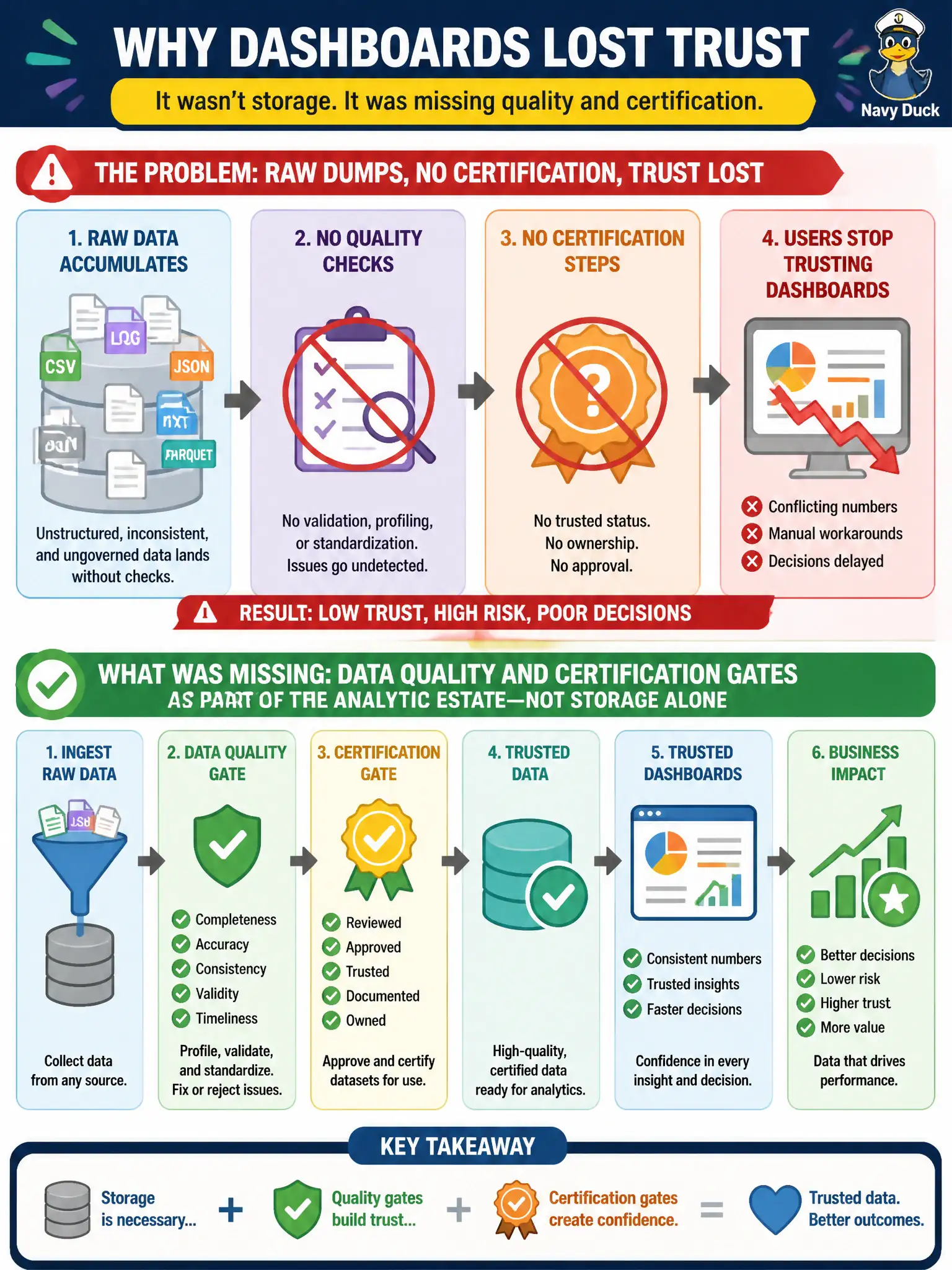
An analytic platform accumulates raw dumps with no certification steps and users stop trusting dashboards. What was missing from the analytic architecture?
Select an answer to reveal the explanation.
Short Explanation
A swamp isn’t a lake with branding—it’s water with no filters. Analytic architecture needs quality and certification gates so people know what is safe to use, not just a pile of storage.
Full Explanation
Analytic platforms that accumulate raw dumps with no certification steps teach users not to trust dashboards. Analytic architecture must include data quality and certification gates—not storage alone—so curated products earn confidence for municipal decisions. Unlimited storage without retention or quality controls is a swamp, not an estate. Removing all metadata so pipelines “run faster” destroys discoverability and trust signals. A policy that every raw file is automatically executive-ready invents false certification. Exam answer: quality and certification as architectural components. Caveat: raw zones can exist for exploration if clearly labeled untrusted and separated from certified serving layers. Operationally, define certification criteria for analytic products, enforce gates before executive dashboards bind to datasets, and show trust badges and quality scores in the catalog consumers use. Block executive dashboard binding to datasets lacking certification status, keeping raw landing clearly marked untrusted in the analytic estate. Certification gates belong in the pipeline promotion path, not only in slideware, so uncertified raw dumps cannot silently become the unmarked source behind executive charts.