
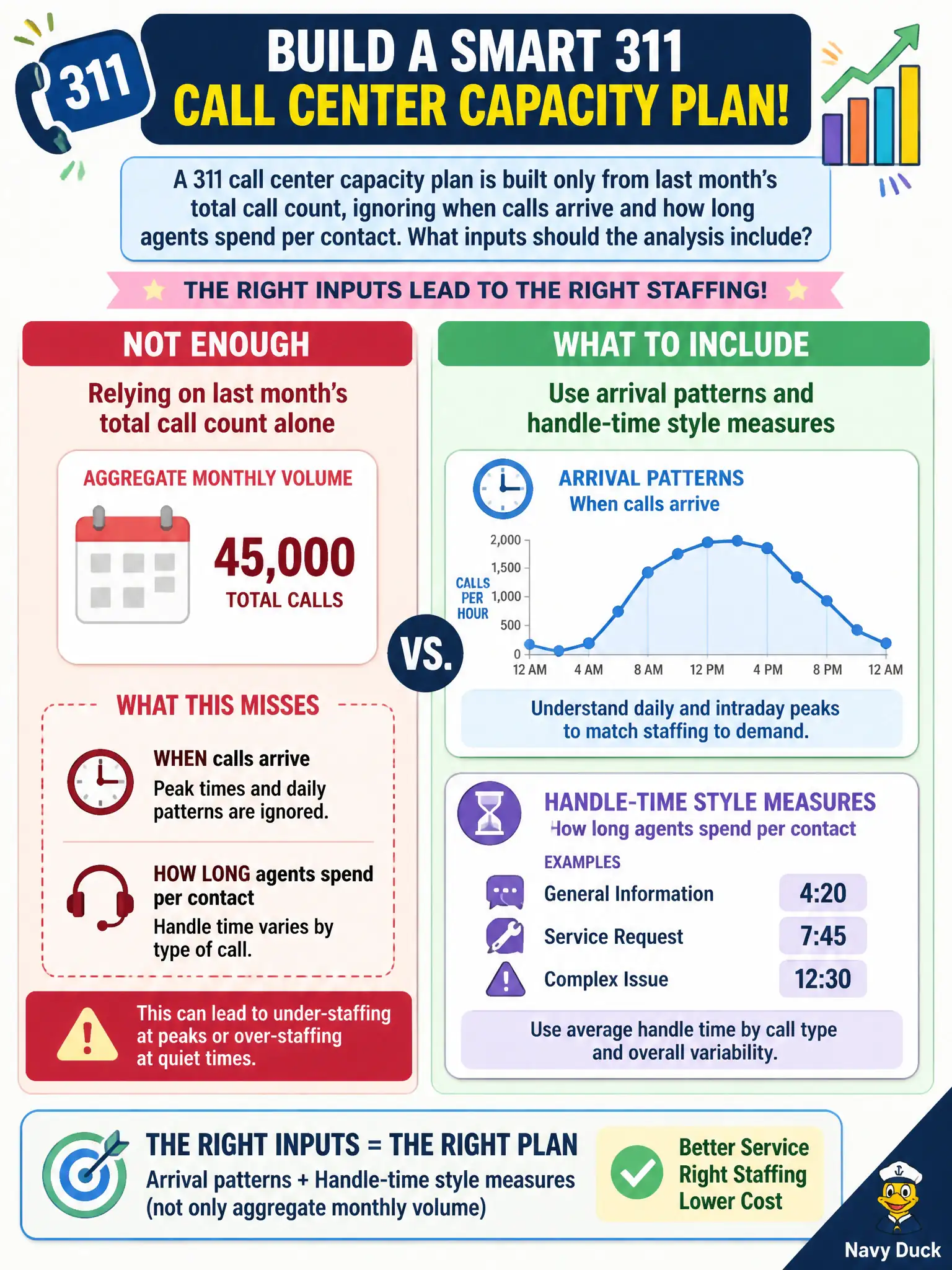
A 311 call center capacity plan is built only from last month's total call count, ignoring when calls arrive and how long agents spend per contact. What inputs should the analysis include?
Select an answer to reveal the explanation.
Short Explanation
Staffing a call center from a monthly total alone is like buying umbrellas based on yearly rainfall without asking which hours it pours. You need arrival patterns and handle time to see the peaks and the work per call. Capacity is a timing problem, not just a sum.
Full Explanation
A 311 call center capacity plan built only from last month’s total call count ignores when calls arrive and how long agents spend per contact. Sound analysis needs arrival patterns (interval volumes, peaks) and handle-time style measures, not only aggregate monthly volume. Executive opinion of how busy the center “usually feels” on Mondays is anecdotal and uncalibrated for staffing models. A single annual headcount target with no operational timing detail cannot place agents against peaks. Using only maximum call length while assuming arrivals are perfectly evenly spaced ignores concurrency and peak load. Exam caveat: totals still matter for budgeting, but workforce planning requires temporal demand and handle-time distributions to avoid chronic understaffing at peaks and idle time in troughs. Operational check: pull interval arrival histograms and average/handle-time distributions, build a simple peak-staffing scenario, compare to last month’s total-only plan, and brief operations on peak coverage gaps the aggregate hid. In municipal information-management practice, record the rationale so future staff know which failure modes the rejected options would create for city services, and re-validate after the next cycle that the same control still holds.