
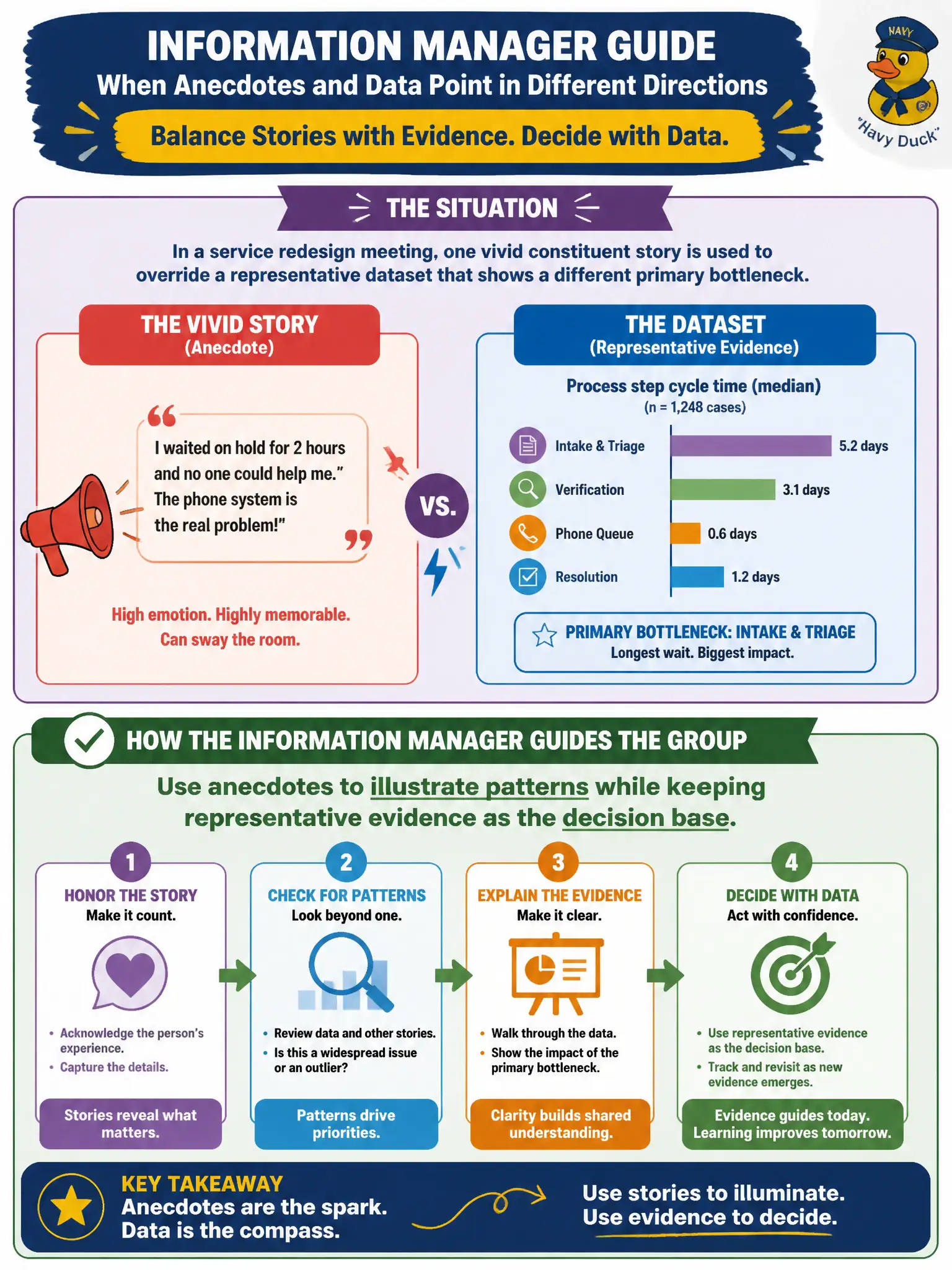
In a service redesign meeting, one vivid constituent story is used to override a representative dataset that shows a different primary bottleneck. How should the information manager guide the group?
Select an answer to reveal the explanation.
Short Explanation
A powerful story can light up a meeting—and it should—but one story isn't a census. Use the anecdote to illustrate what the data shows, not to replace a representative picture of where the bottleneck really is. Hearts and datasets both belong; neither should erase the other.
Full Explanation
In service redesign meetings, vivid constituent stories should illustrate patterns while representative evidence remains the decision base. Anecdotes humanize and can surface blind spots, but one story should not override a dataset that shows a different primary bottleneck for citywide redesign. Discarding the dataset whenever a compelling story appears in the room privileges narrative availability over population evidence. Ignoring all stories because qualitative input never informs civic operations throws away useful context and legitimacy. Letting a single anecdote set citywide priorities for the next fiscal year scales one case into policy without checking prevalence. Exam caveat: if the anecdote reveals a high-severity edge case (safety, legal duty), it may warrant a parallel action even when not the modal bottleneck—still without erasing the representative finding. Operational check: present the representative bottleneck with effect sizes, use the story as illustration or exception analysis, test whether the anecdote’s condition appears at scale in the data, and document both the primary redesign target and any exception pathway. In municipal information-management practice, record the rationale so future staff know which failure modes the rejected options would create for city services, and re-validate after the next cycle that the same control still holds.