
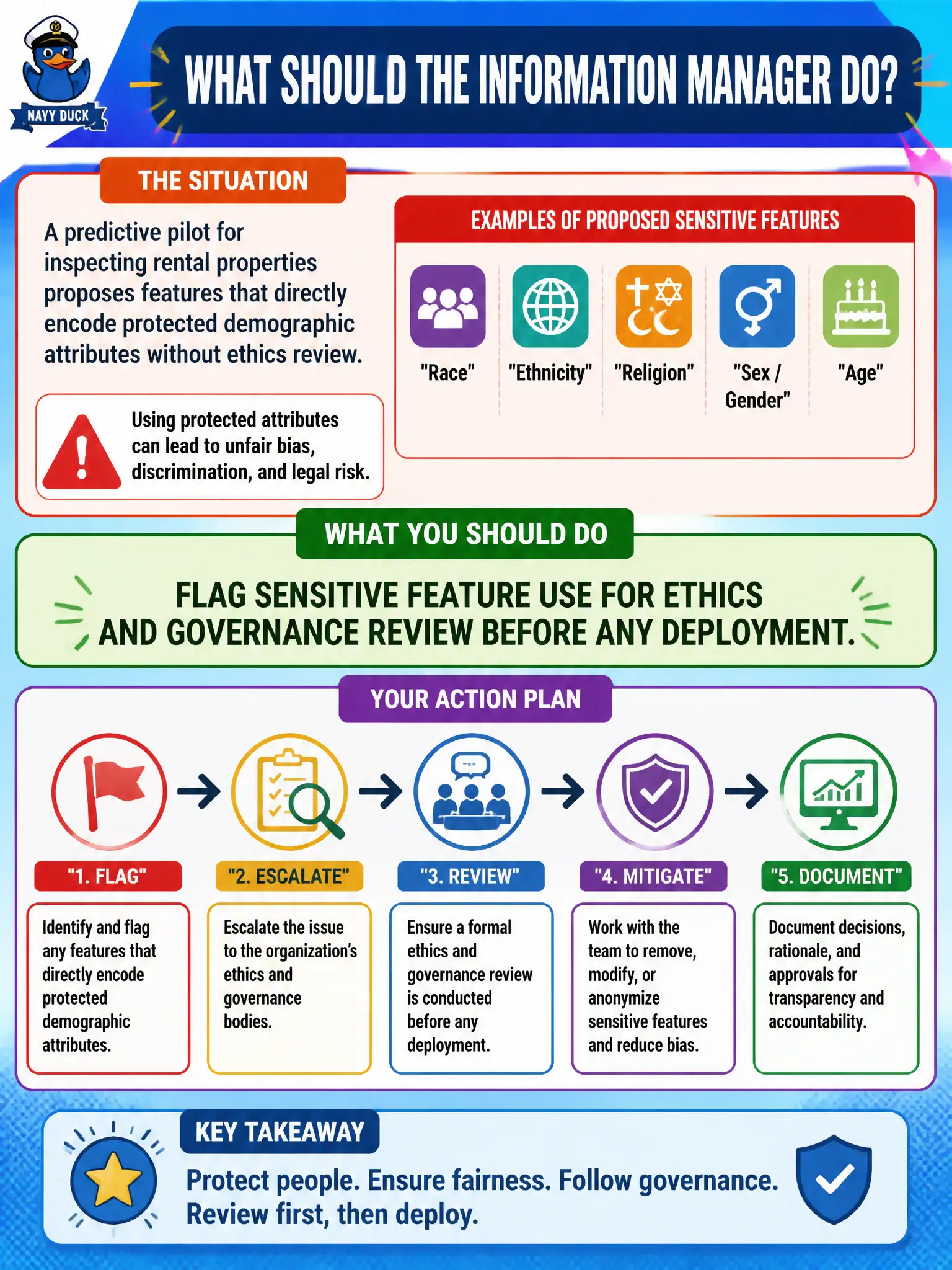
A predictive pilot for inspecting rental properties proposes features that directly encode protected demographic attributes without ethics review. What should the information manager do?
Select an answer to reveal the explanation.
Short Explanation
Dropping protected attributes straight into a predictive model without review is like wiring a power tool with the safety switch taped down—you might get work done, and you might hurt people. Escalate to ethics and governance before deployment. Awareness here means pause and review, not 'ship and see.'
Full Explanation
A predictive pilot for inspecting rental properties that proposes features directly encoding protected demographic attributes without ethics review must be flagged for ethics and governance review before any deployment. Sensitive feature use can create discriminatory enforcement patterns even when accuracy metrics look attractive. Deploying quickly and monitoring fairness only after enforcement actions begin shifts harm onto residents. Hiding attribute names in the model card while keeping the features is concealment, not compliance. Assuming protected attributes always improve accuracy and therefore justify use collapses legality and ethics into a performance heuristic. Exam caveat: some jurisdictions tightly restrict protected-class variables in enforcement models; even where not banned outright, proxy features and disparate impact still need review. Operational check: pause the pilot, inventory features and proxies, convene ethics/governance review with legal and community risk input, document allowed alternatives, and withhold deployment until review clears or redesigns the feature set. In municipal information-management practice, record the rationale so future staff know which failure modes the rejected options would create for city services, and re-validate after the next cycle that the same control still holds.