
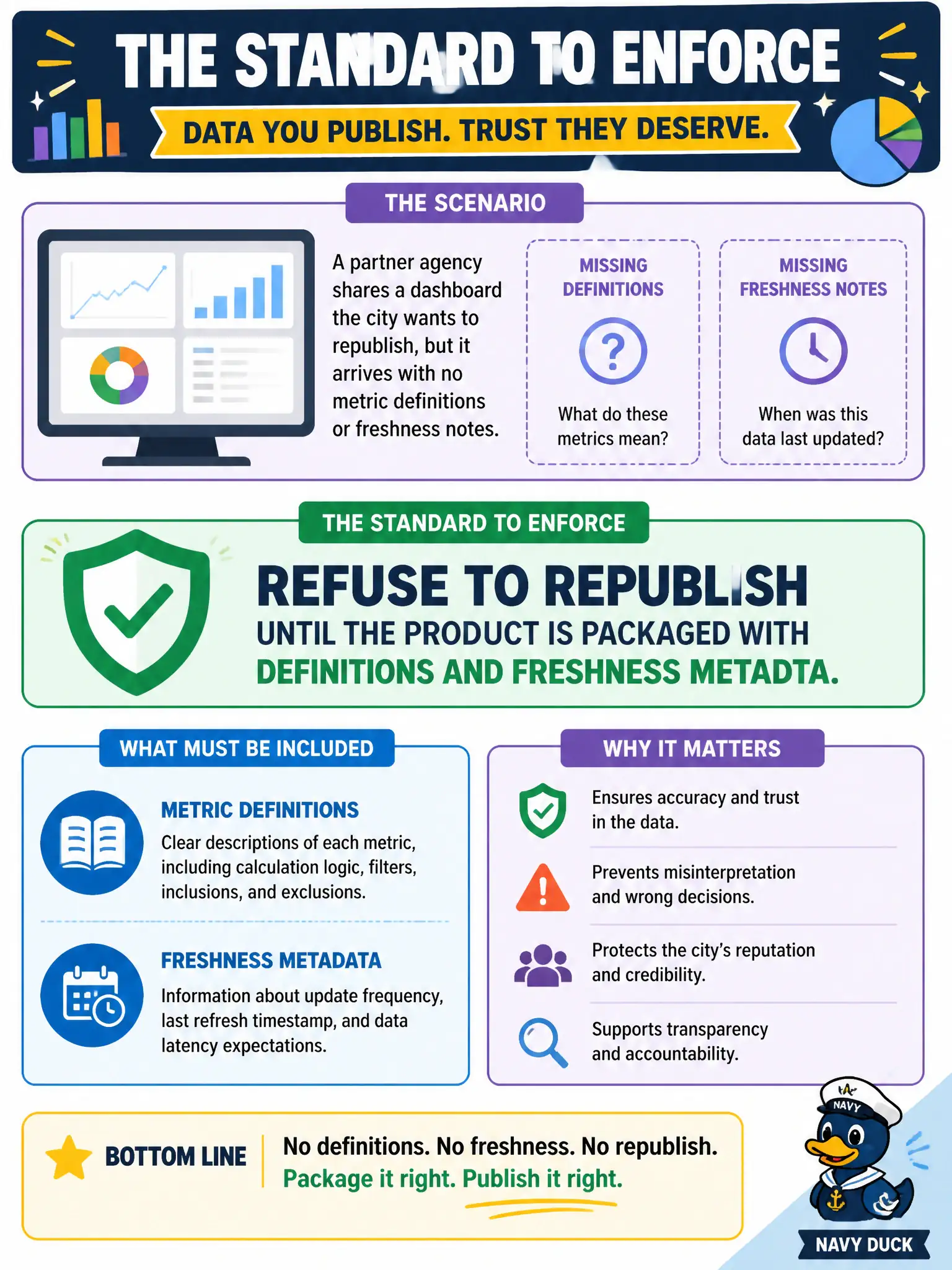
A partner agency shares a dashboard the city wants to republish, but it arrives with no metric definitions or freshness notes. What standard should analysts enforce?
Select an answer to reveal the explanation.
Short Explanation
Republishing a dashboard with no definitions is like handing out medicine bottles with the labels peeled off—people will still take action on it. Require definitions and freshness with the product before it wears the city's logo. Analytic products need packaging, not just pretty charts.
Full Explanation
When a partner agency shares a dashboard the city wants to republish but provides no metric definitions or freshness notes, analysts should refuse to republish until the product is packaged with definitions and freshness metadata. Republishing without that packaging exports ambiguity and risk onto residents who treat the city’s portal as trustworthy. Republishing immediately and adding definitions later if residents ask normalizes incomplete products. Stripping partner branding and presenting the numbers as the city’s own certified metrics misrepresents provenance and certification status. Converting the dashboard to an image so missing metadata cannot be noticed hides the gap rather than closing it. Exam caveat: cities can host partner content with clear attribution and provisional labels if policy allows, but “certified city metric” claims require definitions, freshness, and stewardship. Operational check: request definition and freshness package from the partner, validate against city standards, label provenance, and only then publish—or host with an explicit non-certified partner banner if leadership accepts that lesser status. In municipal information-management practice, record the rationale so future staff know which failure modes the rejected options would create for city services, and re-validate after the next cycle that the same control still holds.